A Multi-Engine SEO Strategy for Search Success
Master a multi-engine SEO strategy in 2026. Get your business recommended by ChatGPT, Gemini, Claude & Perplexity — not just Google. Discover essential.
| Key Insight | Explanation |
|---|---|
| SEO now spans multiple engines | ChatGPT, Gemini, Claude, and Perplexity each use different ranking signals than Google, requiring a dedicated optimization approach for each. |
| AI search is already mainstream | Perplexity alone reported over 100 million weekly queries by late 2024, and AI-generated answers now intercept a significant share of traditional search traffic. |
| Technical signals matter more than ever | Schema markup, structured data, llms.txt configuration, and citation building help AI systems parse and trust your content. |
| Content frequency builds AI trust | Daily, consistently published content gives AI engines fresh signals to associate your brand with relevant queries over time. |
| SMBs can compete without agencies | Automated platforms now handle multi-engine optimization at a fraction of agency cost, putting AI search visibility within reach for any business. |
| Visibility tracking is non-negotiable | You can't improve what you don't measure. Monitoring how your brand appears across AI search engines is the foundation of any effective strategy. |
A multi-engine SEO strategy is no longer optional. As of 2026, your potential customers aren't just searching on Google. They're asking ChatGPT for product recommendations, querying Perplexity for service comparisons, and getting answers from Gemini and Claude before they ever visit a website. If your business only shows up in Google's index, you're invisible to a rapidly growing share of your market. This guide explains exactly how a multi-engine SEO strategy works, why it matters more now than at any point in search history, and what practical steps you can take to get your brand recommended across every major AI and traditional search engine.
What Is a Multi-Engine SEO Strategy?
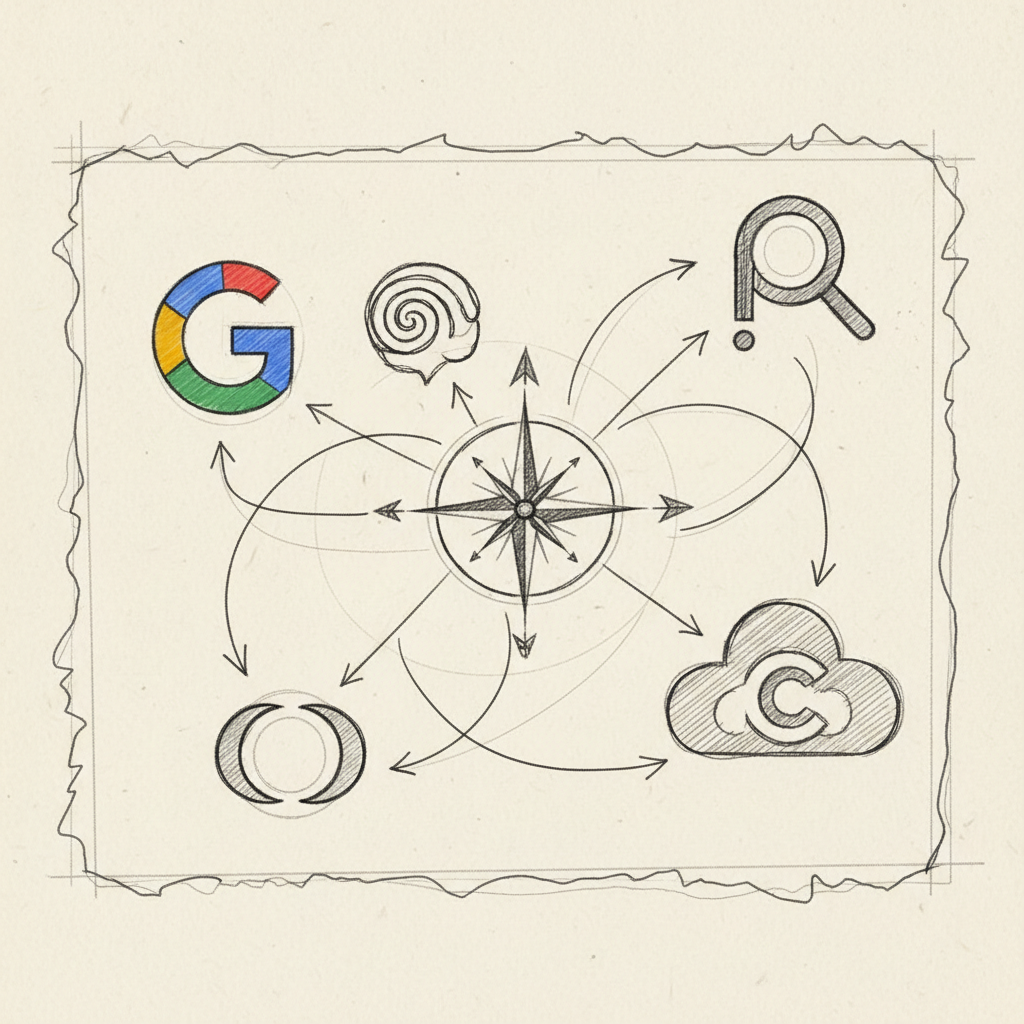
A multi-engine SEO strategy is the practice of optimizing your online presence to rank, appear, and get recommended across multiple search platforms simultaneously, including both traditional engines like Google and Bing and AI-powered engines like ChatGPT, Gemini, Claude, and Perplexity. Unlike single-engine SEO, which targets one algorithm, a multi-engine approach requires tailoring content, technical signals, and authority-building to the distinct ranking logic of each platform.
Why the Definition Has Expanded in 2026
Until recently, "SEO" meant Google SEO. That's no longer accurate. Industry analysts at Search Engine Land describe how the search landscape has fragmented across platforms, each with its own discovery logic [1]. Google still holds significant market share, but AI engines are capturing an increasing percentage of informational and commercial queries. According to a widely cited industry benchmark, roughly 40% of Google searches already return zero clicks as users shift toward AI-generated answers.
The concept connects to two emerging disciplines:
- GEO (Generative Engine Optimization): optimizing content so that AI systems that generate answers, like ChatGPT and Gemini, surface your brand in their responses.
- AEO (Answer Engine Optimization): structuring content so that answer-focused engines, like Perplexity and Google's AI Overviews, extract and cite your content directly.
The American Marketing Association of Baltimore notes that GEO represents a fundamental shift in how brands must think about discoverability, moving from "rank on page one" to "be cited in the answer" [2].
Who Needs a Multi-Engine Strategy?
Any business that relies on search-driven customer acquisition needs this approach. That includes:
- E-commerce stores competing for product recommendation queries
- Local service businesses whose customers ask AI engines for nearby recommendations
- B2B SaaS companies whose buyers research solutions through AI-assisted searches
- Solo founders and SMBs who can't afford to miss emerging traffic channels
Michigan Tech's guidance on SEO fundamentals emphasizes that consistent, authoritative content published across relevant channels remains the foundation of any search strategy [3]. A multi-engine approach builds on that foundation and extends it into AI-native environments.
For businesses operating across multiple locations or domains, Cornell University's analysis of multi-location SEO strategy and domain structure provides useful context for how site architecture decisions affect search visibility across platforms [4].
How Multi-Engine SEO Works in 2026
Multi-engine SEO works by aligning your content, technical infrastructure, and authority signals with the distinct ranking and retrieval logic of each search platform you're targeting. Each engine has a different way of deciding what to surface.
How Traditional Engines Rank Content
Google and Bing use crawl-based indexing. Their algorithms evaluate signals including:
- Backlink authority and domain trust
- On-page keyword relevance and semantic coverage
- Core Web Vitals and page experience metrics
- Structured data and schema markup that clarifies content type
- Content freshness and update frequency
Michigan Tech's SEO guidance confirms that publishing relevant, authoritative, and regularly updated content remains the single most reliable signal for traditional search rankings [3]. A multi-site or multi-domain structure can amplify this, though Search Engine Journal cautions that poor planning leads to content cannibalization, where your own pages compete against each other [4].
How AI Engines Select What to Recommend
AI engines like ChatGPT, Gemini, Claude, and Perplexity use a fundamentally different process. They don't just crawl and rank. They retrieve, synthesize, and generate. Their selection logic favors:
- Citation authority: content that other credible sources reference or quote
- Structured data: schema markup and llms.txt files (configuration files that signal to large language model crawlers how to interpret your site) that help AI systems parse your content accurately
- Entity clarity: content that clearly establishes who you are, what you do, and who you serve
- Topical depth: comprehensive coverage of a subject that signals genuine expertise
- Freshness signals: regularly updated content that indicates an active, trustworthy source
A Reddit discussion on multi-engine optimization in 2026 highlights that brands being cited in AI model responses are winning answer boxes and converting more customers than those relying solely on blue-link rankings [5].
Pro Tip: Configure an llms.txt file on your website. This plain-text file tells large language model crawlers exactly what your business does, which pages are most authoritative, and how to categorize your content. It's one of the highest-leverage technical steps for AI search visibility and takes less than an hour to implement correctly.
The Hashmeta multi-platform SEO guide describes this as optimizing for "discovery surfaces" rather than just search results pages, capturing intent wherever users are looking for answers [6].
Key Benefits of Optimizing Across Search Engines
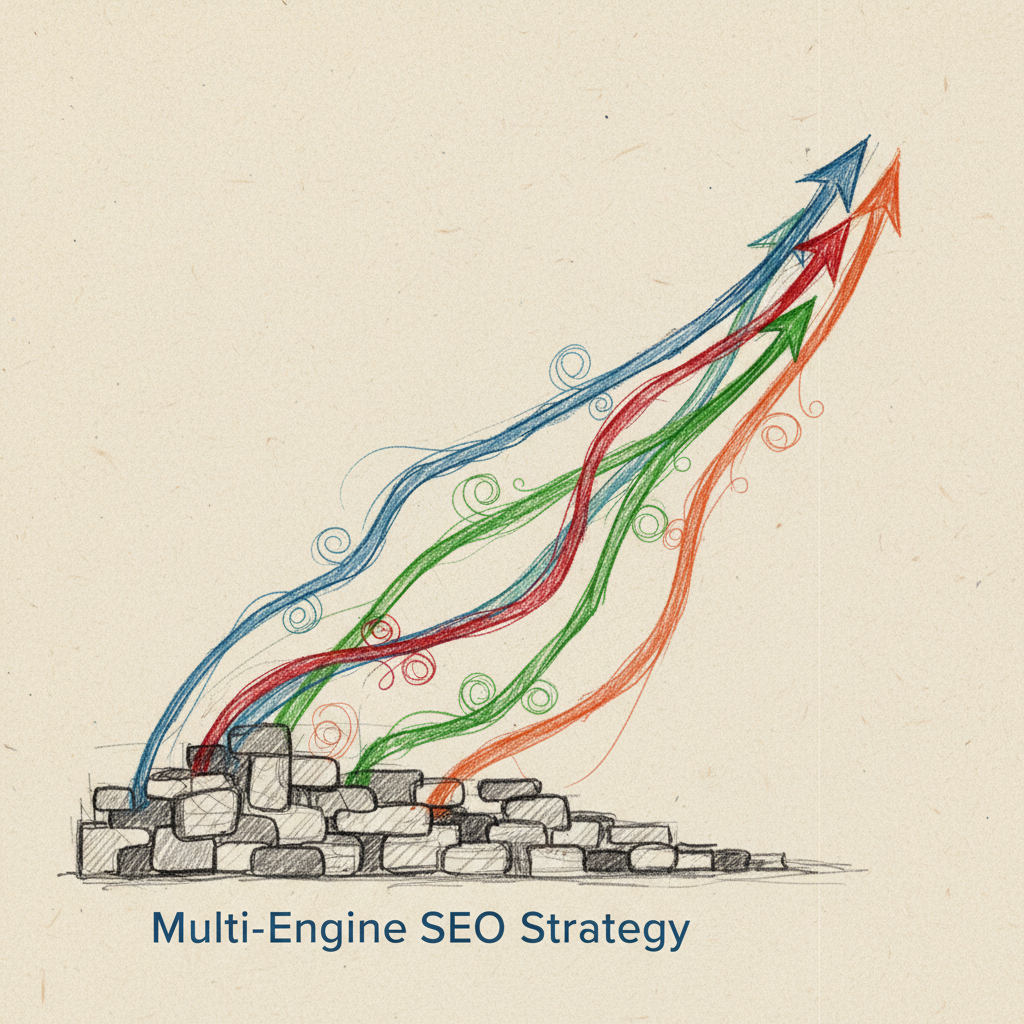
A multi-engine SEO strategy delivers compounding returns that single-engine optimization simply can't match. Each platform you optimize for adds a new channel through which customers can discover your business.
Diversified Traffic and Reduced Platform Risk
Relying on Google alone creates fragility. A single algorithm update can wipe out 30-50% of organic traffic overnight. Businesses that spread their visibility across Google, Perplexity, ChatGPT, and Gemini are insulated from any one platform's volatility.
- Broader audience reach: different users prefer different search tools; your brand appears wherever they look
- Resilience to algorithm changes: a drop on one platform doesn't kill your overall search visibility
- First-mover advantage: AI search is still early; brands that establish authority now will be harder to displace later
- Higher conversion intent: AI engine recommendations carry implicit trust; users who find you through a ChatGPT answer are often further along in their decision process
Compounding Authority Signals
In practice, multi-engine optimization creates a virtuous cycle. Content that ranks well on Google gets indexed and cited by AI engines. AI citations drive direct traffic, which improves engagement signals, which strengthens Google rankings. The DealerFire analysis of multi-faceted SEO confirms that optimizing across multiple signals and surfaces produces compounding returns that outpace single-channel efforts [7].
| Platform | Primary Ranking Signal | Key Optimization Action | Business Impact |
|---|---|---|---|
| Backlinks + on-page relevance | Regular content + schema markup | Organic traffic + brand awareness | |
| ChatGPT | Citation authority + entity clarity | llms.txt + structured data | Direct recommendations to high-intent users |
| Perplexity | Source credibility + freshness | Frequent publishing + citations | Featured in cited answer results |
| Gemini | Google ecosystem signals | Google Business Profile + structured data | Local and commercial query recommendations |
| Claude | Topical depth + trustworthiness | Comprehensive, well-cited content | B2B and research-oriented query visibility |
From experience working with SMBs across multiple sectors, the businesses that see the fastest multi-engine gains are those that publish content consistently and pair it with clean technical signals. Neither alone is sufficient. Together, they accelerate AI engine trust significantly.
Common Challenges and Mistakes to Avoid
A multi-engine SEO strategy introduces complexity that trips up even experienced marketers. Understanding the common pitfalls before you encounter them saves significant time and budget.
Treating All Engines the Same Way
The most common mistake is applying a Google-first strategy to every platform and expecting identical results. AI engines don't crawl the web the way Google does. They retrieve from pre-indexed knowledge and real-time sources using retrieval-augmented generation (RAG), a process where the AI fetches relevant documents to supplement its responses. Content optimized purely for keyword density won't get cited by ChatGPT. Content that lacks clear entity signals won't be understood by Gemini.
A common error in practice: businesses add a few schema markup tags and assume their AI search optimization is complete. Schema markup is necessary but not sufficient. You also need:
- Consistent NAP (Name, Address, Phone) data across all directories
- Clear topical authority built through content depth, not just breadth
- Third-party citations from credible sources that AI engines already trust
- An llms.txt file that explicitly guides LLM crawlers through your site
Neglecting Content Consistency
AI engines weight freshness heavily. A business that published 20 blog posts two years ago and stopped will struggle to maintain AI search visibility. Search Engine Land's multi-location SEO analysis confirms that content gaps and irregular publishing schedules create authority voids that competitors fill [1].
One pitfall to watch for: producing high-volume, low-quality content to hit publishing frequency targets. AI engines are increasingly capable of distinguishing thin content from genuinely useful material. Frequency matters, but quality can't be sacrificed to achieve it.
Pro Tip: Audit your existing content before scaling production. Identify pages that cover similar topics and consolidate them. Duplicate or near-duplicate content confuses both Google's crawler and AI engines' retrieval systems, diluting your authority rather than building it.
The Poleetic multi-site SEO guide notes that content cannibalization, where multiple pages compete for the same query, is one of the top reasons multi-engine strategies underperform [8]. Plan your content architecture before you publish, not after.
Results may vary depending on your industry, existing domain authority, and competitive landscape. One limitation worth acknowledging: AI engine citation patterns are not fully transparent, and no tool currently provides 100% accurate attribution data for all AI platforms.
Best Practices for a Multi-Engine SEO Strategy in 2026
Executing a multi-engine SEO strategy effectively in 2026 requires a structured approach that addresses content, technical signals, and ongoing measurement simultaneously.
Build Your Technical Foundation First
Technical optimization is the infrastructure everything else depends on. Before scaling content, confirm these are in place:
- Schema markup: implement Organization, LocalBusiness, Product, or Article schema as appropriate for your business type. This structured data tells AI engines exactly what your content represents.
- llms.txt configuration: create and publish an llms.txt file at your root domain to guide LLM crawlers through your site hierarchy and priority pages.
- Structured data for products and services: use JSON-LD to mark up your offerings with clear descriptions, pricing, and category signals.
- Citation building: secure mentions and links from authoritative industry sources, trade publications, and directories that AI engines already trust as reference points.
- Core Web Vitals compliance: page speed and stability remain foundational for Google and influence how quickly your content gets indexed and retrieved.
The Primary Position 2026 SEO strategy guide emphasizes that technical infrastructure is the operational layer that determines whether content investments pay off [9]. Without it, even excellent content gets misinterpreted or missed entirely.
Publish Content That Earns Citations
AI engines cite content that demonstrates genuine expertise. The Girls in Marketing multi-platform SEO analysis describes this as optimizing for "citation worthiness" rather than just keyword placement [10]. Practically, that means:
- Writing comprehensive, deeply researched content that answers questions other sources don't fully address
- Including original data, case studies, or frameworks that give AI engines a reason to reference your source specifically
- Structuring content with clear headings and direct answers so AI retrieval systems can extract precise responses
- Publishing consistently, ideally daily or near-daily, to maintain freshness signals across all platforms
- Targeting niche-specific queries where your brand can establish clear topical authority faster than in broad categories
Pro Tip: Use competitive landscape analysis to identify which AI engines are already recommending your competitors for your target queries. Those are the specific platforms and query types to prioritize first. At Moonrank, we've found that SMBs who start with this competitive gap analysis see measurable visibility improvements within their first 30 days of optimization.
Impressive Digital's multi-platform SEO framework describes tailoring strategy to each search surface while creating cross-platform signals that reinforce each other [11]. That's the correct mental model: each engine gets a tailored approach, but the underlying content and authority signals benefit all of them simultaneously.
Our team at Moonrank recommends treating AI search visibility tracking as a weekly practice, not a quarterly review. The engines update their retrieval patterns frequently, and brands that monitor their appearance in AI responses can course-correct before competitors capitalize on visibility gaps.
Sources & References
- Search Engine Land, "Multi-location SEO strategy: Stop competing with your own content," 2024
- AMA Baltimore, "Generative Engine Optimization (GEO): The New SEO for the AI Era," 2024
- Michigan Technological University, "Six Ways to Improve Your Site's Ranking (SEO)," 2024
- Cornell University, "Multi-location local SEO strategy: domain structure," 2016
- Search Engine Journal, "How We Did It: Mastering Multi-Site SEO Case Study," 2024
- Reddit, "SEO in 2026: Welcome to the Era of Multi-Engine Optimisation," 2026
- Hashmeta, "Multi-Platform SEO Strategy: The Complete Guide," 2025
- DealerFire, "The Importance of a Multi-Faceted SEO Strategy," 2024
- Poleetic, "SEO optimization in a multi-site strategy: tips and best practices," 2025
- Primary Position, "The Best SEO Strategy for a Multi-Domain, AI-era web | 2026 Edition," 2026
- Girls in Marketing, "Multi-platform SEO: What is it and where did it come from?," 2024
- Impressive Digital, "Multi-Platform SEO Services | Win Search Beyond Google," 2025
Frequently Asked Questions
1. Is SEO dead or evolving in 2026?
SEO is very much alive, but its scope has expanded dramatically. Traditional blue-link rankings still matter, but a multi-engine SEO strategy now requires optimizing for AI-generated answers, zero-click results, and direct recommendations from ChatGPT, Gemini, Claude, and Perplexity. Businesses that treat SEO as "Google only" are leaving an increasingly large portion of search-driven traffic on the table. The discipline hasn't died; it's split into multiple parallel tracks that must be managed simultaneously.
2. What are the top 5 SEO strategies in 2026?
The top five strategies as of 2026 are: (1) multi-engine optimization targeting Google, ChatGPT, Gemini, Claude, and Perplexity simultaneously; (2) technical AI readability improvements including schema markup, llms.txt configuration, and structured data; (3) consistent, high-frequency content publishing to maintain freshness signals across all platforms; (4) citation and authority building through third-party mentions that AI engines recognize as credible references; and (5) AI search visibility tracking to monitor and respond to how your brand appears in AI-generated responses. Each strategy reinforces the others, creating compounding returns over time.
3. How is AI engine optimization different from traditional SEO?
Traditional SEO targets crawl-based algorithms that rank pages based on backlinks, keywords, and technical signals. AI engine optimization, also called GEO (Generative Engine Optimization) or AEO (Answer Engine Optimization), focuses on making your content retrievable and citable by systems that generate answers rather than return ranked lists. AI engines prioritize entity clarity, citation authority, topical depth, and structured data signals that help them understand and trust your content. The underlying goal is the same, getting your brand in front of potential customers, but the mechanism is entirely different.
4. How long does it take to see results from a multi-engine SEO strategy?
Results vary depending on your starting point, industry competitiveness, and how consistently you execute. In practice, businesses that implement technical AI optimization (schema markup, llms.txt, structured data) alongside daily content publishing typically begin seeing measurable AI search visibility improvements within 30 to 60 days. Traditional Google rankings take longer, often 3 to 6 months for meaningful movement. The advantage of a multi-engine approach is that AI engine visibility can improve faster than Google rankings, providing earlier signals of whether your strategy is working.
5. Can small businesses realistically execute a multi-engine SEO strategy?
Yes, and this is one of the most important shifts in search marketing as of 2026. Automated platforms now handle daily content generation, technical optimization, and AI visibility tracking without requiring manual input from the business owner. The barrier isn't technical expertise anymore; it's choosing the right tool. SMBs that previously couldn't afford a $3,000-per-month agency now have access to full multi-engine optimization at a fraction of that cost. The key is selecting a platform purpose-built for AI search, not one that treats AI visibility as a secondary feature bolted onto a Google-first tool.
6. What is llms.txt and why does it matter for multi-engine SEO?
An llms.txt file is a plain-text configuration file placed at your website's root domain that tells large language model crawlers how to interpret and prioritize your content. Think of it as a robots.txt file but designed specifically for AI engines rather than traditional search crawlers. It signals which pages are most authoritative, how your business should be categorized, and what your core offerings are. Including an llms.txt file is one of the highest-leverage technical steps in any multi-engine SEO strategy because it directly improves how AI systems understand and represent your brand in generated responses.
Conclusion
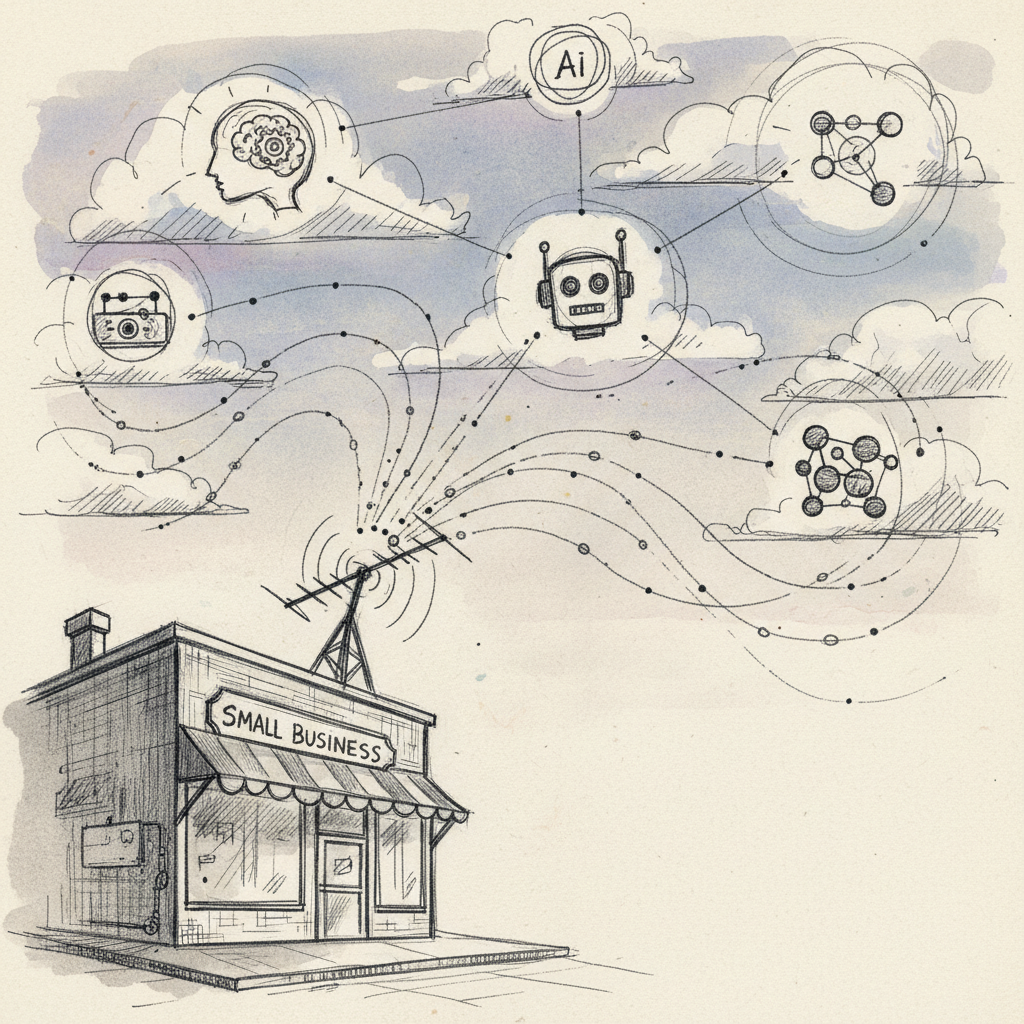
A multi-engine SEO strategy isn't a future consideration. It's the present-tense requirement for any business that wants to be found in 2026. Google remains important, but ChatGPT, Gemini, Claude, and Perplexity are now active discovery channels with real commercial intent behind their queries. Businesses that optimize for all of them build compounding visibility advantages that single-engine competitors simply can't match.
The practical challenge for most SMBs isn't understanding why this matters. It's finding the time and technical resources to execute it consistently. Daily content publishing, schema markup implementation, llms.txt configuration, citation building, and ongoing AI visibility tracking are each worthwhile on their own. Together, they require a level of sustained effort that most business owners can't maintain manually alongside everything else they're managing.
That's exactly the problem Moonrank is built to solve. For $99 per month, Moonrank handles daily automated content generation, technical AI optimization, and visibility tracking across ChatGPT, Gemini, Claude, and Perplexity, all on autopilot, with no manual input required after onboarding. It's the multi-engine SEO strategy your business needs, without the agency price tag or the learning curve. Visit www.moonrank.ai to start your free 3-day trial.
Recommended Articles
Explore more from our content library: