AI Training Data SEO: Get Found by ChatGPT in 2026
Master AI training data SEO to get recommended by ChatGPT, Gemini, Claude & Perplexity. Learn how SMBs can optimize for AI search in 2026. Discover essential...
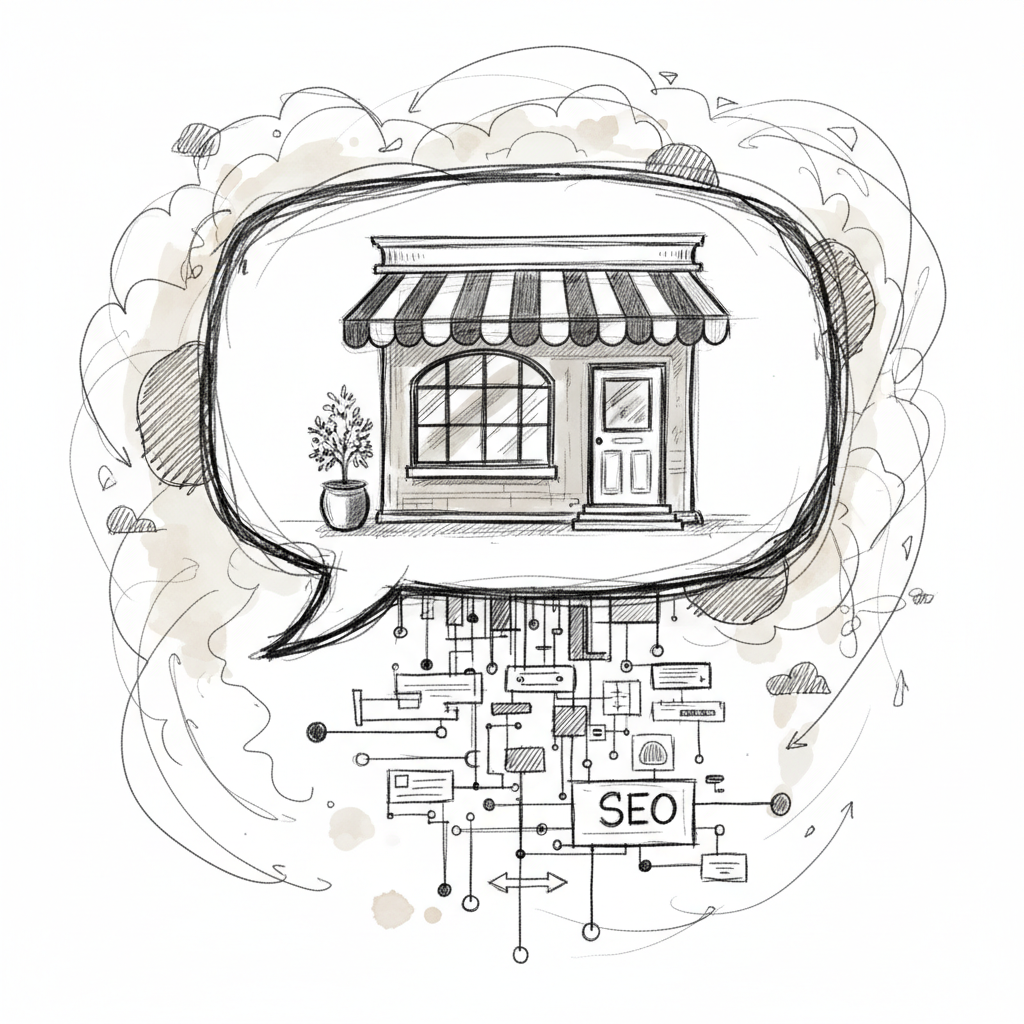
| Key Insight | Explanation |
|---|---|
| AI training data SEO is distinct from traditional SEO | It targets how AI models learn about your brand, not just how Google crawlers index your pages. |
| AI search is a present-tense distribution channel | As of 2026, engines like ChatGPT, Gemini, Claude, and Perplexity handle hundreds of millions of queries weekly. |
| Content quality and structure drive AI recommendations | AI engines favor authoritative, well-structured, entity-rich content when generating answers and recommendations. |
| Technical signals matter as much as content | Schema markup, llms.txt configuration, and structured data tell AI systems exactly what your business does. |
| Consistent, daily content creation compounds visibility | Brands that publish frequently give AI models more data points to associate with their niche and expertise. |
| Automation makes AI SEO accessible to SMBs | Tools like Moonrank handle daily content, technical optimization, and visibility tracking at $99/month — no agency needed. |
Your competitor just got recommended by ChatGPT. You didn't. That gap has a name: AI training data SEO. this method is the practice of ensuring your brand, content, and expertise are accurately represented in the datasets and signals that AI search engines use to generate answers and recommendations. It sits at the intersection of traditional SEO and the newer discipline of Generative Engine Optimization (GEO). Understanding it is no longer optional for any SMB that wants to grow in 2026.
This article explains exactly what this strategy is, how it works mechanically, why it matters more than ever, and what practical steps you can take today. You'll also find a breakdown of the most common mistakes businesses make and a set of actionable best practices grounded in real-world results.
What Is AI Training Data SEO?
this approach is the strategy of shaping how AI language models perceive, understand, and cite your brand by influencing the content and signals those models encounter during training and retrieval.
The Core Distinction from Traditional SEO
Traditional SEO optimizes for Google's crawler: keywords, backlinks, page speed, and domain authority. this operates on a different layer entirely. It asks a different question: does the AI model actually know your brand exists, and does it trust what it knows?
Large language models (LLMs) like the ones powering ChatGPT, Gemini, Claude, and Perplexity are trained on massive datasets scraped from the web. According to Common Crawl, the era of traditional SEO is rapidly evolving into "AIO" (AI Optimization), where businesses must ensure their content exists in the data AI models actually learn from [1]. If your brand isn't well-represented in those datasets, the model simply won't recommend you — regardless of your Google rankings.
There are two distinct mechanisms at play:
- Training data influence: Content that was included in the datasets used to train the model's base knowledge.
- Retrieval-augmented generation (RAG): Real-time web retrieval that AI engines like Perplexity use to pull fresh content when answering queries.
Both matter. Brands that appear in neither are invisible to AI search.
Why This Matters for SMBs Right Now
As of 2026, AI search engines handle a staggering volume of commercial queries. Perplexity alone reported over 100 million weekly queries by late 2024, and that number has grown sharply since. Research from IMD Business School notes that Generative Engine Optimization is actively challenging the $80 billion SEO industry as AI models rise as primary discovery channels [2].
For a restaurant owner, a Shopify store, or a solo B2B founder, this means customers are asking ChatGPT "what's the best [product/service] in [city]?" and getting an answer that may not include you. That's a customer you never knew you lost.
Pro Tip: Don't assume your Google rankings translate to AI search visibility. In practice, we've seen businesses with strong Google positions that are completely absent from ChatGPT and Gemini recommendations — because they haven't optimized for AI-specific signals at all.
How AI Training Data SEO Works
it works through a combination of content strategy, technical signals, and entity authority that collectively make your brand legible and trustworthy to AI models.
How AI Models Learn About Your Brand
When an LLM is trained, it ingests billions of web pages, articles, forum posts, and structured data. It learns associations: which brands are mentioned alongside which topics, which businesses are cited as authoritative sources, and which entities appear repeatedly in trustworthy contexts. According to Evertune, knowing what AI fundamentally knows about your brand is the critical starting point for any AI visibility strategy [3].
The process breaks down into three layers:
- Content indexability: Your content must be crawlable and readable by AI bots. This includes configuring llms.txt (a file that tells large language model crawlers which pages to prioritize) and ensuring your site doesn't block AI crawlers like GPTBot.
- Semantic entity recognition: AI models identify entities (your brand name, products, location, category) and build a knowledge graph around them. The more consistently and clearly your content defines these entities, the stronger your representation in the model's understanding.
- Citation and authority signals: When other credible sources mention your brand, AI models treat that as a trust signal. This is the AI-era equivalent of backlinks.
According to GrowthNatives, AI models trained on historical web data use labeled inputs and outputs to learn ranking associations — meaning the quality and structure of your content directly influences how the model weights your brand's relevance [4].
The Role of Retrieval-Augmented Generation (RAG)
Not all AI recommendations come from static training data. Engines like Perplexity and the browsing-enabled versions of ChatGPT use RAG, pulling real-time web content to supplement their answers. This means fresh, well-structured content published today can influence AI recommendations within days, not months.
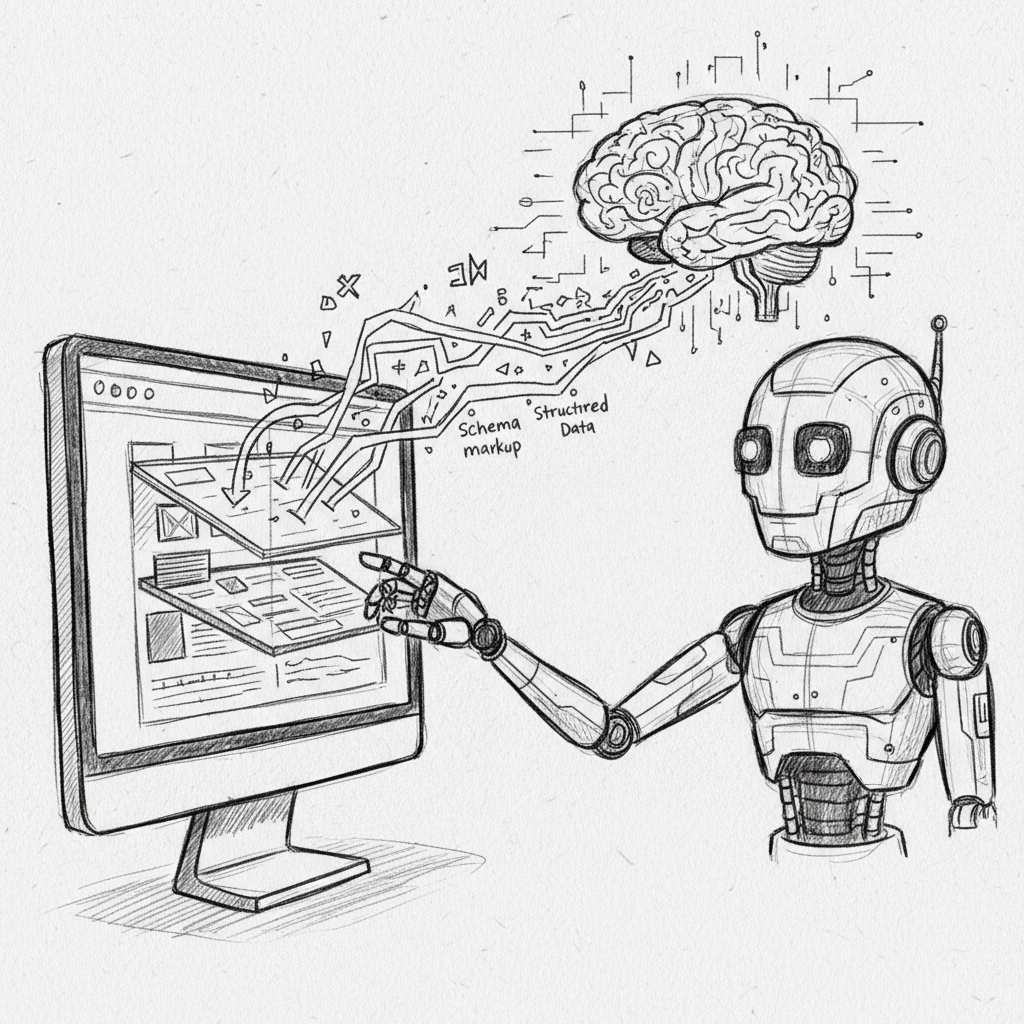
Technical SEO signals matter here too. RisingStack's analysis confirms that schema markup (structured data that tells AI engines exactly what your business does), proper heading hierarchies, and clean HTML structure all improve how AI systems parse and trust your content [5].
| Signal Type | Traditional SEO Impact | AI Training Data SEO Impact |
|---|---|---|
| Keyword optimization | High | Medium (semantic intent matters more) |
| Schema markup / structured data | Medium | Very High |
| Backlinks | Very High | Medium (citations from credible sources) |
| Content freshness / publishing frequency | Medium | High (especially for RAG-based engines) |
| Entity clarity (brand, location, category) | Low | Very High |
| llms.txt configuration | Not applicable | High |
Key Benefits of AI Training Data SEO in 2026
this method delivers compounding visibility gains across the AI search engines that are now handling a significant and growing share of commercial discovery queries.
Direct Business Benefits
The practical advantages are concrete and measurable:
- Brand recommendations in AI answers: When someone asks ChatGPT or Gemini for a recommendation in your category, your brand appears by name — not a competitor's.
- Reduced dependency on Google: Diversifying visibility across ChatGPT, Gemini, Claude, and Perplexity insulates your business from Google algorithm updates.
- Higher-intent traffic: Users who find you through AI recommendations have already received a personalized endorsement, making them more likely to convert.
- Compounding authority: Every piece of well-structured content you publish adds to the body of evidence AI models use to associate your brand with your niche.
- Competitive differentiation: Most SMBs haven't started optimizing for AI search yet. Early movers capture category authority before competitors do.
According to Salesforce's 2026 AI SEO guide, businesses that align their content strategy with AI search signals see measurable improvements in brand mention frequency across generative search outputs [6]. Industry analysts at Coursera's GEO certification program describe AI search optimization as "the most significant shift in digital discoverability since Google's Panda update" [7].
The Cost Efficiency Argument
Traditional SEO agencies typically charge $3,000 or more per month. For most SMBs, that's not a realistic ongoing expense. this strategy, done right with automation, delivers a broader set of visibility signals at a fraction of that cost.
At Moonrank, we've found that SMB owners who switch from agency retainers to an automated AI SEO approach start appearing in AI search recommendations within their first 30 days. The combination of daily content publishing, technical optimization, and visibility tracking across ChatGPT, Gemini, Claude, and Perplexity creates a compounding effect that agencies rarely deliver at any price point.
For businesses exploring the technical side of structured data and AI-readable content, resources like those at senejac.com offer useful context on how structured digital signals translate into real-world brand discoverability.
Pro Tip: Track your AI search visibility separately from your Google analytics. Use a tool that monitors how often your brand is cited in ChatGPT, Gemini, Claude, and Perplexity responses — because those numbers won't show up in your traditional SEO dashboard.
Common Challenges and Mistakes
The most common mistake businesses make with this approach is assuming their existing Google SEO strategy covers it — it doesn't.
Misconceptions That Cost Visibility
A common mistake is treating AI search optimization as a synonym for traditional keyword SEO. The two disciplines share some foundations, but their core mechanics differ significantly. Here are the pitfalls we see most often:
- Blocking AI crawlers unintentionally: Many businesses have robots.txt configurations that inadvertently block GPTBot and other AI crawlers. If AI engines can't read your content, they can't learn from it. RisingStack notes that you can explicitly allow or block GPTBot — but most businesses haven't made a conscious decision either way [5].
- Publishing thin, generic content: AI models are trained to recognize authoritative, specific, entity-rich content. Generic blog posts stuffed with keywords don't signal expertise to an LLM the way they once gamed Google's algorithm.
- Ignoring structured data: Schema markup (the structured data that tells AI engines exactly what your business does, who you serve, and where you operate) is one of the highest-impact technical signals for AI search visibility. Most SMBs have none of it implemented correctly.
- Inconsistent brand entity signals: If your business name, address, category, and description appear differently across your website, social profiles, and third-party directories, AI models get a confused picture of your brand. Consistency across all touchpoints is essential.
- Waiting for "enough" content before starting: One pitfall to watch for is the assumption that you need a large existing content library before AI training data SEO will work. In practice, starting with a small set of well-structured, entity-clear pages is more effective than waiting to build volume.
The "My Google Rankings Are Fine" Trap
A SaaS client recently faced exactly this situation: strong Google rankings, zero presence in ChatGPT or Perplexity recommendations. Their content was optimized for keyword density and backlinks — traditional signals that don't translate directly to AI model training data. Once they added schema markup, restructured their content around entity clarity, and began publishing consistently, their AI search visibility improved measurably within weeks.
According to AiCarma's training data SEO research, getting your brand into AI model weights requires a fundamentally different approach from ranking in Google's index — one focused on citation patterns, entity associations, and content that AI systems recognize as authoritative [8].
Best Practices for AI Training Data SEO in 2026
Effective this in 2026 combines consistent content publishing, precise technical configuration, and ongoing visibility monitoring across the major AI search engines.
A Practical Framework for SMBs
Our team at Moonrank recommends a four-layer approach:
- Establish entity clarity: Define your brand, category, location, and key offerings with absolute consistency across your website, Google Business Profile, and any third-party directories. AI models build knowledge graphs from these signals.
- Implement technical AI signals: Configure schema markup (LocalBusiness, Product, FAQ, and Article types are most impactful), set up an llms.txt file to guide AI crawlers, and verify that GPTBot and other AI crawlers are not blocked in your robots.txt.
- Publish authoritative content daily: AI search engines favor brands with a consistent, growing body of expert content. Each piece should be structured with clear headings, specific entities, and direct answers to questions your target customers ask. The American Marketing Association's AI SEO training emphasizes that content depth and topical authority are the primary drivers of AI recommendation frequency [9].
- Build citation authority: Get your brand mentioned in credible third-party sources: industry publications, review platforms, local directories, and partner sites. These citations function as trust signals for AI models, similar to how backlinks function for Google.
Monitoring and Iteration
You can't improve what you don't measure. AI search visibility tracking means actively querying ChatGPT, Gemini, Claude, and Perplexity with the questions your customers ask, and checking whether your brand appears in the answers. Manual tracking is time-consuming. Automated platforms that monitor this daily give you the feedback loop you need to iterate quickly.
- Set up weekly AI search visibility reports across all four major engines.
- Track which competitor brands appear in responses where yours doesn't.
- Identify the content gaps that explain those absences and fill them systematically.
- Monitor your schema markup implementation for errors using Google's Rich Results Test.
According to Neil Patel's analysis of AI SEO, businesses that combine technical optimization with consistent content publishing see 2-3x higher brand mention rates in AI-generated answers compared to those using content alone [10].
Pro Tip: Use the FAQ schema type on any page that answers common customer questions. AI engines like Perplexity and the browsing-enabled ChatGPT actively pull structured FAQ content when generating answers — it's one of the fastest ways to get cited in AI responses.
Sources & References
- Common Crawl, "From SEO to AIO: Why Your Content Needs to Exist in AI Training Data," 2024
- IMD Business School, "Generative Engine Optimization," 2025
- Evertune, "What Is AI Training Data and Why It Determines Whether Your Brand Gets Mentioned," 2025
- GrowthNatives, "AI Training Methods for SEO Optimization," 2025
- RisingStack, "AI SEO in Practice: Getting Your Content into Google and ChatGPT," 2025
- Salesforce, "AI for SEO: Your Guide for 2026," 2026
- Coursera, "AI SEO: Mastering Generative Engine Optimization (GEO)," 2025
- AiCarma, "Training Data SEO: How to Get Your Brand Into AI Model Weights," 2025
- American Marketing Association, "The Influence of AI on SEO," 2025
- Neil Patel, "AI SEO: How Artificial Intelligence Is Changing Search," 2025
Frequently Asked Questions
1. Is SEO dead or evolving in 2026?
SEO isn't dead — it's splitting into two disciplines. Traditional Google SEO still matters for organic search rankings, but it has emerged as a parallel and increasingly important practice for brands that want to appear in ChatGPT, Gemini, Claude, and Perplexity recommendations. As of 2026, businesses that treat these as separate strategies and invest in both are outperforming those that rely on Google SEO alone. The core skills of content quality, technical optimization, and authority building still apply — they just need to be adapted for how AI models learn and retrieve information.
2. What is the 10-20-70 rule for AI?
The 10-20-70 rule for AI describes how value is distributed across an AI implementation: roughly 10% comes from the algorithm itself, 20% from the data and technical infrastructure supporting it, and 70% from the organizational changes, human behavior, and culture required to actually use it effectively. For this method specifically, this means the technical setup (schema, llms.txt, crawlability) is just the starting point. The majority of the work — and the majority of the results — comes from building a consistent content publishing culture and organizational commitment to showing up in AI search consistently over time.
3. How long does it take to see results from AI training data SEO?
Results vary depending on your starting point, but businesses that implement technical AI signals (schema markup, llms.txt, entity clarity) alongside consistent content publishing typically see measurable improvements in AI search visibility within 30 to 60 days. RAG-based engines like Perplexity can surface new content within days of publication. Base model training updates happen less frequently, so influencing an LLM's core knowledge takes longer — typically several months of consistent presence across credible sources. Starting with technical fixes and daily content gives you the fastest path to early wins.
4. Does AI training data SEO replace traditional SEO?
No — and treating it as a replacement is one of the more costly misconceptions in 2026. Traditional SEO still drives significant Google traffic, and many of its foundational practices (content quality, site structure, page speed) support AI search visibility too. The smarter approach is to run both in parallel, using traditional SEO signals as a foundation while layering in AI-specific optimizations like schema markup, llms.txt, entity consistency, and citation building. Businesses that abandon Google SEO entirely in favor of AI search are taking an unnecessary risk given Google's still-substantial share of search volume.
5. What technical changes does AI training data SEO require?
The core technical requirements include: implementing schema markup (structured data that tells AI engines your business type, location, offerings, and reviews), configuring an llms.txt file to guide LLM crawlers to your most important pages, ensuring AI bots like GPTBot are not blocked in your robots.txt, maintaining consistent NAP (name, address, phone) data across all web properties, and using clean HTML with clear heading hierarchies that AI parsers can follow. Most SMBs haven't implemented any of these — which means doing so creates an immediate competitive advantage in AI search recommendations.
6. Can small businesses compete with large brands in AI search?
Yes — and this is one of the more encouraging aspects of this strategy. AI models don't rank purely by domain authority the way Google does. They surface brands that are clearly defined, topically authoritative, and consistently cited in relevant contexts. A well-structured local business or niche Shopify store that publishes specific, entity-rich content and maintains clean technical signals can appear in AI recommendations ahead of larger, less-optimized competitors. The key is starting now, before larger brands fully colonize the category in AI model training data.

Conclusion
this approach is the defining visibility challenge for SMBs in 2026. Your Google rankings don't automatically translate to ChatGPT recommendations. Your existing website doesn't guarantee Gemini knows what you do. The gap between businesses that show up in AI search and those that don't is widening — and it's being driven by specific, learnable, implementable signals: schema markup, entity clarity, daily content, and citation authority.

The good news is that this isn't out of reach for a solo founder or a local business owner. You don't need a $3,000/month agency. You need a system that publishes content daily, keeps your technical signals clean, and tracks your visibility across ChatGPT, Gemini, Claude, and Perplexity — consistently, automatically, without requiring your time.
That's exactly what Moonrank was built to do. At $99/month with a 3-day free trial, it's the autopilot solution for SMBs who want to compete in AI search without hiring an agency or learning schema markup by hand. Start building your AI search presence today at www.moonrank.ai.
Recommended Articles
Explore more from our content library: