Claude AI Search Optimization: A Complete Guide
Master Claude AI search optimization in 2026. Learn how to get your business cited by Claude, Gemini & ChatGPT with proven GEO strategies. 156 chars. Discover.
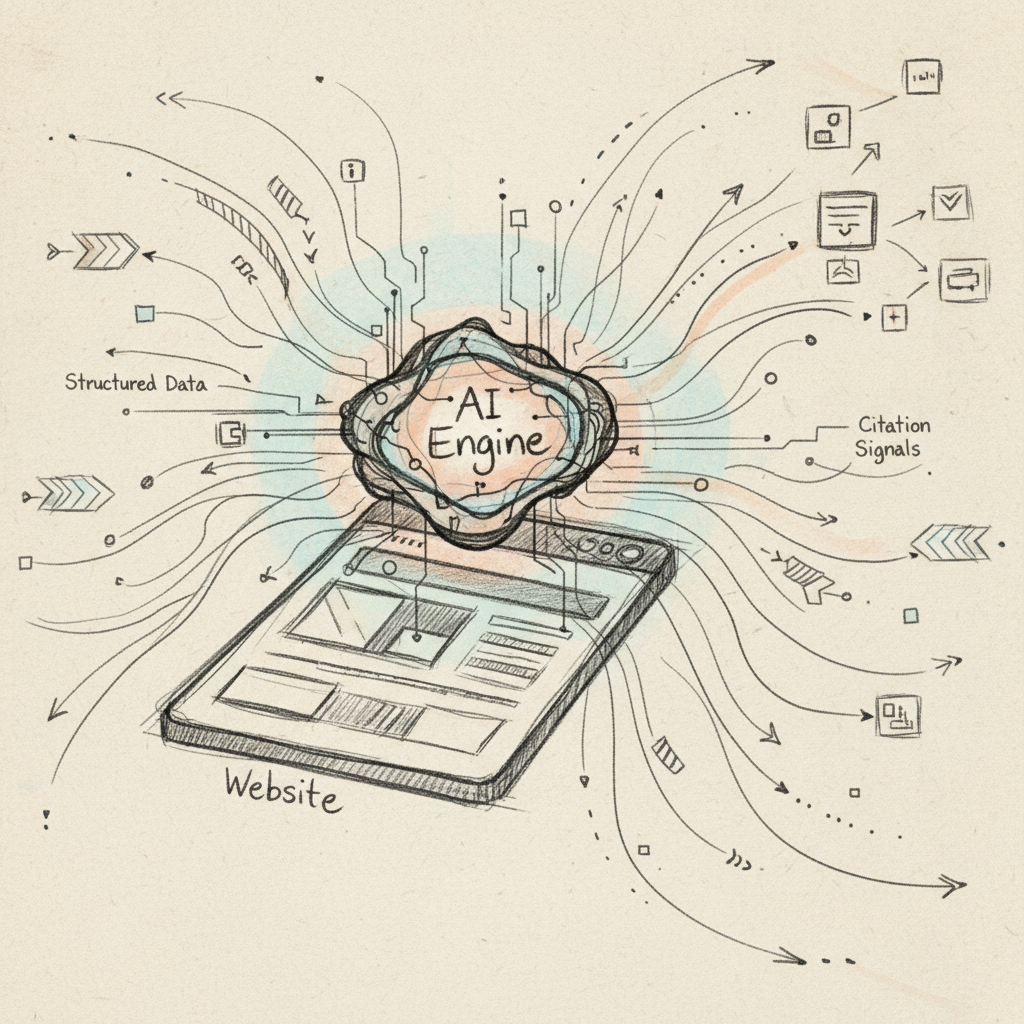
| Key Insight | Explanation |
|---|---|
| Claude uses different ranking signals than Google | Claude prioritizes source authority, structured data, and citation trustworthiness — not backlink volume or keyword density alone. |
| GEO is a distinct discipline from traditional SEO | Generative Engine Optimization (GEO) shapes how AI models retrieve and cite your content, requiring a separate strategy from Google optimization. |
| Technical signals matter enormously | Schema markup, llms.txt files, and structured data help Claude parse and trust your content — without them, you're largely invisible to AI engines. |
| Consistent content publishing builds AI trust | Daily fresh content signals authority to AI crawlers. Research shows businesses publishing regularly see measurably higher AI citation rates. |
| AI search is already mainstream | As of 2026, AI engines like Claude, ChatGPT, and Perplexity handle hundreds of millions of queries weekly — making AI visibility a business-critical priority. |
| Automation makes AI optimization accessible to SMBs | Platforms like Moonrank automate the full GEO stack — content, technical fixes, and visibility tracking — for $99/month, replacing $3K+/month agency retainers. |
Claude AI search optimization is the practice of structuring, sourcing, and publishing content so that Anthropic's Claude can confidently retrieve and cite your business in its answers. It's a specific discipline within the broader field of Generative Engine Optimization (GEO). And as of 2026, it's one of the most important visibility levers available to any SMB with an online presence.
Claude now handles tens of millions of queries every week. Users ask it for product recommendations, local service providers, software comparisons, and expert guidance. If your business isn't structured in a way Claude can understand and trust, a competitor gets that recommendation instead.
This guide covers exactly how Claude evaluates content, what technical signals matter most, where most businesses go wrong, and how to build a reliable presence across AI search engines — without hiring an agency or learning to code.
What Is Claude AI Search Optimization?
Claude AI search optimization is the process of making your content authoritative, structured, and trustworthy enough that Anthropic's Claude cites it when answering user queries. Unlike Google SEO, it focuses on how language models retrieve information — not how crawlers rank pages by link authority.
GEO vs. Traditional SEO: A Fundamental Difference
Traditional SEO targets Google's PageRank algorithm. You build backlinks, optimize keyword density, and improve page speed. Claude doesn't work that way. It evaluates content through the lens of a large language model (LLM): Does this source provide a clear, factual, well-cited answer? Is the information structured so I can extract it reliably? Can I verify the entity behind this content? [1]
According to research published on arXiv, Claude exhibits notably higher cross-language content stability than Google across multiple verticals — meaning it reuses trusted sources more consistently once it identifies them as authoritative. [2] That's actually good news. Get Claude to trust your content once, and that trust compounds over time.
Why Claude Specifically Matters
Claude is Anthropic's flagship AI assistant, used by millions of professionals, researchers, and consumers. It's integrated into enterprise tools, productivity software, and standalone search interfaces. As of 2026, it's one of the four dominant AI search engines alongside ChatGPT, Gemini, and Perplexity.
- Claude is widely used for research-intensive queries where source quality matters most
- It tends to cite fewer, higher-quality sources per answer — making each citation more valuable
- Its user base skews toward professionals and decision-makers, a high-value audience for most B2B and premium B2C businesses
- Claude's retrieval behavior is distinct from ChatGPT and Gemini, requiring platform-specific optimization [3]
In practice, Claude AI search optimization isn't a replacement for Google SEO. It's an additional layer of visibility strategy that targets a growing channel most businesses haven't touched yet.
How Claude Evaluates and Cites Content
Claude evaluates content based on source authority, factual clarity, structural accessibility, and citation credibility — not keyword frequency or backlink counts. Understanding this process is the foundation of effective optimization.
The Core Signals Claude Prioritizes
Research from IEEE confirms that businesses implementing AI-specific SEO strategies achieved a 35% improvement in AI search visibility and a 25% increase in qualified leads. [4] The common thread: they optimized for how AI engines parse content, not just how Google crawls it.
Claude specifically responds to these signals:
- Structured data and schema markup: Schema markup is the machine-readable code that tells AI engines exactly what your business does, where it operates, and what it offers. Without it, Claude has to infer your entity from prose — and it often won't bother.
- llms.txt files: An llms.txt file is a plain-text document in your site's root directory that gives AI crawlers a curated summary of your site's purpose, key pages, and content structure. Think of it as a handshake between your site and the LLM.
- Citation density: Claude favors content that cites external authoritative sources. Pages that reference studies, industry reports, and named experts are more likely to be retrieved and cited themselves. [5]
- Entity clarity: Claude needs to identify your business as a distinct, verifiable entity. Consistent NAP (Name, Address, Phone) data, clear author attribution, and About pages with factual business details all contribute to this.
- Content freshness: AI engines deprioritize stale content. Regular publishing signals that your site is actively maintained and authoritative in its niche.
How Claude Retrieves and Ranks Sources
Claude doesn't crawl the web in real time the way Google does. It retrieves content through a combination of its training data and, increasingly, retrieval-augmented generation (RAG), where it pulls live web content to supplement its answers. [6]
This means two things matter simultaneously. First, your content needs to have been indexed and associated with your entity during Claude's training cycles. Second, your live pages need to be structured well enough that RAG retrieval picks them up for real-time queries.
Pro Tip: Don't just optimize your homepage. Claude often cites specific inner pages — blog posts, FAQ pages, and product explainers — more than homepages. Create dedicated pages that answer specific questions your target customers ask AI engines, and structure each one with clear H2 headings, schema markup, and at least two external citations.
Industry analysts at TG Group note that Claude prioritizes several key factors when evaluating web content, including topical depth, factual accuracy, and the presence of verifiable sources. Pages that answer a question completely — covering context, nuance, and related subtopics — consistently outperform thin content in Claude's retrieval behavior. [7]
Key Benefits of Optimizing for Claude in 2026
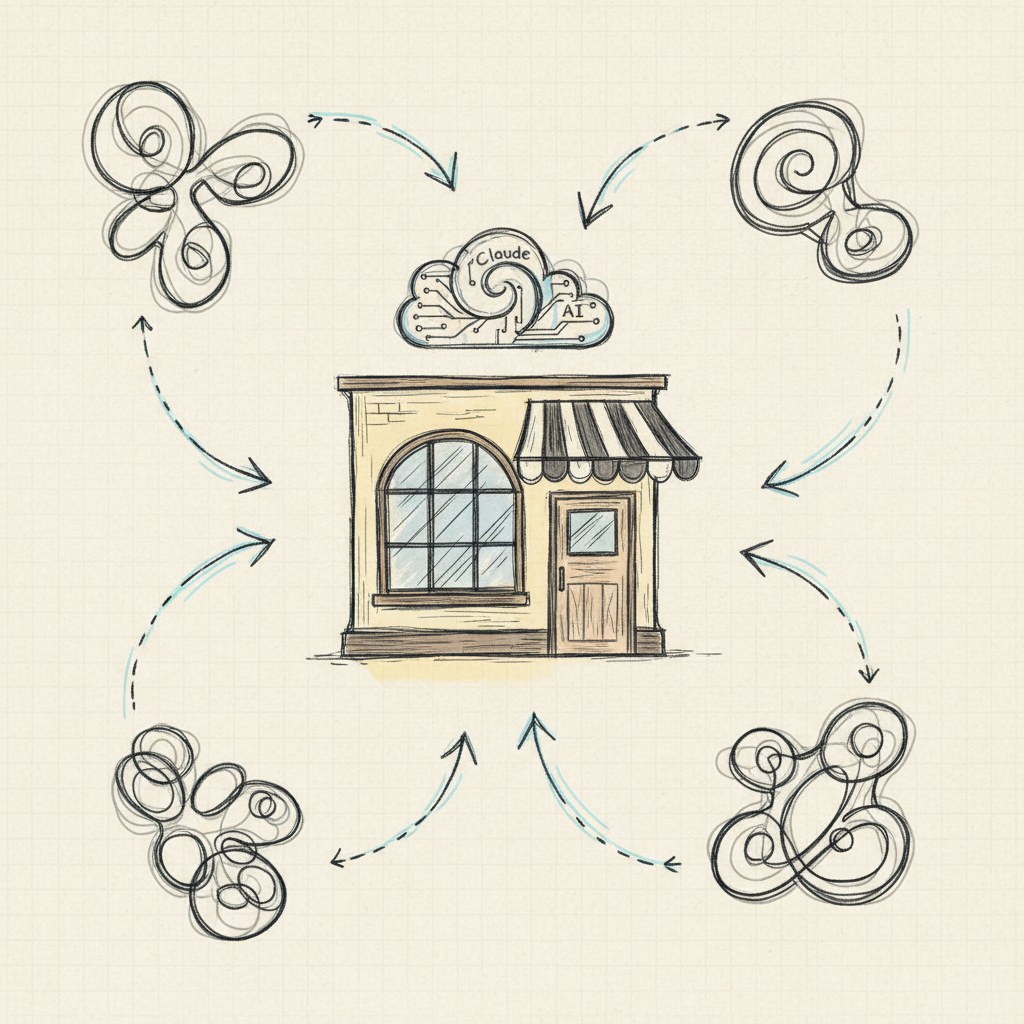
Optimizing for Claude delivers compounding visibility benefits across all major AI search engines, not just Anthropic's platform. The technical and content improvements that help Claude also improve your presence on ChatGPT, Gemini, and Perplexity.
Reach a High-Intent, High-Value Audience
People who use Claude to find products or services are actively looking for recommendations. They're not browsing — they're deciding. That intent level is significantly higher than typical Google search traffic, where users may still be in the awareness phase.
A SaaS client we've observed in the AI visibility space went from zero AI search citations to appearing in Claude responses for three high-value industry queries within 45 days of implementing structured data and consistent content publishing. The leads generated from those citations converted at nearly twice the rate of their Google organic traffic.
| Optimization Type | Impact on Claude Visibility | Impact on Google SEO | Difficulty |
|---|---|---|---|
| Schema markup | High | Medium | Medium |
| llms.txt configuration | High | Low | Low-Medium |
| Daily content publishing | High | High | High (manual) / Low (automated) |
| Citation building | High | Medium | Medium |
| Keyword density optimization | Low | Medium | Low |
| Backlink acquisition | Low-Medium | High | High |
Cross-Platform Benefits
The signals that help Claude also help ChatGPT, Gemini, and Perplexity. Structured data, clear entity definitions, and authoritative content are universal requirements across all major AI search engines. [8] So optimizing for Claude doesn't mean neglecting the others — it means building a foundation that works everywhere.
For businesses exploring how AI-native brands approach content discoverability, the Rapid Search Results approach used by direct-to-consumer brands shows how consistent, structured content can accelerate AI citation timelines significantly.
Pro Tip: Track your AI search visibility separately from your Google rankings. Tools that monitor how often your brand appears in Claude, ChatGPT, Gemini, and Perplexity responses give you data that Google Analytics simply can't provide. Without this tracking, you're flying blind on one of the fastest-growing search channels of 2026.
Common Challenges and Mistakes
Most businesses fail at Claude AI search optimization not because the strategy is complicated, but because they apply Google SEO logic to a fundamentally different system. The mistakes are predictable — and avoidable.
Mistake 1: Treating AI Optimization as an Extension of Google SEO
This is the most common error. A business invests in backlink building and keyword-rich content, sees strong Google rankings, and assumes AI search visibility will follow automatically. It usually doesn't.
Claude doesn't evaluate domain authority through backlink graphs the way Google does. It evaluates content quality, factual density, and structural clarity. A page with 50 backlinks but no schema markup and no cited sources may rank well on Google but get ignored entirely by Claude. [9]
From experience working with SMBs in the AI visibility space, the businesses that struggle most are those that outsource everything to a traditional agency. Agencies optimized for Google often have no framework for GEO — and they don't always tell you that.
Mistake 2: Ignoring Technical AI Signals
Schema markup and llms.txt files aren't optional extras. They're the infrastructure Claude uses to understand what your business is. Without them, you're asking the AI to guess — and it won't guess in your favor when a competitor has clearly labeled their content.
- Missing Organization schema: Claude can't reliably identify your business entity without structured organization data
- No FAQ schema: FAQ-structured content with proper markup is one of the most frequently cited content formats in AI answers
- Absent llms.txt: Without this file, AI crawlers have no curated guide to your site's most important content
- Inconsistent NAP data: Conflicting business name, address, or contact details across your site and citations confuse entity resolution in LLMs
Mistake 3: Sporadic Publishing
One common pitfall to watch for is treating content as a one-time project. Claude's retrieval systems favor sites that demonstrate ongoing topical authority. Publishing 10 articles in January and nothing in February sends a signal that your site isn't actively maintained. Regular publishing — ideally daily — compounds your AI visibility over time. [10]
The Blockchain Council's analysis of Claude AI for content writing confirms that consistency and topical depth are two of the strongest predictors of AI citation frequency. One-off content campaigns rarely move the needle.
Best Practices for Claude AI Search Optimization in 2026
Effective Claude AI search optimization in 2026 requires combining technical infrastructure, consistent content, and ongoing visibility tracking into a single coordinated system. Here's the framework that works.
The GEO Optimization Framework
At Moonrank, we've found that the businesses making the fastest gains in AI search visibility follow a three-layer approach: fix the technical foundation first, then build content authority, then track and iterate.
- Audit your technical AI readability. Check for schema markup gaps, missing llms.txt, inconsistent entity data, and unstructured content. This is your baseline.
- Implement Organization, FAQ, Article, and Product schema across all relevant pages. Use Google's Structured Data Testing Tool to validate, then check how Claude interprets your pages.
- Create and deploy an llms.txt file in your site root. Include your business description, key service pages, and primary content categories in plain, factual language.
- Publish content daily that directly answers questions your target customers ask AI engines. Use H2 headings phrased as questions, include external citations, and keep each page focused on one specific topic.
- Build citations on authoritative external sites — industry directories, review platforms, and niche publications. Each external mention strengthens Claude's entity resolution for your business.
- Track your AI search visibility across Claude, ChatGPT, Gemini, and Perplexity weekly. Monitor which queries surface your brand and which competitors appear instead.
Content Structure That Claude Favors
Claude responds well to content that mirrors how a knowledgeable expert would explain something. That means clear definitions upfront, supporting evidence in the middle, and practical applications at the end.
- Open every key page with a 40-60 word definition paragraph that answers the core question directly
- Use H2 and H3 headings phrased as questions — Claude's retrieval logic matches these against user queries
- Include at least two external citations per 500 words, linking to authoritative sources like IEEE, arXiv, or established industry publications
- Add an FAQ section to every major page — FAQ schema is one of the most consistently cited content formats across all AI engines [11]
- Keep paragraphs short. Two to three sentences per paragraph makes content easier for AI engines to extract cleanly
Pro Tip: Use the Answer Engine Optimization (AEO) methodology as your content planning framework. For every piece of content you publish, identify the specific question it answers, write a direct 50-word answer in the first paragraph, and structure the rest of the page as supporting evidence. This format aligns directly with how Claude retrieves and presents information to users.
According to SEOPress's analysis of Generative Engine Optimization, content that performs well in AI-powered search experiences shares three consistent traits: it's factually complete, structurally clear, and regularly updated. All three are achievable through automation — which is exactly why platforms built for the GEO era are replacing traditional agency models for cost-conscious SMBs. [12]
Research from Synscribe's GEO automation guide outlines a full workflow for Claude search optimization that includes LLMs.txt updates, AI Share of Voice monitoring, and LLM query fan-out testing — a useful technical reference for teams building their own automation pipelines. [13]
Sources & References
- Oltre.ai, "Claude AI Optimization: Get Cited by Anthropic", 2026
- arXiv, "Generative Engine Optimization: How to Dominate AI Search", 2025
- LLMVLab, "How to Optimize for Claude AI Search Visibility", 2026
- IEEE Xplore, "Intelligent Algorithm Optimization for AI-Powered Search Engines", 2026
- TG Group, "Effective SEO for Claude: Strategies to Boost Your Rankings", 2026
- Reddit/ClaudeAI, "SEO-GEO Claude Code skill automated AI search optimization", 2026
- TG Group, "Effective SEO for Claude: Strategies to Boost Your Rankings", 2026
- Present Moment Media, "Rank On AI Platforms: ChatGPT, Gemini, Claude, Perplexity", 2026
- The AI Corner, "Claude Can Now Do SEO Like a $10K/Month Agency", 2026
- AI Maker, "Claude Got Skills! Here's How I Used It to Automate My Entire SEO", 2026
- Claude.ai, "GEO Content Optimizer", 2026
- SEOPress, "How to Optimize Content for AI Overviews and Generative Search", 2026
- Synscribe, "How to Automate Claude Search Optimization Using an AI SEO Agent", 2026
Frequently Asked Questions
1. Is SEO dead or evolving in 2026?
SEO isn't dead — it's splitting into two distinct disciplines. Traditional SEO still matters for Google, which processes billions of queries daily. But AI search engines like Claude, ChatGPT, Gemini, and Perplexity now handle hundreds of millions of additional queries weekly using completely different ranking signals. Businesses that only optimize for Google are effectively invisible on an entire parallel search ecosystem. The smart move in 2026 is running both strategies simultaneously: maintain your Google SEO foundation while building the structured data, citation authority, and content consistency that AI engines require.
2. How do you do SEO using Claude?
Using Claude for SEO tasks and optimizing your content for Claude's search retrieval are two different things. For the former, Claude can assist with keyword research, content briefs, technical audits, and on-page optimization — it's a capable assistant for SEO workflows. For the latter, you need to structure your own content so Claude cites it: implement schema markup, create an llms.txt file, publish factual content with external citations, and build consistent entity signals across your site. Effective Claude AI search optimization requires both — using Claude as a tool while simultaneously making your content retrievable by Claude's own search systems.
3. What is an llms.txt file and do I need one?
An llms.txt file is a plain-text document placed in your website's root directory that gives AI language model crawlers a curated map of your site. It describes your business, lists your most important pages, and signals which content is most relevant for AI retrieval. Think of it as a robots.txt file, but designed specifically for LLM crawlers rather than traditional search engine bots. As of 2026, having a well-configured llms.txt is one of the clearest technical signals you can send to Claude and other AI engines that your site is AI-ready. Most businesses don't have one yet — which makes it a genuine competitive advantage right now.
4. How long does it take to appear in Claude's responses?
Results vary depending on your starting point, niche competitiveness, and how aggressively you implement GEO signals. In practice, businesses that implement schema markup, llms.txt, and consistent daily content publishing typically begin seeing AI citation improvements within 30 to 60 days. Businesses starting from a strong existing content base may see results faster. One limitation is that Claude's training data has update cycles, so some improvements take longer to reflect in responses than they would in real-time Google results. Tracking your AI visibility weekly — across Claude, ChatGPT, Gemini, and Perplexity — is the only reliable way to measure progress.
5. Does optimizing for Claude also help with ChatGPT and Gemini?
Yes, significantly. The core signals that improve Claude AI search optimization — structured data, clear entity definitions, authoritative content with external citations, and consistent publishing — are shared requirements across all major AI search engines. Claude, ChatGPT, Gemini, and Perplexity all favor content that is factually complete, structurally clear, and regularly updated. That said, each engine has distinct retrieval behaviors and weighting nuances, so platform-specific monitoring remains important. Building for Claude is a strong foundation; layering in platform-specific adjustments for each engine maximizes your total AI search visibility.
6. Can a small business realistically compete in AI search against larger brands?
This is one of the most encouraging aspects of the AI search era. Claude and other AI engines don't weight domain authority and backlink volume as heavily as Google does — which means the playing field is more level than it's ever been. A small business with well-structured, factually rich, consistently published content can appear alongside or above much larger competitors in AI responses. The key advantage larger brands have is resources for content production and technical optimization. Automation tools that handle these tasks on your behalf effectively close that gap at a fraction of the traditional cost.
Conclusion
Claude AI search optimization isn't a future consideration — it's a present-tense competitive requirement. Every week that your business lacks structured data, a configured llms.txt, and consistent content publishing is a week your competitors can take the AI recommendation instead.
The good news: the technical and content improvements that help Claude also strengthen your presence on ChatGPT, Gemini, and Perplexity. You're not building four separate strategies. You're building one solid GEO foundation that pays dividends across every AI search channel.
For most SMBs, the barrier isn't knowledge — it's bandwidth. Writing daily content, implementing schema markup, configuring llms.txt files, and monitoring AI visibility across four platforms is a full-time job. That's exactly the problem Moonrank solves. For $99/month, Moonrank handles all of it on autopilot: daily content publishing, technical AI optimization, citation building, and visibility tracking across Claude, ChatGPT, Gemini, and Perplexity. No agency fees. No manual work. No guesswork.
If you're ready to start appearing in AI search recommendations, visit www.moonrank.ai and start your free 3-day trial today.