Complete Guide to Automated SEO Monitoring in 2026
Master automated SEO monitoring in 2026. Learn to track rankings, audit technical issues, and optimize for AI search engines with proven tools and strategies.

| Key Insight | Explanation |
|---|---|
| AI-First Monitoring | Track visibility across ChatGPT, Claude, and Perplexity alongside traditional search engines |
| 24/7 Automation | Continuous monitoring catches ranking drops and technical issues within hours |
| Cost Efficiency | Automated tools cost $99-299/month vs $3,000+ for agency monitoring services |
| Technical Depth | Monitor schema markup, Core Web Vitals, and structured data automatically |
| Competitive Intelligence | Track competitor movements and identify content gaps through automated analysis |
| Scalable Tracking | Monitor thousands of keywords and pages without manual intervention |
What You'll Need: automated SEO monitoring
Setting up effective automated SEO monitoring requires specific tools, access permissions, and strategic planning to ensure comprehensive coverage of your digital presence. The foundation starts with selecting monitoring platforms that align with your business size, technical requirements, and budget constraints.Essential Tools and Platforms
Your automated monitoring stack should include several key components working together seamlessly. Primary monitoring platforms like Nightwatch offer comprehensive rank tracking and AI visibility monitoring, while specialized tools handle specific aspects like technical auditing and content analysis. Essential platform requirements include:- Multi-search engine tracking (Google, Bing, DuckDuckGo, AI platforms)
- Technical SEO auditing capabilities with automated issue detection
- Competitor monitoring and analysis features
- Custom reporting and alert configuration options
- API access for integration with existing business systems
- White-label reporting for client or stakeholder presentations
Access and Permissions Setup
Before implementing automated monitoring, establish proper access to all necessary platforms and data sources. This includes Google Search Console verification, Google Analytics 4 configuration, and any relevant social media or advertising platform connections. Critical access requirements encompass:- Google Search Console admin or verified user status
- Google Analytics 4 edit permissions for goal and event tracking
- Website backend access for implementing tracking codes and schema markup
- DNS management access for domain verification processes
- Content management system permissions for automated content optimization
Pro Tip: Document all access credentials and verification codes in a secure password manager. Automated monitoring systems often require periodic re-authentication, and having organized access information prevents monitoring interruptions.
Step 1: Configure Your Monitoring Setup
Configure your automated SEO monitoring by establishing baseline metrics, defining tracking parameters, and integrating multiple data sources into a unified monitoring dashboard. This foundational step determines the accuracy and comprehensiveness of all future monitoring activities.Baseline Metric Establishment
Begin configuration by documenting current performance metrics across all relevant channels and search engines. This baseline serves as the reference point for measuring improvement and identifying significant changes in your search visibility.- Export current ranking data for your target keywords from Google Search Console
- Document existing traffic patterns, click-through rates, and conversion metrics
- Catalog technical SEO status including page speed scores, mobile usability, and Core Web Vitals
- Record competitor positions for shared keywords and content topics
- Establish AI search visibility benchmarks across ChatGPT, Claude, and Perplexity
Integration and Data Source Configuration
Modern automated SEO monitoring requires seamless integration between multiple platforms and data sources. Configure your monitoring system to pull data from search engines, analytics platforms, and AI search tools simultaneously. Essential integration points include:- Google Search Console API for ranking and impression data
- Google Analytics 4 for traffic and conversion tracking
- PageSpeed Insights API for technical performance monitoring
- Social media APIs for content performance across platforms
- AI search engine monitoring tools for visibility tracking
- Competitor analysis platforms for market intelligence
Pro Tip: Set up monitoring for both branded and non-branded keywords. Many businesses focus solely on product terms while missing valuable brand mention opportunities that automated monitoring can identify.
Step 2: Implement Comprehensive Tracking
Implement multi-layered tracking systems that monitor rankings, technical health, content performance, and user engagement signals across traditional and AI search platforms. This comprehensive approach ensures no critical changes escape detection.Ranking and Visibility Tracking
Deploy automated ranking surveillance across multiple search engines and geographic locations to capture the full scope of your search visibility. Modern tracking systems monitor thousands of keywords daily while providing granular insights into ranking fluctuations and their potential causes.- Configure daily ranking checks for primary and long-tail keywords
- Set up location-based tracking for local and international markets
- Implement device-specific monitoring (desktop, mobile, tablet)
- Enable SERP feature tracking (featured snippets, knowledge panels, local packs)
- Activate AI search visibility monitoring for ChatGPT and Claude recommendations
Technical Health Monitoring
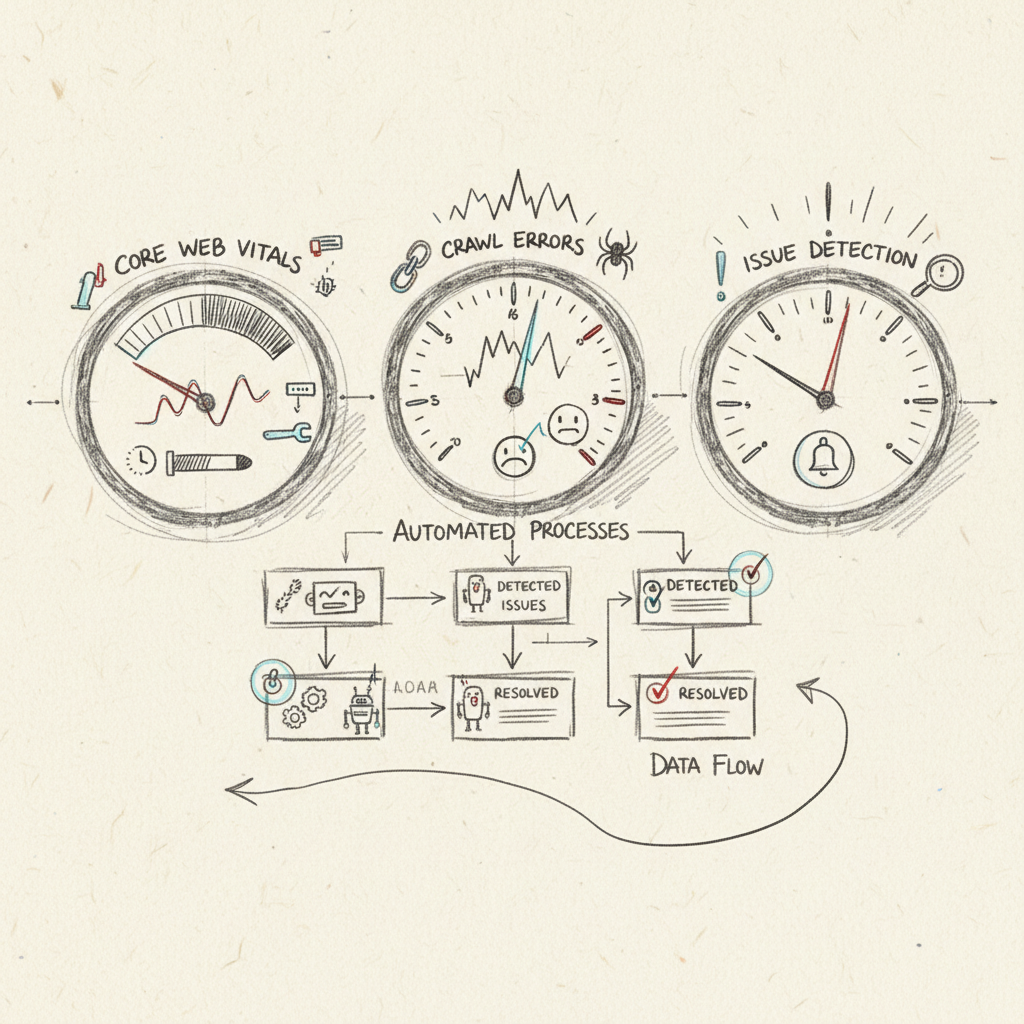
Automated technical monitoring continuously scans your website for issues that impact search performance, from broken links and slow loading times to schema markup errors and mobile usability problems.| Monitoring Category | Key Metrics | Alert Thresholds |
|---|---|---|
| Page Speed | Core Web Vitals, LCP, FID, CLS | >2.5s LCP, >100ms FID |
| Crawl Health | 404 errors, redirect chains, crawl errors | >5% error rate increase |
| Schema Markup | Structured data validation, rich snippets | Any validation errors |
| Mobile Usability | Responsive design, touch targets | Mobile usability issues |
| Security | HTTPS implementation, security headers | Mixed content warnings |
Step 3: Automate Reporting and Alerts
Automate comprehensive reporting systems that deliver actionable insights through customized dashboards, scheduled reports, and intelligent alert mechanisms. This automation ensures stakeholders receive relevant information without manual data compilation.Intelligent Alert Configuration
Configure smart alert systems that distinguish between normal ranking fluctuations and significant changes requiring immediate attention. Modern automated monitoring platforms use machine learning algorithms to reduce false positives while ensuring critical issues trigger appropriate notifications. Effective alert configuration includes:- Ranking drop alerts for keywords losing more than 5 positions within 24 hours
- Traffic decline notifications when organic sessions decrease by more than 20%
- Technical issue alerts for new crawl errors or Core Web Vitals degradation
- Competitor movement alerts when rivals gain significant ranking improvements
- AI search visibility alerts when brand mentions decrease in AI platforms
- Content performance alerts for pages experiencing engagement declines
Custom Dashboard Development
Design automated dashboards that present key performance indicators in digestible formats for different stakeholder groups. Executive dashboards focus on high-level metrics and ROI indicators, while technical teams require detailed diagnostic information and trend analysis. According to automated SEO tool analysis, businesses using customized reporting see 45% improvement in response time to critical SEO issues compared to those relying on standard reporting templates. Dashboard components should include:- Real-time ranking positions for priority keywords across search engines
- Traffic trend analysis with month-over-month and year-over-year comparisons
- Technical health scores with automated issue prioritization
- Competitor performance benchmarking and market share analysis
- AI search visibility metrics and recommendation tracking
- Content performance indicators including engagement and conversion data
Pro Tip: Set up escalation protocols for critical alerts. Configure your system to send immediate notifications for severe ranking drops while batching minor issues into daily or weekly summary reports to avoid alert fatigue.
Step 4: Optimize for AI Search Engines
Optimize your automated SEO monitoring to track and improve visibility across AI search platforms like ChatGPT, Claude, Perplexity, and emerging generative search engines. This emerging aspect of SEO monitoring requires specialized tools and strategies distinct from traditional search optimization.AI Search Platform Integration
Implement monitoring systems specifically designed to track how AI search engines discover, process, and recommend your content. Unlike traditional search engines, AI platforms consider factors like content authority, citation quality, and semantic relevance when generating responses. Key AI monitoring components include:- Brand mention frequency across AI platform responses
- Citation accuracy and context in AI-generated content
- Recommendation positioning when users ask industry-related questions
- Content snippet extraction and attribution tracking
- Competitive analysis of AI search visibility
- Schema markup optimization for AI understanding
Structured Data Optimization
Configure automated monitoring for structured data implementation and validation, ensuring AI search engines can properly interpret and utilize your content. This includes monitoring schema markup, implementing llms.txt files, and optimizing content for AI extraction.- Implement comprehensive schema markup across all content types
- Create and maintain llms.txt files for AI search engine guidance
- Optimize content structure for AI comprehension and extraction
- Monitor citation accuracy across AI platform responses
- Track brand mention sentiment and context in AI-generated content
Step 5: Scale Your Monitoring Operations
Scale your automated SEO monitoring infrastructure to handle growing keyword portfolios, expanding content libraries, and increasing competitive intelligence requirements. This scalability ensures monitoring effectiveness doesn't diminish as your business grows.Enterprise-Level Automation
Implement enterprise-grade monitoring systems capable of tracking thousands of keywords, multiple domains, and complex competitive landscapes without performance degradation. Advanced automation includes workflow integration, API-based data sharing, and custom reporting for diverse stakeholder groups. Scalability features include:- Multi-domain monitoring with centralized reporting and management
- Keyword portfolio expansion with automated relevance scoring
- International market monitoring across multiple languages and regions
- Integration with business intelligence platforms and data warehouses
- Custom API development for specialized monitoring requirements
- White-label reporting for client or partner distribution
Workflow Integration and Automation
Connect your SEO monitoring system with existing business workflows, content management systems, and marketing automation platforms. This integration enables automated responses to monitoring insights and streamlines optimization processes. Integration possibilities encompass content management system connections for automated optimization suggestions, customer relationship management integration for lead attribution tracking, and marketing automation platform connections for campaign performance correlation.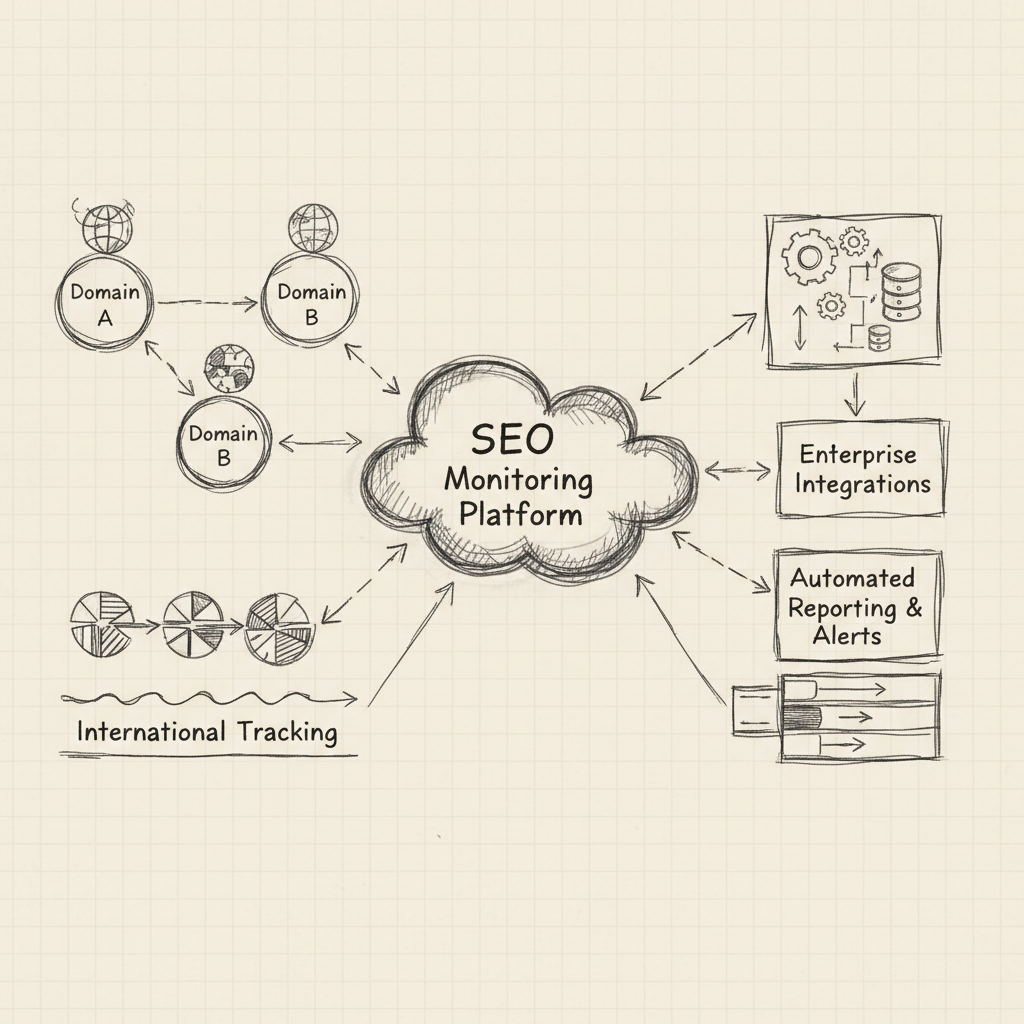
Common Mistakes to Avoid
Avoid critical pitfalls that can undermine the effectiveness of your automated SEO monitoring system and lead to missed opportunities or delayed responses to important changes. Understanding these common mistakes helps ensure your monitoring infrastructure delivers reliable, actionable insights.Over-Monitoring and Alert Fatigue
One frequent mistake involves configuring excessive alerts that overwhelm stakeholders with notifications, leading to important alerts being ignored or dismissed. Effective monitoring balances comprehensive coverage with manageable alert volumes. Common over-monitoring symptoms include:- Daily alerts for minor ranking fluctuations within normal ranges
- Separate notifications for related issues that should be grouped
- Alerts for metrics that don't directly impact business objectives
- Duplicate notifications across multiple platforms and channels
- Alerts without clear action items or resolution pathways
Incomplete Baseline Documentation
Failing to establish comprehensive baselines before implementing automated monitoring creates challenges in identifying significant changes and measuring improvement over time. Proper baseline documentation includes historical performance data, competitive positioning, and technical health metrics.Neglecting AI Search Optimization
Many businesses continue focusing exclusively on traditional search engines while ignoring the growing importance of AI search platforms. This oversight becomes increasingly costly as more users rely on AI assistants for information discovery and brand recommendations.Pro Tip: Regularly audit your alert configurations and monitoring scope. What seemed important during initial setup may become less relevant as your business evolves, while new monitoring needs emerge that weren't initially apparent.
Integration and Data Silos
Implementing monitoring tools that don't integrate with existing business systems creates data silos that limit the value of automated insights. Effective monitoring requires seamless data flow between SEO tools, analytics platforms, and business intelligence systems. Integration challenges often include incompatible data formats, limited API access, manual data transfer requirements, and inconsistent reporting schedules across different platforms.Sources & References
- Gitnux, "Top 10 Best Automated SEO Software of 2026", 2026
- Founder Toolkit, "Compound Your Traffic with Automated SEO", 2026
- UCR Library, "AI Solutions for Automated Website Health Monitoring and SEO Fixes", 2026
- Hype Studio, "Automate SEO Tasks with n8n: The Ultimate Workflow Guide", 2026
- SEO Clarity, "8 Best SEO Monitoring Tools to Track Page Changes in 2026", 2026
- Nightwatch, "Best SEO Automation Tools in 2026", 2026
- Siteimprove, "Unlocking the Power of SEO Automation and Optimization", 2026
- Eesel AI, "I Tested the 6 Best Automated SEO Tools", 2026
Frequently Asked Questions
1. Is SEO dead or evolving in 2026?
Understanding automated SEO monitoring is essential. SEO is rapidly evolving, not dying, with AI search engines fundamentally changing how content gets discovered and recommended. Traditional ranking factors remain important, but businesses must now optimize for AI platforms like ChatGPT and Claude alongside Google. The shift toward automated monitoring helps businesses adapt to these changes while maintaining visibility across all search channels.
2. Can ChatGPT do an SEO audit?
ChatGPT can assist with SEO audits by analyzing exported data and identifying patterns, but it cannot directly crawl websites or access live performance metrics. Automated SEO monitoring tools provide comprehensive auditing capabilities that ChatGPT cannot match, including real-time crawling, technical issue detection, and continuous performance tracking. The most effective approach combines automated tools for data collection with AI analysis for insights.
3. How much does automated SEO monitoring cost compared to manual tracking?
Automated SEO monitoring typically costs $99-299 per month for comprehensive platforms, while manual tracking through agencies ranges from $3,000-10,000 monthly. The automation provides 24/7 monitoring, faster issue detection, and more comprehensive data collection than manual methods. Most businesses see positive ROI within 2-3 months through improved response times and reduced labor costs.
4. What's the difference between traditional SEO monitoring and AI search optimization?
Traditional SEO monitoring focuses on search engine rankings, traffic, and technical health, while AI search optimization tracks brand mentions, citation accuracy, and recommendation frequency across AI platforms. AI monitoring requires different metrics like content authority signals, structured data validation, and semantic relevance scoring. Modern automated systems should monitor both traditional and AI search channels for comprehensive visibility.
5. How quickly can automated monitoring detect ranking changes?
Quality automated monitoring platforms detect ranking changes within 24 hours, with some premium services offering hourly updates for critical keywords. This rapid detection enables faster response to algorithm changes, competitor actions, or technical issues. Manual monitoring typically identifies changes 3-7 days after they occur, making automated systems essential for competitive markets.
6. Can automated monitoring replace an SEO specialist?
Automated monitoring handles data collection, analysis, and reporting but cannot replace strategic thinking, content creation, or complex optimization decisions that require human expertise. The technology excels at identifying opportunities and issues, while specialists focus on strategy development and implementation. The most effective approach combines automated monitoring with expert interpretation and action planning.
7. What technical requirements are needed for automated SEO monitoring?
Basic requirements include Google Search Console access, Google Analytics 4 implementation, and website administration permissions for installing tracking codes. Advanced monitoring may require API access, custom integration capabilities, and data warehouse connections. Most modern platforms offer simple setup processes that don't require extensive technical knowledge, while specialized consulting services can assist with complex enterprise implementations.

Recommended Articles
Explore more from our content library: