Source Attribution AI Search Ranks Business Content
Source attribution in AI search is the process by which AI platforms like ChatGPT, Perplexity, Gemini, and Claude identify and credit the specific... Discover.
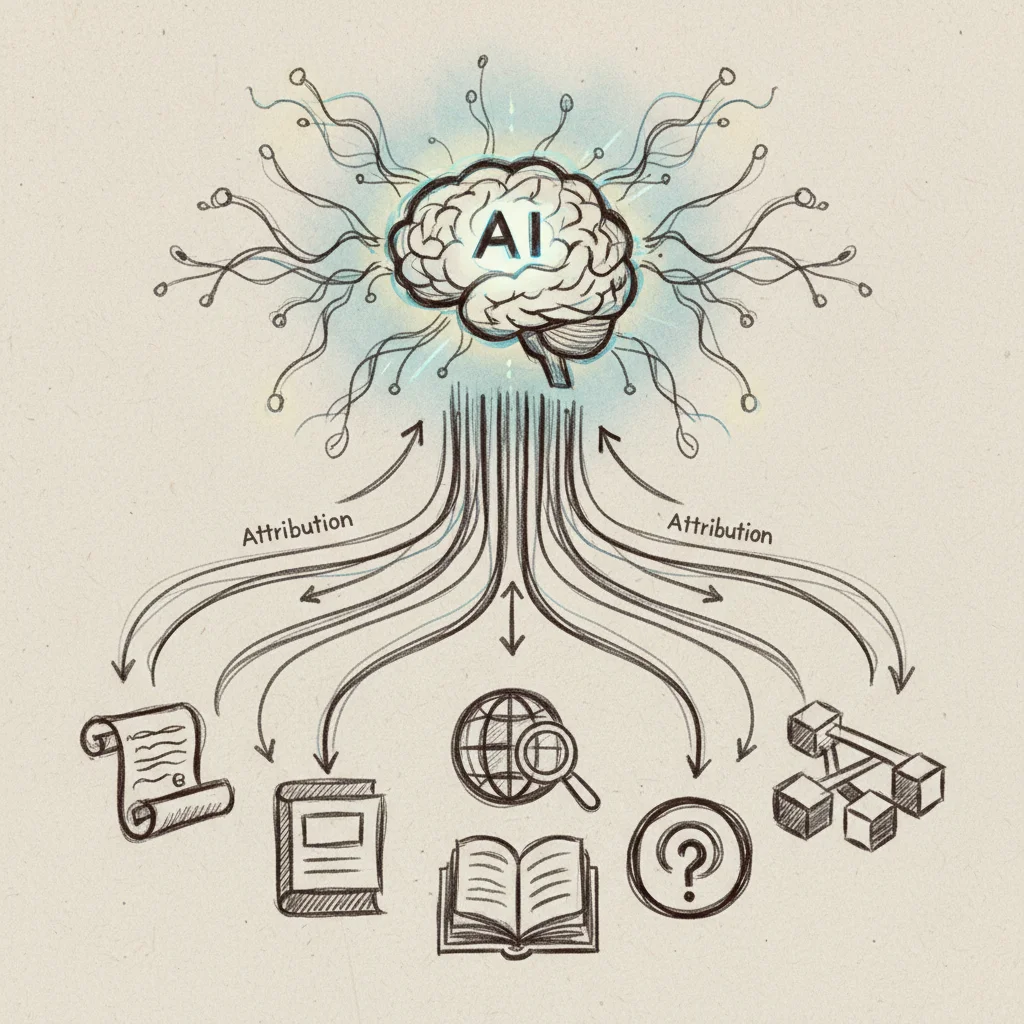
Understanding source attribution AI search is essential. Source attribution in AI search is the process by which AI platforms like ChatGPT, Perplexity, Gemini, and Claude identify and credit the specific websites or content pieces they draw on when generating a response. Unlike traditional search rankings, where a click depends on a blue link, AI attribution determines whether your brand gets named, or ignored, inside the answer itself. For content creators and businesses, being cited as a source directly drives brand visibility, referral traffic, and credibility in an era where AI answers are replacing the first page of Google.
What Is Source Attribution in AI Search and Why Does It Matter for Content Creators?: source attribution AI search
Source attribution in AI search is the mechanism AI platforms use to identify, credit, and surface specific content when building a generated response, not rank a URL on a results page. This is particularly relevant for source attribution AI search.
When ChatGPT, Perplexity, or Gemini answers a question, it pulls from specific web content and either names that source explicitly or draws on it silently. That selection process, source attribution, determines whether your brand appears inside the answer or gets left out entirely.
Attribution takes two distinct forms. Platforms like Perplexity and Bing Copilot show inline citations: clickable links that appear directly alongside the answer text. ChatGPT without browsing mode uses implicit sourcing, the model draws on content it was trained or retrieval-tuned on, but no visible link appears. Both forms influence brand visibility, but only the first produces a trackable referral click.
Why Source Attribution Is Becoming More Important Than Traditional Search Rankings
A page-one Google ranking places your URL below the answer. A cited source gets named inside the answer, which drives brand recall even when the user never clicks through. That difference in placement is significant for any business competing on awareness.
As AI-generated answers replace traditional search results for informational queries, content that isn't structured for attribution risks becoming invisible regardless of its Google ranking [3]. A high-ranking page that AI models can't parse or trust simply won't be cited.
The Measurable Business Impact of Being Cited by AI
Brands cited by AI tools report referral traffic spikes and increased branded search volume, even as organic click-through rates from traditional SERPs decline [2]. The citation itself functions as a brand mention at the moment of highest buyer intent.
A 2025 analysis of AI citation patterns found that three domains, YouTube (23.3%), Wikipedia (18.4%), and Google.com (16.4%), dominate citations across most industries [3]. That concentration means the opportunity for niche brands is real: within a specific category, a well-structured site can become the default cited source if competitors haven't optimized for source attribution AI search signals.
Tools like Moonrank track exactly this, monitoring how often and where your brand gets cited across ChatGPT, Gemini, Claude, and Perplexity, so you can measure attribution performance the same way you'd track keyword rankings.
How ChatGPT, Gemini, Perplexity, and Claude Handle Source Attribution Differently
Each major AI platform handles source attribution differently, Perplexity cites every source inline, while Claude provides no direct attribution at all. When considering source attribution AI search, this point stands out.
Understanding these differences matters because your optimization strategy should match the platform's actual citation behavior. A tactic that earns a Perplexity citation won't automatically translate to a Gemini source card or a ChatGPT reference.
Which AI Platforms Are Most Likely to Cite Your Content, and Why
Perplexity is the most attribution-friendly platform for content creators. It displays numbered inline citations with clickable source links on every response [3], making source attribution in AI search visible and measurable. If your content ranks in Perplexity's retrieval results, users see your URL directly.
Bing Copilot sits close behind. It cites sources inline and pulls heavily from Microsoft's Bing index, so content that is crawlable and indexed by Bing's bot earns the most consistent attribution there.
ChatGPT with browsing enabled (GPT-4o) surfaces citations when it retrieves live web content. But the default model, used without browsing, draws on training data and provides no inline attribution at all. That gap means attribution behavior varies significantly depending on which version a user runs.
Google Gemini integrates directly with Google Search and shows source cards inside AI Overviews. It prioritizes content already performing well in Google's index [2], so traditional SEO signals, backlinks, page authority, structured data, influence attribution here more than on any other platform.
Claude (Anthropic) does not browse the web by default and provides no inline citations in standard responses [3]. Attribution is implicit and tied entirely to training data, which makes Claude the hardest platform to track or optimize for directly. Tools like Moonrank monitor visibility across all four platforms precisely because each one behaves so differently.
The Technical Process Behind How AI Models Select and Weight Sources
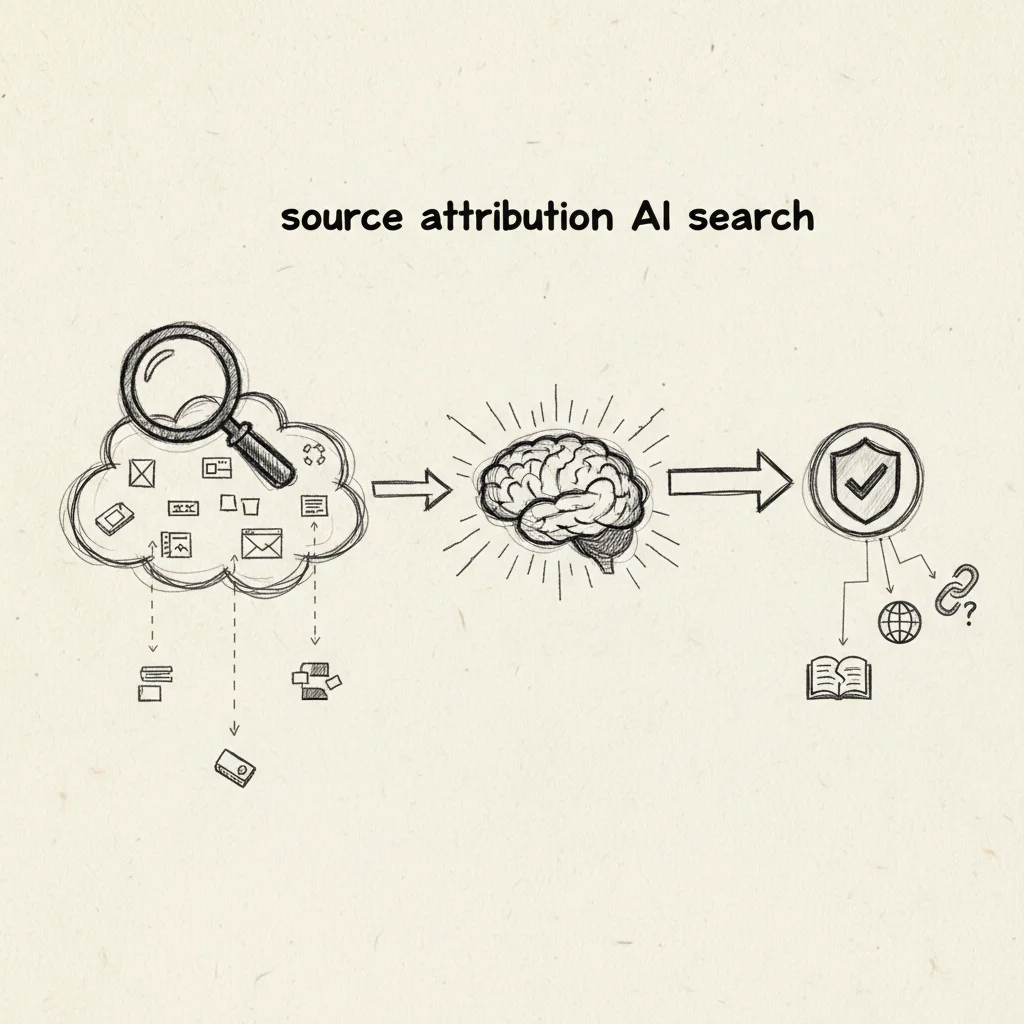
AI models select sources through two distinct mechanisms, live retrieval at query time, or weighting from training data, and each rewards different content signals. For those exploring source attribution AI search, this matters.
How AI Models Decide Which Sources to Prioritize
Retrieval-Augmented Generation (RAG), the architecture used by Perplexity and browsing-enabled ChatGPT, fetches live web content at query time. The system breaks retrieved pages into chunks, ranks those chunks by semantic relevance to the query, and feeds the highest-scoring passages to the language model. Content that answers the query directly and concisely scores higher than content that buries the answer in lengthy preamble.
For models that rely primarily on training data, Claude and base ChatGPT, source weighting works differently. How frequently a piece of content was referenced or linked to across the web before the training cutoff directly influences how much weight the model assigns it [3]. Domain authority and backlink profile are not irrelevant to source attribution in AI search; they shape the training signal that determines which sources a model treats as credible.
E-E-A-T signals, Experience, Expertise, Authoritativeness, Trustworthiness, matter across both architectures. Google's AI Overviews and many RAG-based systems use Google's index or equivalent quality filters as a pre-filter before retrieval, so content that already ranks well on quality signals enters the candidate pool first [1].
What Factors Determine Whether Your Content Beats a Competitor's
Structured, scannable content gives AI chunking algorithms a clean extraction target. Clear headings, short paragraphs, defined entities, and FAQ schema all help a model pull a precise, citable passage rather than a muddled block of text [2].
Several factors actively reduce selection likelihood: thin content, paywalls that block crawlers, slow page load times that prevent bot access, and a weak topical focus that fails to match a specific query intent [1]. A page that covers ten topics loosely will lose to a page that covers one topic thoroughly, every time.
How to Optimize Your Content Strategy for AI Source Attribution Versus Traditional SEO
Improving source attribution in AI search requires structural precision and crawler access, not longer articles or more backlinks.
Specific On-Page and Structural Changes That Improve AI Citation Rates
Write direct-answer passages of 50 to 100 words that fully resolve a single question. Retrieval-augmented generation (RAG) systems extract discrete chunks of text, not full articles [1], so an answer buried in paragraph eight of a 3,000-word guide rarely gets cited, even if the overall page ranks well on Google. This directly impacts source attribution AI search outcomes.
This is where AI attribution optimization diverges sharply from conventional SEO. Traditional SEO rewards long-form content for dwell time and topical depth signals. AI citation rewards precision: a focused 600-word page that answers one question clearly can outperform a sprawling guide that takes too long to reach the point [2].
Apply FAQ schema and HowTo schema markup to every page where it fits. Both Google's AI Overviews and third-party crawlers like PerplexityBot and GPTBot use structured data to identify extractable, trustworthy content [3]. Schema signals that your content is organized, not just present.
Check your robots.txt file. If it blocks GPTBot, PerplexityBot, ClaudeBot, or Google-Extended, those AI systems cannot retrieve your content for live attribution, regardless of how well-optimized the page is. Unblocking these crawlers is the fastest single technical fix available.
Build topical authority on a narrow subject rather than publishing broadly. AI models cite sources they have encountered repeatedly on a specific topic [1]. A site with 40 tightly focused articles on one subject outperforms a generalist site with a single relevant post, a pattern tools like Moonrank address directly through daily automated content publishing within a defined niche.
How to Audit Which AI Models Are Currently Citing Your Content
Query ChatGPT, Perplexity, Gemini, and Claude directly using your target questions and record which sources each platform cites in its responses. This manual spot-check takes under 30 minutes and reveals attribution gaps immediately. Perplexity shows inline citations by default, making it the fastest platform to audit.
For ongoing tracking, monitor your server logs for crawl activity from GPTBot, PerplexityBot, and ClaudeBot, their presence confirms the models are indexing your content, which is a prerequisite for source attribution in AI search.
How to Measure and Track Whether AI Models Are Citing Your Content
Tracking source attribution in AI search requires a mix of dedicated tools, manual prompt audits, and traffic analysis, run consistently over 60 to 90 days. This is particularly relevant for source attribution AI search.
Tools and Methods for Monitoring AI Source Attribution
Dedicated AI visibility platforms give you the fastest read on citation frequency. Moonrank monitors how your domain appears in AI-generated responses across ChatGPT, Gemini, Claude, and Perplexity, automatically, without requiring you to run queries manually. Brandwatch and Semrush's AI Overviews tracker offer similar monitoring for brands that already use those platforms.
Manual prompt audits fill the gaps that automated tools miss. Query ChatGPT, Perplexity, Gemini, and Claude using the exact questions your customers type, "best [product category] for [use case]", then record whether your domain is cited directly, paraphrased without credit, or absent entirely. Run this audit monthly and log results in a spreadsheet so you can see movement over time.
In Google Analytics 4, filter referral traffic by known AI sources: perplexity.ai, chatgpt.com, and bing.com/chat. A rising share of sessions from those domains is a direct signal that attribution is improving [2].
Also watch branded search volume in Google Search Console. When AI tools cite your brand by name without a hyperlink, users frequently search your brand directly afterward, creating a measurable lift in branded queries that acts as a secondary attribution indicator.
How to Establish a Baseline and Track Attribution Improvements Over Time
Before changing any content, document your current citation rate per platform. Record how many times your domain appears across 20 to 30 representative queries on each AI engine, that number is your baseline.
After implementing structured content updates, schema markup, and technical fixes, re-run the same query set at the 60-day and 90-day marks. Compare citation counts, referral traffic share, and branded search volume against your baseline to calculate a concrete delta. Without this starting point, any improvement is invisible.

Frequently Asked Questions
Does being cited by AI search tools actually drive traffic to your website?
Yes, AI citations generate referral traffic, though the volume depends on the platform and how prominently your source appears. Perplexity and Google AI Overviews both display clickable source links, and early data from 2025 shows that cited sources receive measurable click-through rates, particularly when they appear in the top three citations. That said, AI search often satisfies queries without a click, so citation volume and brand mention frequency matter as much as raw traffic numbers. When considering source attribution AI search, this point stands out.
Can you get cited by AI models if your content is behind a paywall?
Generally, no. AI crawlers index publicly accessible content; pages requiring login or payment are typically invisible to them. If your best content sits behind a paywall, consider publishing a free-access summary or excerpt that covers the key claims and structured data signals. That public-facing version can earn citations while the full content remains gated for subscribers.
How is AI source attribution different from a Google featured snippet?
A Google featured snippet pulls a direct excerpt from one page and displays it verbatim; AI source attribution synthesizes multiple sources into a generated answer and then credits them. The selection logic also differs, Google's snippet algorithm prioritizes on-page structure and exact-match relevance, while AI models weigh authority, recency, and how well content answers the full conversational intent [1]. You can rank for a featured snippet without being cited by ChatGPT, and vice versa.
How long does it take to see results after optimizing content for AI source attribution?
Most brands see measurable changes in citation frequency within four to twelve weeks of publishing optimized content, though this varies by niche competitiveness and crawl frequency. Technical fixes, schema markup, structured data, llms.txt configuration, can be picked up faster than content authority signals, which accumulate over time. Tracking your brand's appearance across ChatGPT, Gemini, Claude, and Perplexity on a weekly basis gives you the clearest signal of whether your changes are working.
Conclusion
Source attribution in AI search is now a direct input to brand visibility and customer acquisition. Three things determine whether AI models cite your content: how well your pages are structured for machine parsing, how consistently you publish content that matches conversational queries, and how actively you monitor your citation footprint across ChatGPT, Gemini, Claude, and Perplexity.
The clearest next step is to audit one high-value page today, check whether it carries schema markup, answers a specific question in the first paragraph, and links to credible external sources. If it doesn't, fix those three elements first. If you want that process automated across your entire site, Moonrank handles the technical optimization, daily content publishing, and AI visibility tracking for $99/month, no agency required.
Sources & References
- What Is Source Attribution in AI Search? Complete Guide | GetMentioned
- AI Source Attribution: How AI Search Cites Your Content
- Source Attribution in AI: what it is and how to improve it
Recommended Articles
Explore more from our content library: