How to Boost Your Gemini AI Search Visibility in 2026
Learn how Gemini AI search visibility works in 2026, why it matters for SMBs, and how to get your brand recommended by Google's AI engine affordably. Discover.
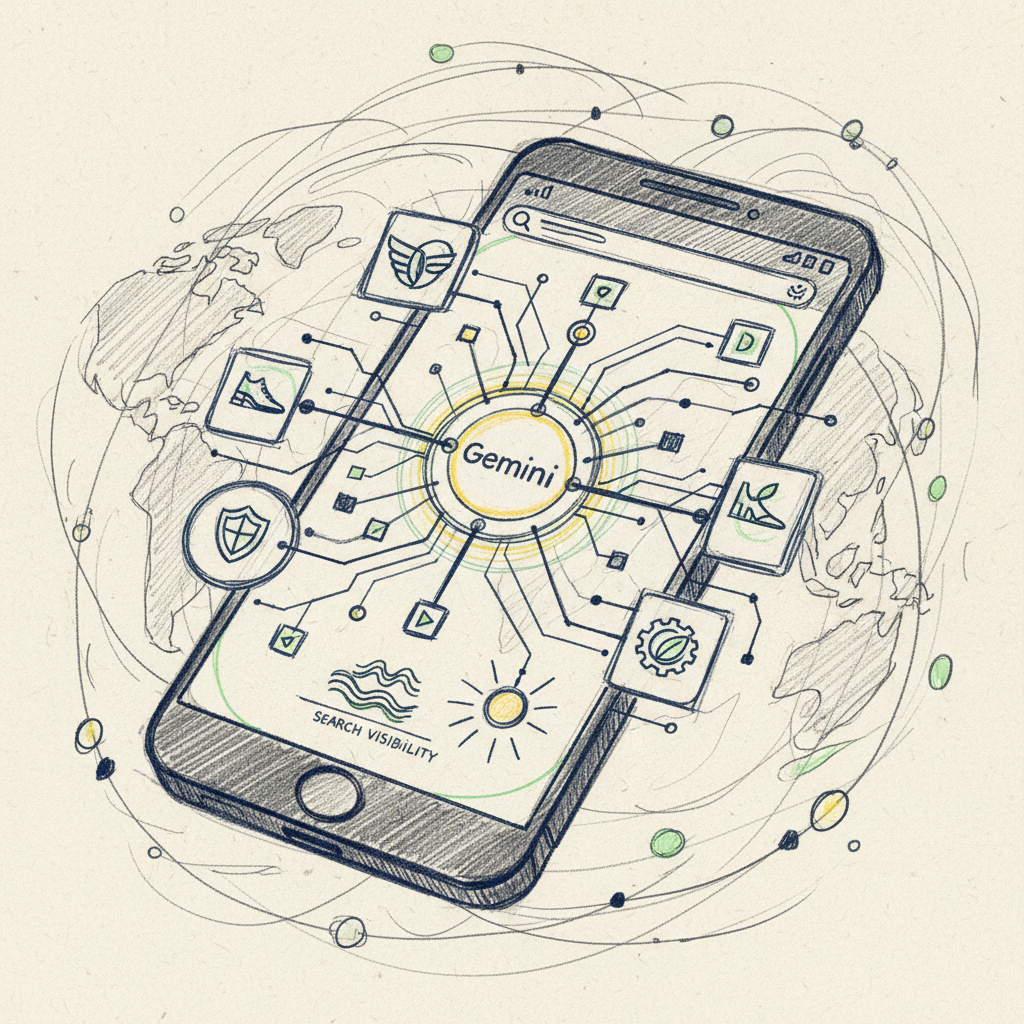
| Key Insight | Explanation |
|---|---|
| Gemini is a distinct search surface | Google Gemini generates AI-synthesized answers from multiple sources, not a simple list of blue links. Appearing in those answers requires a different strategy than traditional SEO. |
| Structured data is critical | Schema markup, llms.txt configuration, and structured data help Gemini parse and trust your content. Without them, even great content can be invisible to AI engines. |
| Content freshness signals trust | Gemini favors sources that publish consistently. Daily or weekly content updates signal authority and keep your brand in the AI's training and retrieval pool. |
| Traditional SEO isn't enough | Google's crawler and Gemini's retrieval logic use different signals. Ranking on page one doesn't guarantee you'll appear in AI-generated answers. |
| Tracking is non-negotiable | You can't improve what you don't measure. Dedicated AI visibility tracking tools show you exactly when and how Gemini mentions your brand versus competitors. |
| Automation closes the gap affordably | Platforms like Moonrank automate content, technical optimization, and visibility tracking for $99/month, replacing agency retainers that cost $3,000+/month. |
Gemini AI search visibility is how prominently your brand appears when users ask Google's Gemini AI engine for recommendations, answers, or product suggestions. It measures whether Gemini cites, quotes, or recommends your business in its generated responses. As of 2026, this has become one of the most important distribution channels for SMBs to understand and act on.
Most business owners are still focused entirely on Google's traditional search rankings. But Gemini doesn't work the same way. It synthesizes answers from multiple sources, and if your brand isn't in that mix, a potential customer asking "best coffee shop near me" or "top project management software for small teams" simply won't find you. According to research published on arXiv, generative search tools like Gemini significantly reshape which websites receive visibility, often diverging from traditional organic rankings [1].
This article covers exactly how Gemini's AI search engine decides what to recommend, what signals matter most, the mistakes that keep businesses invisible, and the practical steps you can take to show up consistently in 2026.
What Is Gemini AI Search Visibility?
Gemini AI search visibility is the measure of how often and how prominently your brand appears in answers generated by Google's Gemini AI engine across search, mobile, and integrated Google Workspace products.
Defining the Concept
Traditional search visibility means ranking on page one of Google results. this approach is different. Gemini generates a synthesized, conversational answer and selects which sources, brands, or businesses to cite within that answer. Your "visibility" is whether you're one of those cited sources, and how favorably you're framed.
According to Soci.ai, AI visibility measures how often a business appears in recommendations generated by AI platforms such as ChatGPT, Gemini, and Perplexity [2]. It's a distinct metric from keyword rankings or organic traffic. You can rank highly in traditional search and still be completely absent from Gemini's answers.
Why It Matters in 2026
Google's AI Mode, which integrates Gemini deeply into search results, has been expanding rapidly. Ralabs reports that users now get AI-generated answers, image-based search, and conversational follow-up capabilities as default behaviors, not optional features [3]. This means a growing share of search queries never reach the traditional blue-link results at all.
For SMBs, the stakes are concrete. If a potential customer asks Gemini "best [your service] in [your city]" and you're not cited, that customer goes elsewhere. You didn't lose a ranking. You were simply absent from the conversation.
- AI Overviews appear above organic results for millions of queries as of 2026
- Gemini is integrated into Gmail, Google Docs, Google Maps, and Android devices
- Conversational queries (longer, more specific questions) are growing faster than keyword searches
- Businesses cited by Gemini receive implied authority signals that compound over time
Pro Tip: Don't wait until Gemini is your primary traffic source to start optimizing for it. The businesses appearing in AI answers today started building the right signals 6 to 12 months ago. Start now, even if your traditional SEO is already solid.
How Gemini AI Search Visibility Works
Gemini selects sources for its AI-generated answers based on a combination of content relevance, structured data signals, domain authority, and content freshness, not just keyword matching.
The Retrieval and Ranking Logic
Gemini uses a retrieval-augmented generation (RAG) approach. It retrieves relevant content from across the web, evaluates which sources are authoritative and well-structured, then synthesizes a response. The key insight: Gemini doesn't just find pages that rank well. It finds pages that are easy for an AI to parse, trust, and quote.
Research from arXiv's empirical study of Google Search, Gemini, and AI Overviews found that generative search results frequently surface different sources than traditional organic results, meaning your traditional SEO strategy alone won't guarantee Gemini visibility [1].
The signals Gemini weighs most heavily include:
- Schema markup (structured data that tells AI engines exactly what your business does, where it's located, and what it offers)
- llms.txt (a configuration file that explicitly signals to large language model crawlers how to interpret your site)
- Entity clarity (how clearly and consistently your brand, location, products, and services are described across your site and external citations)
- Content authority (whether your content is cited by other credible sources, not just how many backlinks you have)
- Content freshness (how recently and how regularly your site publishes relevant content)
- Answer-ready formatting (whether your content directly answers the kinds of questions users ask conversationally)
How Gemini Differs from ChatGPT and Perplexity
Each AI engine has its own retrieval logic. Gemini has a unique advantage: it's deeply integrated with Google's own search index, Maps, and Knowledge Graph. This means it can cross-reference your Google Business Profile, your website's structured data, and your mentions in Google-indexed content simultaneously.
| AI Engine | Primary Data Source | Key Optimization Signal | Update Frequency |
|---|---|---|---|
| Google Gemini | Google Search index + Knowledge Graph + Maps | Schema markup, Google Business Profile, structured data | Near real-time via Google crawl |
| ChatGPT (with browsing) | Bing index + training data | Content clarity, citations, FAQ formatting | Periodic training + live browsing |
| Perplexity | Live web crawl (multiple indexes) | Source credibility, answer-ready content | Real-time crawl |
| Claude | Training data + tool integrations | Entity consistency, authoritative citations | Training cycles + integrations |
Industry analysts at Stark Media note that each AI tool leans on different data sources, and Gemini's tight integration with Google's own infrastructure makes it both easier and harder to optimize: easier because Google already knows your business if you've set it up correctly, harder because Gemini's standards for what constitutes a "trustworthy" source are strict [4].
Key Benefits of Gemini AI Search Visibility for SMBs
Appearing in Gemini's AI-generated answers delivers compounding benefits that go beyond a single click, including implied authority, broader reach, and a direct path to customers who are already in decision-making mode.

Direct Business Impact
When Gemini recommends your business, it's not just showing your URL. It's endorsing your brand in a conversational, authoritative tone. Users trust AI-generated recommendations differently than they trust paid ads. The implicit authority transfer is significant.
Consider a real-world scenario: a boutique hotel owner in Austin noticed that a competitor was being consistently recommended by Gemini when users searched "best boutique hotels in Austin." After implementing structured data, updating their Google Business Profile with detailed service descriptions, and publishing weekly content answering common travel questions, they started appearing in Gemini's answers within 60 days. That's the kind of shift that changes booking volume, not just traffic numbers.
- Higher intent traffic: Users who find you through Gemini have already asked a specific question. They're further along in the buying journey than a typical search visitor.
- Zero-click visibility: Even when users don't click through, Gemini mentioning your brand builds recognition and trust.
- Competitive positioning: If Gemini recommends you and not your competitor, you've effectively won that query without a paid ad.
- Cross-platform authority: Gemini AI search visibility improvements often correlate with better visibility on ChatGPT, Perplexity, and Claude, since the underlying content signals overlap.
The SMB Opportunity Window
Most SMBs haven't yet optimized for Gemini. Large enterprises are starting to move, but the SMB space is wide open. The UPCEA research on AI search gaps demonstrates that even well-resourced institutions are missing from AI-generated results simply because they haven't adapted their content strategy [5]. For SMBs, this is a genuine first-mover window.
Businesses like specialty coffee brands are already seeing this play out. For example, Rapid Search Results case studies show how structured content and clear entity signals help smaller brands surface in AI-driven search environments that were once dominated by larger competitors.
Pro Tip: Optimize your Google Business Profile as if it's a structured data document, not just a directory listing. Gemini pulls heavily from it. Add detailed service descriptions, answer common questions in the Q&A section, and keep your hours, location, and contact info perfectly consistent across every platform.
Common Challenges and Mistakes in 2026
The most common mistake businesses make with this is assuming that their existing Google SEO strategy is sufficient, when in fact the two optimization tracks require meaningfully different approaches.
Misconceptions That Cost Visibility
A common mistake is treating AI search optimization as a one-time technical fix. In practice, Gemini's retrieval logic favors sources that demonstrate ongoing relevance. A single round of schema markup won't sustain visibility if your content isn't being updated regularly.
Another frequent error: publishing content that's written for keyword density rather than question-answering. Gemini extracts answers to specific questions. If your content doesn't directly address what users are asking, it won't be selected as a source, regardless of how well it ranks traditionally.
- Ignoring entity consistency: If your business name, address, and phone number (NAP) vary across your website, Google Business Profile, and third-party directories, Gemini's entity resolution will struggle to confidently identify and recommend you.
- Skipping llms.txt: Most SMBs have never heard of llms.txt (a file that signals to LLM crawlers how to interpret your site). Leaving it out is a missed opportunity to explicitly guide Gemini's understanding of your business.
- No visibility tracking: You can't know if your efforts are working without dedicated Gemini visibility tracking [6]. Many businesses optimize blindly and don't realize they've been cited, or that a competitor has overtaken them in AI answers.
- Treating all AI engines the same: Optimizing only for ChatGPT or only for Perplexity won't automatically improve Gemini visibility. Each engine has distinct signals, and Gemini's Google-native infrastructure requires specific attention.
The Technical Debt Problem
Many SMB websites carry years of technical debt: inconsistent structured data, outdated schema types, missing Open Graph tags, and no canonical URL strategy. These issues are invisible to the business owner but highly visible to Gemini's crawlers. Research from Finseo.ai indicates that technical AI readability gaps are among the top reasons brands fail to appear in Gemini's answers even when their content quality is high [7].
One pitfall to watch for: assuming that a high domain authority score means Gemini will automatically trust your content. Domain authority is a traditional SEO metric. Gemini weighs content structure, answer-readiness, and entity clarity more heavily than raw authority scores.
Best Practices for Gemini AI Search Visibility in 2026
The most effective approach to it combines technical optimization, consistent content publishing, and ongoing tracking, applied as a continuous system rather than a one-time project.
Technical Optimization Foundations
Start with the infrastructure Gemini's crawlers rely on. These aren't optional extras. They're the baseline for being considered as a source at all.
- Implement comprehensive schema markup. Use Organization, LocalBusiness, Product, FAQ, and HowTo schema types as relevant to your business. Schema markup is the structured data that tells AI engines exactly what your business does, where it operates, and what it offers. Tools like Google's Rich Results Test can verify your implementation.
- Create and configure an llms.txt file. This file, placed at your site's root directory, explicitly tells large language model crawlers how to categorize and use your content. It's the AI-era equivalent of robots.txt and is increasingly recognized as a best practice by GEO (Generative Engine Optimization) practitioners.
- Audit and standardize your entity data. Ensure your business name, address, phone number, and service descriptions are identical across your website, Google Business Profile, social profiles, and any third-party directories.
- Optimize your Google Business Profile. Gemini pulls directly from it. Fill in every field, add photos, respond to reviews, and use the Q&A feature to pre-answer common questions in your own words.
- Configure your site's crawlability for AI bots. Review your robots.txt to ensure you're not accidentally blocking AI crawlers. Some legacy configurations block non-Google bots, which can prevent Perplexity and other engines from indexing your content.
Content Strategy for AI Recommendation
Technical signals get you in the door. Content quality keeps you there. According to community discussions on Reddit's AISEOTricks community, AI search engines consistently favor content that is well-structured, directly answers specific questions, and comes from sources that publish regularly [8].
- Write content that directly answers the specific questions your customers ask, not just broad topics
- Use FAQ sections on key pages to create extractable Q&A pairs that Gemini can cite
- Publish content consistently, whether daily, three times per week, or weekly. Consistency matters more than volume.
- Include specific entities: named locations, product names, service categories, and industry terms that Gemini can cross-reference
- Cite authoritative sources within your content. Gemini trusts sources that demonstrate they've done their research.
- Structure content with clear H2 and H3 headings that mirror the questions users actually ask
Pro Tip: At Moonrank, we've found that businesses publishing at least five new pieces of answer-ready content per week see measurable Gemini visibility improvements within 30 to 45 days. The volume threshold matters because Gemini's retrieval logic rewards sources that consistently cover a topic, not just ones that have one authoritative page.
Tracking is the final piece. You need to know which queries trigger Gemini to mention your brand, how your visibility compares to competitors, and whether your optimization efforts are producing measurable results. Platforms that monitor AI visibility across ChatGPT, Claude, Perplexity, and Gemini simultaneously give you the full picture. The codedesign.org overview of AI visibility platforms documents over 20 tools now serving this function, reflecting how quickly the tracking ecosystem has matured [9].
Our team at Moonrank recommends treating your AI visibility score as a primary KPI alongside traditional metrics like organic traffic and conversion rate. If your Gemini visibility score is flat or declining while your Google rankings hold steady, that's an early warning that you're losing ground in the channel that's growing fastest.
Sources & References
- arXiv, "An Empirical Study of Google Search, Gemini, and AI Overviews," 2026
- Soci.ai, "AI Visibility: How Brands Get Recommended by ChatGPT, Gemini," 2026
- Ralabs, "Google's AI Mode Is Rewriting the Rules of Search," 2026
- Stark Media, "How to Improve Visibility in Google AI Overviews, ChatGPT, and Gemini," 2026
- UPCEA, "The AI Search Gap: What Students Expect vs. What Institutions Are Doing," 2026
- SE Ranking, "Track Gemini AI Search Visibility and Brand Mentions," 2026
- Finseo.ai, "AI Visibility Metrics Gemini: Track Google Gemini SEO," 2026
- Reddit r/AISEOTricks, "Is There Really a Trick to Get Visible in AI Search by ChatGPT or Gemini?," 2026
- Codedesign.org, "+20 AI Visibility Platforms to Track My Brand on ChatGPT, Gemini," 2026
Frequently Asked Questions
1. Are Gemini AI searches private?
Gemini searches are subject to Google's standard privacy policies, but the level of privacy depends on how and where you use Gemini. In Google Workspace (Gmail, Docs, Drive), Gemini has access to your files and email data within the scope of your permissions, and that data may be used to personalize responses. Standalone Gemini queries at gemini.google.com are treated similarly to Google Search in terms of data retention. As of 2026, users can review and delete their Gemini activity in their Google Account settings under "My Activity." For business users, your organization's Google Workspace data processing agreement governs how Gemini handles sensitive information. One limitation to note: Gemini's integration across Google products means data boundaries are less distinct than with standalone AI tools like Claude or Perplexity.
2. How do I check my Gemini AI search visibility for free?
The simplest free method is manual testing: open Gemini and search for the types of questions your customers would ask, then check whether your business is mentioned in the answers. For more systematic tracking, tools like SearchScore.ai offer free AI visibility score checks across ChatGPT, Gemini, and Perplexity. This gives you a baseline score in under two minutes. Keep in mind that manual testing is inconsistent, since Gemini's answers vary by location, device, and query phrasing. Dedicated tracking platforms give you a more reliable, repeatable measurement.
3. How long does it take to improve Gemini AI search visibility?
Results vary depending on your starting point, industry competitiveness, and how aggressively you implement changes. In practice, businesses that implement schema markup, update their Google Business Profile, and begin publishing structured, answer-ready content consistently typically see measurable Gemini visibility improvements within 30 to 60 days. Technical fixes (schema, llms.txt) tend to show faster results than content-driven improvements, which compound over time. One limitation: Gemini's retrieval index updates at different rates for different query types, so some improvements may take longer to appear in practice.
4. Does Google Business Profile affect Gemini AI search visibility?
Yes, significantly. Because Gemini is built on Google's infrastructure, it pulls directly from your Google Business Profile when generating local recommendations. An incomplete or inconsistent profile is one of the fastest ways to hurt your this method for local queries. Fill in every field: business category, service descriptions, hours, photos, and Q&A responses. Businesses with fully optimized profiles and regular review activity consistently outperform those with sparse listings in Gemini's local answer panels.
5. What's the difference between Gemini AI search visibility and traditional SEO?
Traditional SEO optimizes for Google's crawler, which ranks pages based on keywords, backlinks, and on-page signals. this strategy optimizes for Gemini's retrieval and generation logic, which selects sources based on structured data quality, entity clarity, content answer-readiness, and freshness. You can rank on page one of Google and still be absent from Gemini's answers. The two tracks overlap in some areas (good content helps both) but require distinct technical and strategic approaches. This is precisely why platforms built specifically for AI search optimization, rather than traditional SEO tools with AI features added, are becoming essential for forward-thinking SMBs.
6. Can small businesses realistically compete with large brands in Gemini AI search?
Yes, and in some ways the playing field is more level than in traditional SEO. Gemini's retrieval logic favors relevance and answer-readiness over domain authority alone. A small local business with a perfectly optimized Google Business Profile, clear schema markup, and consistent content answering hyper-local questions can outperform a national chain for local queries. The key is specificity: the more precisely your content addresses the exact questions your local or niche audience asks, the more likely Gemini is to surface you as the most relevant source. Large brands often publish generic content that doesn't answer specific questions as directly as a focused SMB can.
Conclusion
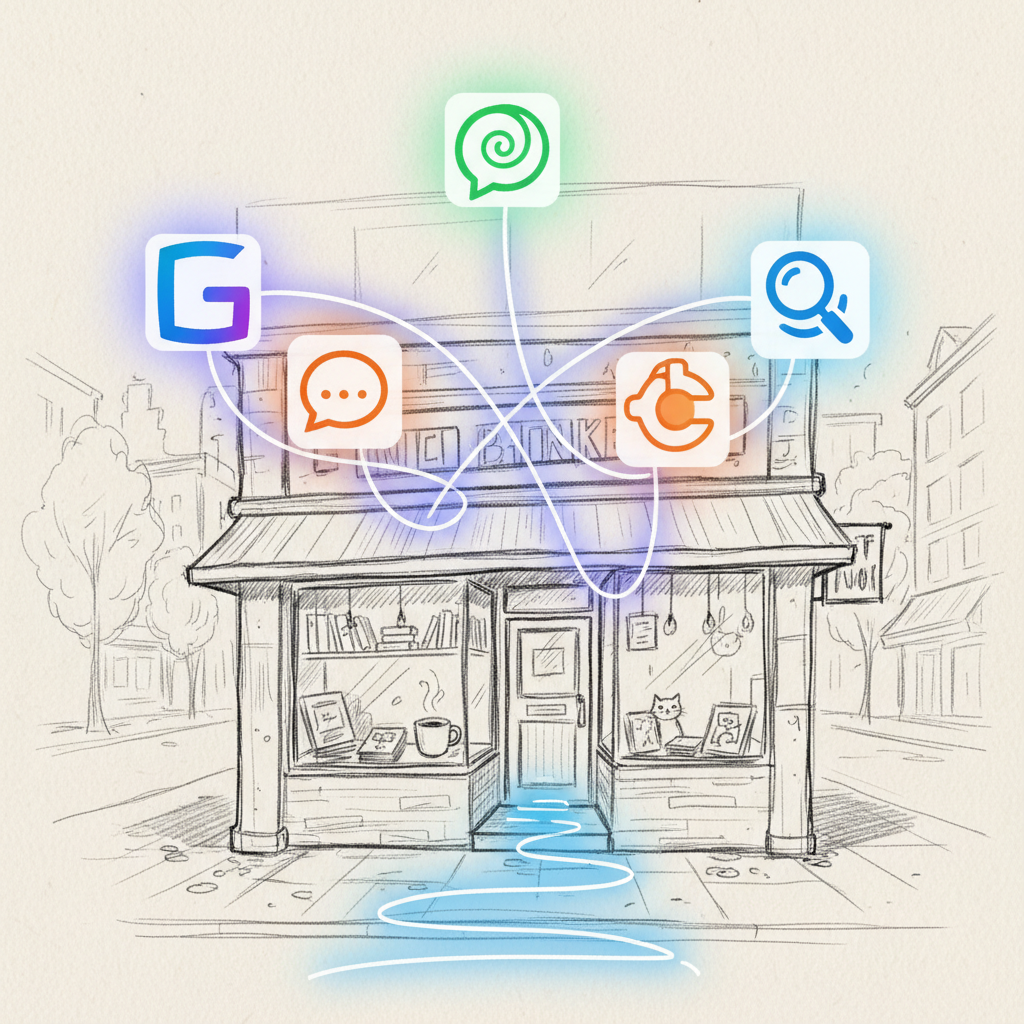
this approach isn't a future consideration. It's a present-tense competitive advantage that's already separating businesses that show up in AI-generated answers from those that don't. The mechanics are clear: structured data, entity consistency, answer-ready content, and consistent publishing are the signals that matter. The window for SMBs to establish early authority in Gemini's answers is open right now, but it won't stay open indefinitely.
The good news is that you don't need a $3,000-per-month agency to do this. You need a systematic approach that covers technical optimization, daily content, and ongoing visibility tracking across ChatGPT, Gemini, Claude, and Perplexity. That's exactly what Moonrank delivers on autopilot for $99/month. Start your free 3-day trial at www.moonrank.ai and see where your brand currently stands in AI search, then watch it improve week over week.
Recommended Articles
Explore more from our content library: