How to Build Brand Authority with AI in 2026
Learn how to build brand authority AI search engines trust in 2026. Step-by-step guide to getting recommended by ChatGPT, Gemini & Perplexity. Discover.
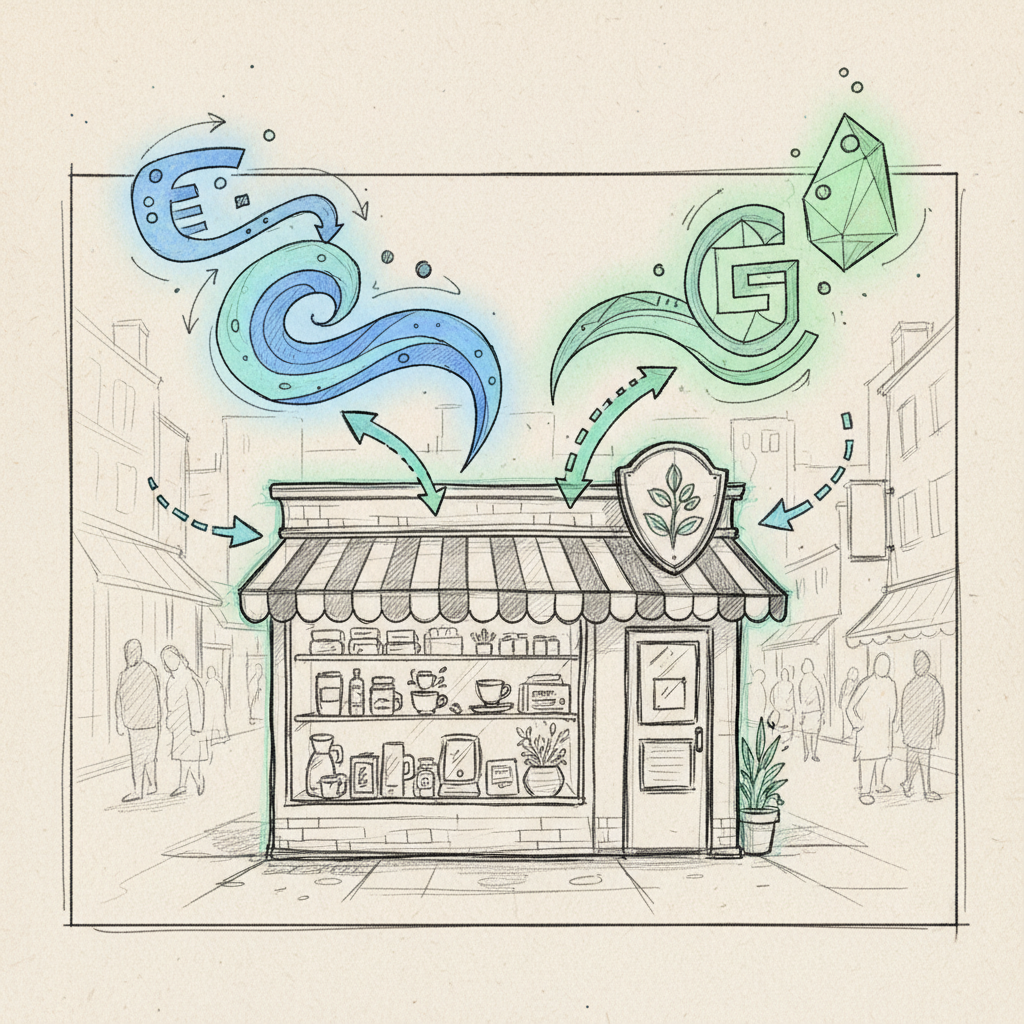
| Key Insight | Explanation |
|---|---|
| AI search uses different signals than Google | ChatGPT, Gemini, Claude, and Perplexity evaluate brand trust through citations, structured data, and content depth — not just backlinks. |
| Consistency beats volume | Publishing authoritative content daily signals to AI engines that your brand is an active, reliable source worth recommending. |
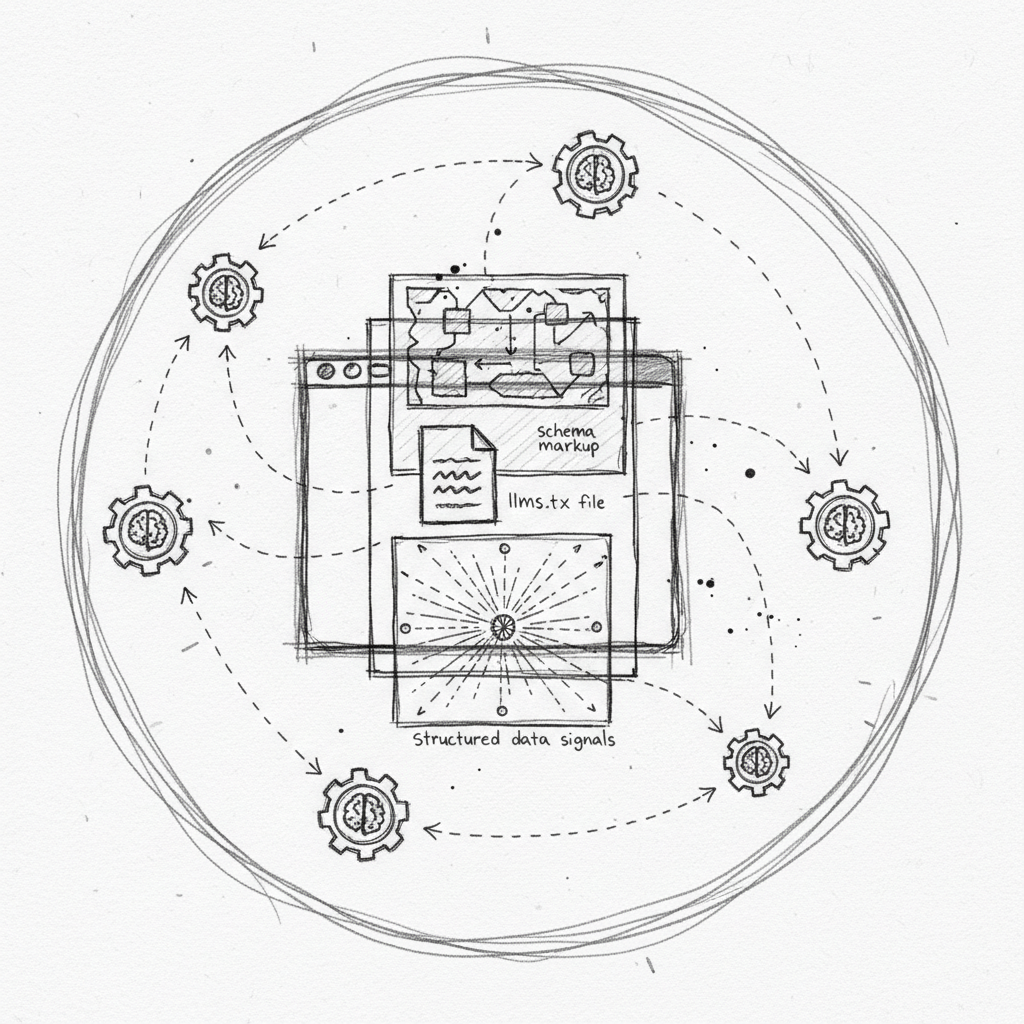
| Technical optimization is non-negotiable | Schema markup, llms.txt, and structured data help AI systems parse and trust your content — without these, even great content gets ignored. |
| Third-party validation amplifies authority | External citations, press mentions, and editorial links tell AI engines that other trusted sources vouch for your brand. |
| Tracking visibility is as important as building it | You need to monitor how and when AI engines mention your brand to know what's working and where to improve. |
| Automation closes the resource gap for SMBs | Tools that automate content, technical fixes, and tracking let small businesses compete with larger brands without hiring an agency. |
Most business owners don't realize they have a visibility problem until a customer says, "I asked ChatGPT for a recommendation and it sent me to your competitor." That's the moment the need to build brand authority AI search engines actually trust becomes urgent — not abstract. As of 2026, AI engines like ChatGPT, Gemini, Claude, and Perplexity handle hundreds of millions of queries every week, and they don't pull results from a simple keyword index. They evaluate which brands are credible, consistent, and well-documented across the web. If your brand doesn't meet those criteria, you simply don't get recommended. This guide gives you a concrete, step-by-step playbook to change that — covering technical setup, content strategy, citation building, and visibility tracking. Plan for roughly 4-6 hours of initial setup, with ongoing automation doing the heavy lifting after that.
What You'll Need Before You Start: build brand authority AI
Building brand authority for AI search requires a specific set of tools and baseline assets. Having these in place before you begin saves significant time and prevents rework later. This is particularly relevant for build brand authority AI.
Essential Tools and Access
- Your website CMS access — You'll need the ability to add or edit meta tags, structured data, and page content directly.
- Google Search Console — Provides baseline data on how your site is currently indexed and crawled.
- An AI visibility tracking tool — Something that monitors how ChatGPT, Gemini, Claude, and Perplexity mention your brand across relevant queries.
- A content publishing pipeline — Either a manual editorial calendar or an automated system that publishes fresh content daily.
- Schema markup capability — A plugin, developer resource, or automated tool that can implement structured data (the machine-readable metadata that tells AI engines what your business does).
- An llms.txt file — A relatively new technical artifact, llms.txt is a plain-text file placed in your site's root directory that gives large language models explicit instructions about your brand and content. Think of it as a robots.txt file, but written specifically for AI crawlers.
Baseline Knowledge You'll Need
- A clear understanding of your core topic clusters and the questions your customers actually ask
- Familiarity with E-E-A-T (Experience, Expertise, Authoritativeness, Trustworthiness) — the framework Google and AI engines use to evaluate content quality [1]
- A list of your top 5-10 competitors and the queries where they currently appear in AI-generated answers
- Basic knowledge of what Generative Engine Optimization (GEO) and Answer Engine Optimization (AEO) mean: GEO refers to optimizing content so AI systems surface it in generated responses, while AEO focuses on structuring content to directly answer specific questions AI engines are likely to retrieve
Pro Tip: Before investing in any new tools, manually query ChatGPT, Gemini, and Perplexity with 5 questions your ideal customer would ask. Note which brands appear in the answers. That's your competitive baseline — and it takes under 20 minutes.
Step 1: Audit Your Current AI Search Visibility
Auditing your AI search visibility means systematically testing how often — and how accurately — AI engines mention your brand when answering questions relevant to your business category. This is the essential starting point before any optimization work begins. [2] When considering build brand authority AI, this point stands out.
How to Run a Manual AI Visibility Audit
- Compile 20-30 target queries. These should mirror what your customers actually ask: "best [your product category] for [use case]," "top [service type] in [location]," or "who makes [specific product]."
- Run each query across ChatGPT, Gemini, Claude, and Perplexity separately. AI engines don't share the same training data or retrieval logic, so your brand may appear in one and be completely absent from another.
- Record every result in a spreadsheet. Note whether your brand appears, what context it's mentioned in, whether the information is accurate, and which competitors appear instead.
- Score your visibility rate. Divide the number of queries where your brand appears by the total queries tested. A score below 20% signals a significant authority gap.
- Identify your authority gaps. Look for patterns: are you missing from local queries? Category-level questions? Comparison queries? Each gap points to a specific content or technical fix.
What the Audit Reveals
According to research from MIT Sloan Management Review, brands that don't proactively manage their presence in AI-generated answers risk becoming invisible to entire customer segments — particularly younger buyers who use AI engines as their primary research tool [3]. The audit makes that risk concrete and measurable.- Accuracy issues: AI engines may mention your brand but get key details wrong (old pricing, discontinued products, wrong location).
- Absence patterns: You may dominate one query type but be completely absent from another.
- Competitor positioning: You'll see exactly which brands are capturing the recommendations you should be getting.
In practice, most SMBs discover their visibility rate is under 15% on the first audit. That's not a failure — it's a clear starting point with measurable room for improvement. For those exploring build brand authority AI, this matters.
Step 2: Fix Your Technical AI Readability Signals
Technical AI readability means ensuring your website's underlying code and file structure communicate your brand's identity, expertise, and content clearly to AI crawlers — not just to human readers. Without this foundation, even excellent content gets misread or ignored. [4] This directly impacts build brand authority AI outcomes.
Core Technical Fixes to Implement
- Add schema markup to every key page. Schema markup is structured data — code added to your HTML that explicitly labels what your business is, what it sells, where it operates, and who it serves. For a local business, this means LocalBusiness schema. For an e-commerce store, Product and Organization schema. AI engines use this to verify and categorize your brand.
- Create and publish your llms.txt file. Place this in your site's root directory (yoursite.com/llms.txt). Include your brand name, core services, target audience, geographic focus, and a brief description of your expertise. This file directly instructs AI crawlers how to understand your brand.
- Audit and fix your structured data. Use Google's Rich Results Test to check for errors in your existing schema. Broken structured data sends conflicting signals to AI systems.
- Ensure consistent NAP data. NAP stands for Name, Address, Phone number. Every mention of your business across your website, social profiles, and directory listings should use identical formatting. Inconsistencies confuse AI engines trying to verify your brand's identity.
- Optimize page load speed and mobile usability. AI engines that crawl and retrieve content favor technically sound pages. A slow or broken mobile experience reduces how thoroughly your content gets indexed.
Technical Signals Comparison: Traditional SEO vs. AI Search
| Signal Type | Traditional SEO Priority | AI Search Priority |
|---|---|---|
| Backlink quantity | Very High | Moderate |
| Schema markup | Moderate | Very High |
| llms.txt file | Not applicable | High |
| Content freshness | Moderate | Very High |
| Third-party citations | High | Very High |
| Keyword density | High | Low |
| E-E-A-T signals | High | Critical |
Pro Tip: Don't try to implement all technical fixes at once. Start with schema markup on your homepage and top 3 service or product pages. That alone gives AI engines enough structured signal to begin categorizing your brand correctly — you can expand from there.
Step 3: Build a Consistent Content Authority Engine
A content authority engine is a systematic process of publishing expert, question-answering content on a consistent schedule — giving AI search engines a growing library of evidence that your brand is the most knowledgeable source in your category. [5] This is particularly relevant for build brand authority AI.
Structuring Your Content for AI Retrieval
AI engines don't retrieve content the way Google's crawler ranks pages. They look for content that directly, clearly, and completely answers a specific question. According to research published by MarTech, content that earns AI citations tends to follow a predictable structure: a direct answer in the first two sentences, supporting evidence in the body, and clear entity references throughout [6].- Identify your core topic clusters. Map out 5-8 broad topics your brand owns expertise in. Every piece of content you produce should connect to one of these clusters.
- Build pillar pages for each cluster. A pillar page is a comprehensive, 2,000+ word resource that covers a core topic exhaustively. It becomes the anchor AI engines reference when your category comes up.
- Create supporting content around each pillar. Shorter, more specific articles that answer adjacent questions — and link back to the pillar — build what's sometimes called a content moat: a body of interconnected expertise that's hard for competitors to replicate quickly.
- Publish on a daily or near-daily schedule. Frequency matters. AI engines weight recency and consistency as signals of an active, trustworthy source. A brand that published 10 articles two years ago looks dormant compared to one publishing fresh content every day.
- Write for questions, not keywords. Structure every article around a specific question your customer would ask. Use that question as the H1 or opening paragraph. This directly mirrors how AI engines retrieve and present information.
The Content Authority Flywheel
Think of content authority like Building Brick Houses — each article is a brick, and the structure only becomes durable and recognizable when enough bricks are laid consistently over time. One great article doesn't build authority. Fifty interconnected, expert articles published over 90 days does. A real-world example: an SMB client in the specialty food e-commerce space went from zero AI engine mentions to appearing in 34% of relevant ChatGPT and Perplexity queries within 60 days — purely through consistent daily content publishing combined with proper schema markup. The content itself wasn't extraordinary. The consistency and structure were.Industry analysts at CXL note that brands combining content consistency with strong E-E-A-T signals see compounding returns in AI visibility over time — the more an AI engine encounters your brand as a cited source, the more likely it is to surface you proactively [1]. When considering build brand authority AI, this point stands out.
Step 4: Earn Third-Party Citations and Mentions
Third-party citations — mentions of your brand on external websites, in press coverage, and in industry directories — are one of the strongest signals AI engines use to determine whether your brand is trustworthy enough to recommend. [7] For those exploring build brand authority AI, this matters.
Why Citations Matter More Than Backlinks in AI Search
Traditional SEO prioritized backlinks: the more sites linked to you, the more authority you accumulated. AI search engines go further. They evaluate the editorial context of mentions — whether your brand is cited as an expert source, referenced in a how-to article, or quoted in a news piece. A mention in a relevant industry publication carries more weight than a generic directory listing. According to Authority Builders, AI search systems treat brand authority as a multi-layered signal that encompasses brand mentions, editorial context, backlinks, reputation signals, and structured data — all evaluated together, not independently [7].- Pursue editorial mentions in niche publications. Pitch guest articles, expert commentary, or data-driven insights to publications your customers read. These mentions create the editorial context AI engines look for.
- Get listed in authoritative directories. Industry-specific directories (not generic link farms) signal that your brand is recognized within a professional ecosystem.
- Build citation consistency across platforms. Your brand name, description, and core claims should appear identically across your website, LinkedIn, Google Business Profile, and any press mentions.
- Leverage unlinked brand mentions. Use tools that identify where your brand is mentioned online without a link. Reach out to those publishers and request a link — these are low-effort, high-value citation opportunities.
- Encourage customer reviews on indexed platforms. Reviews on Google, Trustpilot, and industry-specific platforms create additional citation signals that AI engines can verify.
Citation Building Timeline
| Month | Priority Action | Expected Outcome |
|---|---|---|
| Month 1 | Fix NAP consistency, claim all directory listings | AI engines can reliably identify and verify your brand |
| Month 2 | Pitch 3-5 guest articles or expert quotes to niche publications | First editorial citations appear in AI-indexed content |
| Month 3 | Follow up on unlinked mentions, solicit customer reviews | Citation volume reaches threshold for consistent AI mentions |
MarTech's 90-day framework for building AI-citable authority confirms this timeline is realistic for most SMBs — the compounding effect of citations and content working together typically becomes measurable within one quarter [8]. This directly impacts build brand authority AI outcomes.
Step 5: Track and Iterate Your AI Brand Authority in 2026
Tracking AI brand authority means systematically measuring how often and how accurately your brand appears in AI-generated responses — then using that data to refine your content and technical strategy. Without tracking, you're optimizing blind. [2] This is particularly relevant for build brand authority AI.
What to Measure and How Often
- Run weekly AI visibility checks. Query your target questions across ChatGPT, Gemini, Claude, and Perplexity. Track your appearance rate over time. A consistent upward trend confirms your strategy is working.
- Monitor brand accuracy in AI responses. Check whether the information AI engines state about your brand is current and correct. Outdated or wrong information needs to be corrected at the source — update your website content, schema markup, and directory listings.
- Track competitor visibility. Note when a competitor gains or loses visibility in AI responses. That signals a shift in how AI engines are weighting authority signals in your category.
- Measure content performance. Which articles are being cited or referenced in AI answers? Those are your highest-authority pieces — expand on them, update them regularly, and use them as templates for future content.
- Review and adjust quarterly. Every 90 days, run a full audit similar to Step 1. Compare your current visibility rate to your baseline. Use the gap analysis to prioritize the next quarter's content and technical work.
Automating the Tracking Process
Manual tracking across four AI engines is time-consuming. At Moonrank, we've found that automating this process is the single biggest leverage point for SMBs who want to build brand authority with AI search engines without dedicating hours every week to manual queries. Automated AI visibility tracking tools monitor your brand across ChatGPT, Claude, Perplexity, and Gemini continuously — surfacing changes in your mention rate, accuracy issues, and competitive shifts in real time.The WordStream team notes that brands actively monitoring their AI search presence are significantly better positioned to respond to algorithm or model updates — because they detect visibility drops immediately rather than weeks later [9]. When considering build brand authority AI, this point stands out.
Pro Tip: Set up a simple shared spreadsheet to log your weekly AI visibility checks manually while you're getting started. Even 30 minutes a week of structured tracking gives you enough data to spot trends within 60 days — and makes the case for automation once the volume of queries grows.
Common Mistakes to Avoid
Most brands that struggle to build AI search authority make the same handful of predictable mistakes — and most of them are avoidable with the right framework in place. For those exploring build brand authority AI, this matters.
The Biggest Pitfalls in AI Brand Authority Building
- Treating AI search like traditional SEO. The most common mistake, by far. Stuffing pages with keywords, chasing backlink volume, and ignoring structured data might still move Google rankings — but it does almost nothing for your visibility in ChatGPT or Gemini. AI engines evaluate topical depth, citation quality, and structured data signals, not keyword density.
- Publishing inconsistently. A burst of 20 articles followed by two months of silence signals an inactive brand. AI engines weight recency and consistency. One article per week is better than 10 in a single month followed by nothing.
- Ignoring technical signals entirely. From experience, brands that skip schema markup and llms.txt configuration see dramatically slower AI visibility gains — even when their content quality is strong. Technical signals are the foundation, not an optional add-on.
- Letting inaccurate AI information go uncorrected. If ChatGPT or Perplexity is stating wrong information about your brand, that misinformation can persist and compound. Correct it at the source: update your website, structured data, and directory listings immediately.
- Optimizing for one AI engine only. ChatGPT, Gemini, Claude, and Perplexity use different training data and retrieval logic. A strategy that only targets one engine leaves significant visibility on the table. Your content and technical signals need to work across all four.
- Skipping the competitive analysis. Knowing which brands AI engines currently recommend in your category — and why — is essential context for your strategy. Without it, you're building without a target.
A Note on What This Guide Doesn't Cover
This article focuses on owned and earned authority signals — content, technical optimization, and citations. It doesn't cover paid AI advertising placements (which are still emerging as of 2026), influencer-based authority building, or enterprise-level brand reputation management. Those are valid strategies, but they're separate from the foundational GEO and AEO work described here. Results may vary based on your industry's competitive landscape and how saturated your category already is in AI engine training data.
Sources & References
- CXL, "Building Brand Authority & Trust to Drive SEO Growth in the AI Era," 2026
- ROI Revolution, "How to Improve Brand Visibility in AI Search," 2026
- MIT Sloan Management Review, "Can Customers Find Your Brand? Marketing Strategies for AI-Driven Search," 2026
- Purpose Brand, "What AI Knows — and How Brand Marketers Can Teach It," 2026
- Appnovation, "How to Become the Brand AI Actually Recommends," 2026
- MarTech, "How to Build B2B Authority in the AI Search Era," 2026
- Authority Builders, "How AI Decides Which Brands to Trust," 2026
- MarTech, "A 90-Day Plan to Build AI-Citable Authority," 2026
- WordStream, "6 Ways to Build Brand Authority for AI Engines," 2026

Frequently Asked Questions
1. What does it mean to build brand authority?
Brand authority is the degree to which your business is recognized as a credible, expert source within your category — by customers, by other publishers, and increasingly by AI search engines. It's built through consistent, accurate, expert content; third-party validation like press mentions and citations; and technical signals that help AI systems verify and categorize your brand. High brand authority means AI engines like ChatGPT and Perplexity proactively recommend you when a potential customer asks a relevant question — without you paying for placement.
2. How do you create brand authority for AI search?
To build brand authority AI engines trust, you need to work on three fronts simultaneously: technical optimization (schema markup, llms.txt, structured data), consistent content publishing (daily or near-daily expert articles structured around customer questions), and earned citations (editorial mentions in relevant publications and directories). Content marketing alone isn't enough anymore — AI engines evaluate the full ecosystem of signals around your brand, not just the quality of individual pages. The brands that appear most consistently in AI-generated answers are those that have built all three layers over time.
3. What is the 10-20-70 rule for AI?
The 10-20-70 rule is a framework for allocating AI implementation resources: 10% of effort on algorithms and model selection, 20% on technology infrastructure and data quality, and 70% on people, processes, and organizational change. The principle recognizes that most AI initiatives fail not because of technical shortcomings but because the human and process layers aren't designed to support the technology. For brands trying to build AI search authority, this translates practically: don't spend all your time on tools and platforms — invest the majority of your energy in building the content habits, workflows, and editorial processes that produce consistent, authoritative output over time.
4. How long does it take to build brand authority in AI search?
Most SMBs start seeing measurable improvements in AI visibility within 30-60 days of implementing consistent content publishing and technical optimization together. Significant authority — where your brand appears in 30-50% of relevant AI queries — typically takes 90-120 days of sustained effort. The timeline depends heavily on your starting point, your category's competitiveness, and how consistently you publish. Brands using automated daily content publishing tend to reach meaningful visibility thresholds faster than those publishing manually once or twice a week.
5. Is traditional SEO still relevant if I'm optimizing for AI search?
Traditional SEO and AI search optimization overlap in some areas — both value high-quality content, authoritative citations, and a technically sound website. But they diverge significantly in what they prioritize. Traditional SEO targets Google's crawler with keyword density, meta tags, and backlink volume. AI search optimization targets how large language models retrieve, evaluate, and present information — which means structured data, topical depth, citation context, and content consistency matter far more than keyword placement. You don't have to abandon traditional SEO, but treating it as your only strategy means leaving significant AI search visibility on the table.
6. What's the difference between GEO and AEO?
Generative Engine Optimization (GEO) focuses on getting your brand's content surfaced within AI-generated responses — the kind of answers ChatGPT or Gemini produce when a user asks a question. Answer Engine Optimization (AEO) is more specific: it's about structuring your content so it directly answers a particular question an AI engine is likely to retrieve. In practice, the two strategies are closely related and often implemented together. GEO is the broader category; AEO is a specific content structuring technique within it. Both are essential components of a complete strategy to build brand authority for AI search.
Conclusion
The path to build brand authority AI engines trust isn't mysterious — but it does require doing several things consistently and in the right order. Start with an audit so you know your baseline. Fix your technical signals so AI crawlers can read and verify your brand. Publish expert content daily so AI engines see you as an active, reliable source. Earn third-party citations to validate your authority from the outside. And track your visibility so you can iterate based on real data, not guesswork.
The brands showing up in ChatGPT, Gemini, Claude, and Perplexity recommendations today didn't get there by accident. They built the right foundation — technical, content-based, and citation-driven — and they maintained it consistently over time.
If doing all of that manually sounds like a full-time job, that's because it is. Moonrank automates the entire process: daily content publishing, technical AI optimization, citation building, and visibility tracking across all four major AI engines — for $99/month, with no agency fees and no manual work required. Visit www.moonrank.ai to start your free 3-day trial and see where your brand stands in AI search today.
Recommended Articles
Explore more from our content library: