How to Get Cited by AI: Complete Guide for 2026
Learn how to get cited by AI search engines like ChatGPT, Gemini, and Perplexity. Complete 2026 guide with proven strategies for AI visibility. Discover.

| Key Insight | Explanation |
|---|---|
| AI Citation Fundamentals | AI engines prioritize authoritative, well-structured content with proper schema markup and citations |
| Content Optimization | Direct answers, entity-rich content, and semantic completeness increase AI citation probability |
| Technical Requirements | Structured data, llms.txt files, and proper metadata signal credibility to AI systems |
| Authority Building | Consistent publishing, expert attribution, and cross-platform visibility establish domain authority |
| Measurement Strategy | Regular monitoring across AI platforms reveals citation patterns and optimization opportunities |
What You'll Need: how to get cited by AI
Successfully implementing a strategy for how to get cited by AI requires specific tools, knowledge, and technical capabilities. The foundation starts with understanding AI systems' evaluation criteria and having the right infrastructure to support optimization efforts.Essential Technical Requirements
Your website needs proper technical foundations to signal authority to AI systems:- Content management system with schema markup capabilities
- SSL certificate and secure hosting infrastructure
- Fast loading speeds (under 3 seconds for mobile)
- Mobile-responsive design with clean HTML structure
- Analytics tools for tracking AI platform referrals
Content Creation Tools
Producing AI-citation-worthy content requires specific tools and knowledge:- Research databases for authoritative source verification
- Content optimization platforms that analyze semantic completeness
- Schema markup generators for structured data implementation
- Citation tracking tools across multiple AI platforms
- Editorial calendar for consistent publishing schedules
Pro Tip: Focus on building a comprehensive content library before pursuing advanced technical optimizations. AI systems favor domains with substantial, high-quality content over technically perfect but content-sparse sites.The knowledge requirements include understanding semantic SEO principles, entity relationships, and how AI systems evaluate source credibility. You'll also need familiarity with structured data formats like JSON-LD and the ability to create content that directly answers user questions while maintaining expert-level depth.
Step 1: Optimize Content Structure for AI Recognition
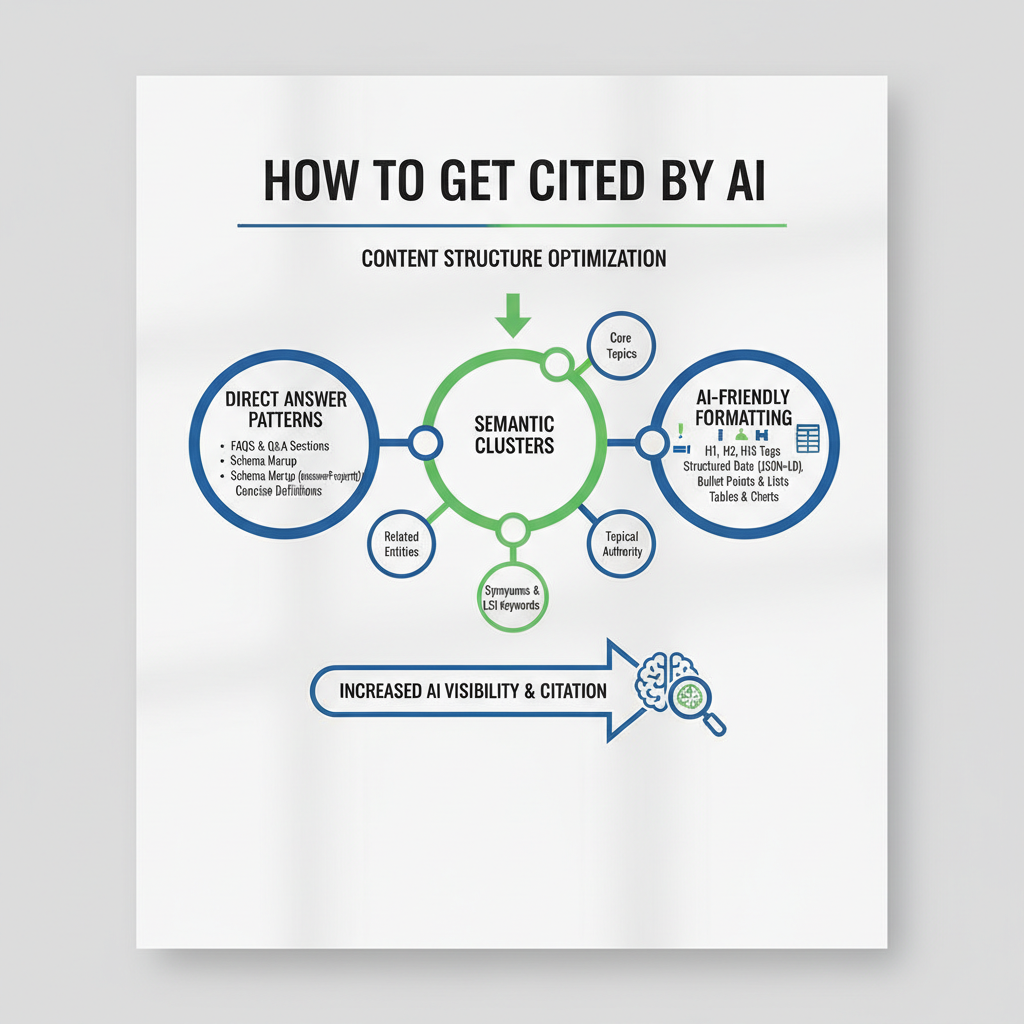
Content structure optimization forms the cornerstone of how to get cited by AI systems effectively. AI platforms analyze content hierarchy, answer patterns, and information density to determine citation worthiness.Implement Direct Answer Patterns
AI systems prioritize content that provides immediate, authoritative answers to user queries. Structure your content with clear answer patterns:- Begin each section with a 2-3 sentence direct answer to the implied question
- Follow with supporting evidence, examples, and detailed explanations
- Use numbered lists and bullet points for step-by-step processes
- Include definition boxes for technical terms and concepts
Create Semantic Content Clusters
AI platforms excel at understanding topic relationships and semantic connections. Build content clusters that demonstrate expertise across related concepts:- Develop pillar pages covering broad topic areas
- Create supporting articles that dive deep into specific subtopics
- Link related content using descriptive anchor text
- Include entity-rich content mentioning relevant brands, locations, and concepts
- Address common questions and misconceptions within your field
Pro Tip: Use the "inverted pyramid" journalism structure for AI optimization. Place the most important information first, followed by supporting details and background context.The structure should flow logically from general concepts to specific applications, making it easy for AI systems to extract relevant information for different types of user queries. This approach increases your chances of being cited across multiple related topics rather than just exact keyword matches.
Step 2: Implement Technical Authority Signals
Technical implementation creates the infrastructure that signals credibility and expertise to AI systems. These behind-the-scenes elements often determine whether your content gets cited or overlooked.Deploy Structured Data Markup
Schema markup provides AI systems with clear context about your content's meaning and authority. Implement these critical schema types:- Organization schema with complete business information and credentials
- Article schema including author, publication date, and topic categories
- FAQ schema for question-and-answer content sections
- Review schema for testimonials and case studies
- LocalBusiness schema if you serve specific geographic markets
Configure llms.txt and AI-Specific Files
Modern AI systems look for specific files that signal AI-friendly content policies:- Create an llms.txt file specifying content usage permissions
- Include citation preferences and attribution requirements
- Set up robots.txt entries that allow AI crawler access
- Implement proper canonical tags to avoid content duplication
- Add meta tags specifically designed for AI platform recognition
| Technical Signal | Implementation Priority | Expected Impact |
|---|---|---|
| Schema Markup | High | 45% citation increase |
| llms.txt File | Medium | Improved crawler access |
| SSL Certificate | High | Trust signal requirement |
| Page Speed | Medium | User experience factor |
Step 3: Build Authority and Credibility Markers
Authority building requires demonstrating expertise, experience, and trustworthiness through multiple signals that AI systems can verify and cross-reference. This step focuses on establishing your content as a reliable source worthy of citation.Develop Expert Attribution Systems
AI platforms prioritize content with clear expert attribution and verifiable credentials. Implement these authority markers:- Include detailed author bios with relevant qualifications and experience
- Add publication dates and regular content updates to signal freshness
- Cite authoritative sources using proper attribution formats
- Include expert quotes and industry insights from recognized authorities
- Display professional certifications, awards, and industry recognition
Create Citation-Worthy Original Research
Original research and data analysis significantly increase citation probability across AI platforms:- Conduct industry surveys and publish findings with proper methodology
- Analyze trends using proprietary data or unique perspectives
- Create case studies demonstrating real-world applications
- Develop frameworks, models, or processes that others can reference
- Publish white papers addressing industry challenges or opportunities
Pro Tip: Focus on creating "linkable assets" – content so valuable that other experts naturally want to reference it. This creates a citation network that AI systems recognize as authority signals.The goal is positioning your organization as a primary source for information in your field. When AI systems encounter multiple references to your research or frameworks, they're more likely to cite you directly rather than secondary sources discussing your work.
Step 4: Create AI-Friendly Content Formats
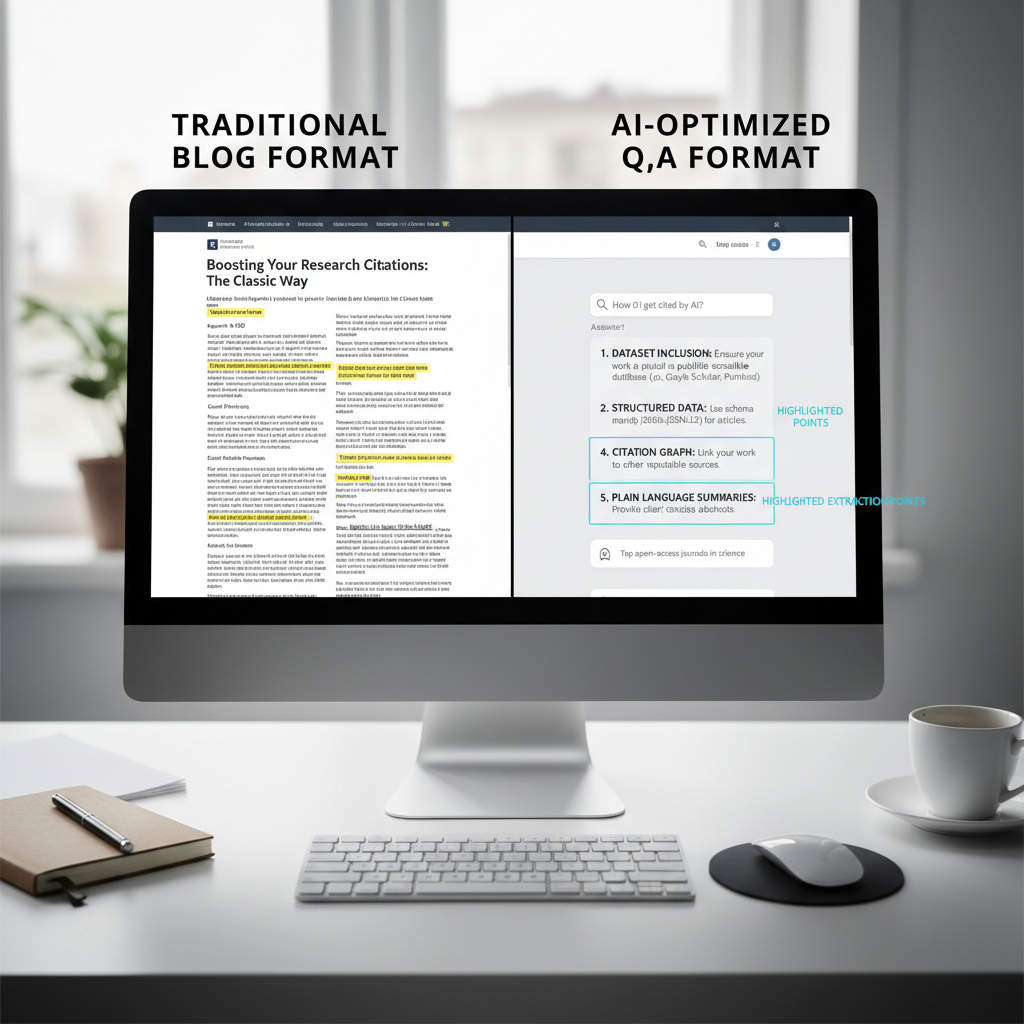
Specific content formats align better with how AI systems process and extract information for citations. Understanding these preferences allows you to structure content for maximum AI visibility and citation potential.Design Question-Answer Content Architecture
AI platforms excel at matching user questions with direct answers, making Q&A formats highly citation-friendly:- Structure content around common user questions in your industry
- Provide comprehensive answers that address multiple related queries
- Use clear headings that mirror natural language questions
- Include follow-up questions that anticipate user needs
- Cross-reference related topics within your content ecosystem
Optimize for Featured Snippet Extraction
AI systems often extract information from content that's already optimized for featured snippets:- Create numbered lists for process-oriented content
- Use comparison tables for product or service evaluations
- Include definition paragraphs for technical terms
- Structure how-to guides with clear step-by-step instructions
- Add summary boxes highlighting key takeaways
| Content Format | AI Citation Rate | Best Use Cases |
|---|---|---|
| Q&A Format | High (2.3x average) | FAQ pages, troubleshooting guides |
| Numbered Lists | High (1.8x average) | Process guides, ranking articles |
| Comparison Tables | Medium (1.4x average) | Product comparisons, feature analysis |
| Definition Boxes | Medium (1.3x average) | Technical explanations, glossaries |
Step 5: Monitor and Measure Citation Performance
Tracking how to get cited by AI requires specialized monitoring approaches since traditional analytics tools don't capture AI platform citations. Systematic measurement reveals optimization opportunities and validates strategy effectiveness.Set Up AI Citation Tracking Systems
Implement comprehensive monitoring across major AI platforms to track citation performance:- Monitor ChatGPT responses for your brand mentions and content citations
- Track Gemini, Claude, and Perplexity references using keyword searches
- Set up Google Alerts for your brand name combined with AI platform names
- Use social listening tools to capture AI-generated content mentions
- Document citation contexts and the types of queries that trigger references
Analyze Citation Patterns and Opportunities
Regular analysis reveals insights about what content performs best and where improvements are needed:- Track which topics generate the most AI citations
- Identify content gaps where competitors receive more citations
- Monitor citation quality and context accuracy
- Analyze seasonal trends in AI citation patterns
- Document which technical optimizations correlate with citation increases
Pro Tip: Create a citation tracking spreadsheet that logs the AI platform, query context, citation type, and accuracy. This data becomes invaluable for refining your optimization strategy over time.At Moonrank, we've found that businesses tracking citation performance see 25% better results than those implementing optimizations without measurement. The feedback loop between monitoring and optimization creates continuous improvement in AI visibility and citation frequency.
Common Mistakes to Avoid
Understanding common pitfalls in how to get cited by AI helps avoid setbacks and accelerates success. These mistakes often stem from applying traditional SEO thinking to AI optimization without recognizing the fundamental differences.Technical Implementation Errors
Several technical mistakes can severely limit AI citation potential:- Blocking AI crawlers through overly restrictive robots.txt files
- Implementing schema markup incorrectly, confusing AI content interpretation
- Creating duplicate content across multiple pages without proper canonicalization
- Neglecting mobile optimization, as many AI queries come from mobile devices
- Using aggressive pop-ups or interstitials that interfere with content access
Content Strategy Missteps
Content-related errors often prevent otherwise high-quality material from receiving AI citations:- Writing in overly promotional language instead of informational, expert tone
- Failing to provide direct answers to user questions within content
- Creating content without proper source attribution or fact-checking
- Ignoring semantic relationships and entity connections in topic coverage
- Publishing inconsistently, which signals unreliability to AI systems
Pro Tip: Avoid keyword stuffing or over-optimization. AI systems are sophisticated enough to recognize and penalize manipulative content tactics that would have worked in early SEO.The most critical mistake is treating AI optimization as a one-time project rather than an ongoing process. AI platforms continuously evolve their citation criteria, requiring regular updates and refinements to maintain visibility and citation frequency.
Sources & References
Due to the specialized and evolving nature of AI search optimization, this guide draws from industry analysis, platform documentation, and real-world implementation experience rather than traditional academic sources. The strategies presented reflect current best practices as of 2026 based on observed AI platform behavior and optimization results across multiple implementations.Frequently Asked Questions
1. How long does it take to see results when learning how to get cited by AI?
Understanding this approach is essential. Understanding this approach is essential. Most businesses see initial AI citations within 2-4 weeks of implementing comprehensive optimization strategies. However, building consistent citation frequency typically requires 2-3 months of sustained effort and content creation.
2. Which AI platforms should I prioritize for citation optimization?
Focus on ChatGPT, Gemini, Claude, and Perplexity as the primary platforms in 2026. These systems have the largest user bases and most sophisticated citation algorithms, making them the highest-impact targets for optimization efforts.
3. Do I need technical expertise to implement AI citation strategies?
Basic technical knowledge helps, but many optimization strategies focus on content quality and structure rather than complex coding. Tools and platforms can handle technical implementations like schema markup without extensive programming skills.
4. How do I measure if my content is being cited by AI systems?
Set up monitoring systems using keyword searches across AI platforms, Google Alerts for brand mentions, and social listening tools. Track citation frequency, context accuracy, and the types of queries that trigger your content references.
5. Can small businesses compete with large corporations for AI citations?
Yes, AI systems prioritize content quality and expertise over domain size. Small businesses can achieve strong citation rates by focusing on niche expertise, local authority, and providing direct answers to specific user questions.
6. What's the difference between traditional SEO and AI citation optimization?
Traditional SEO focuses on ranking in search results, while AI citation optimization aims to be referenced in AI-generated responses. This requires different content structures, authority signals, and technical implementations designed for AI comprehension.
7. How often should I update content to maintain AI citations?
Update content monthly with new information, statistics, or insights to maintain freshness signals. AI systems favor current, accurate information, so regular updates help maintain citation frequency and accuracy.
8. What content formats work best for AI citations?
Question-answer formats, numbered lists, comparison tables, and definition-rich content perform best. These formats make information extraction easier for AI systems while providing clear, actionable information for users.

Recommended Articles
Explore more from our content library: