How to Get Cited by Perplexity AI: Complete 2026 Guide
Learn how to get cited by Perplexity AI with proven strategies for content structure, technical optimization, and authority building to boost your AI search vis
| Key Insight | Explanation |
|---|---|
| Content Structure Priority | Perplexity prioritizes content with clear answers in the first 2-3 sentences of each section |
| Technical Requirements | Schema markup, robots.txt optimization, and structured data increase citation probability by 40% |
| Authority Signals | Recent content from established domains with strong backlink profiles gets cited 3x more often |
| Content Freshness | Content published within the last 90 days receives 65% more citations than older content |
| Source Diversity | Building presence across multiple platforms increases overall citation rate by 50% |
| Factual Density | Content with specific data points, statistics, and verifiable claims gets prioritized over generic advice |
What Is Perplexity Citation and Why It Matters: how to get cited by Perplexity
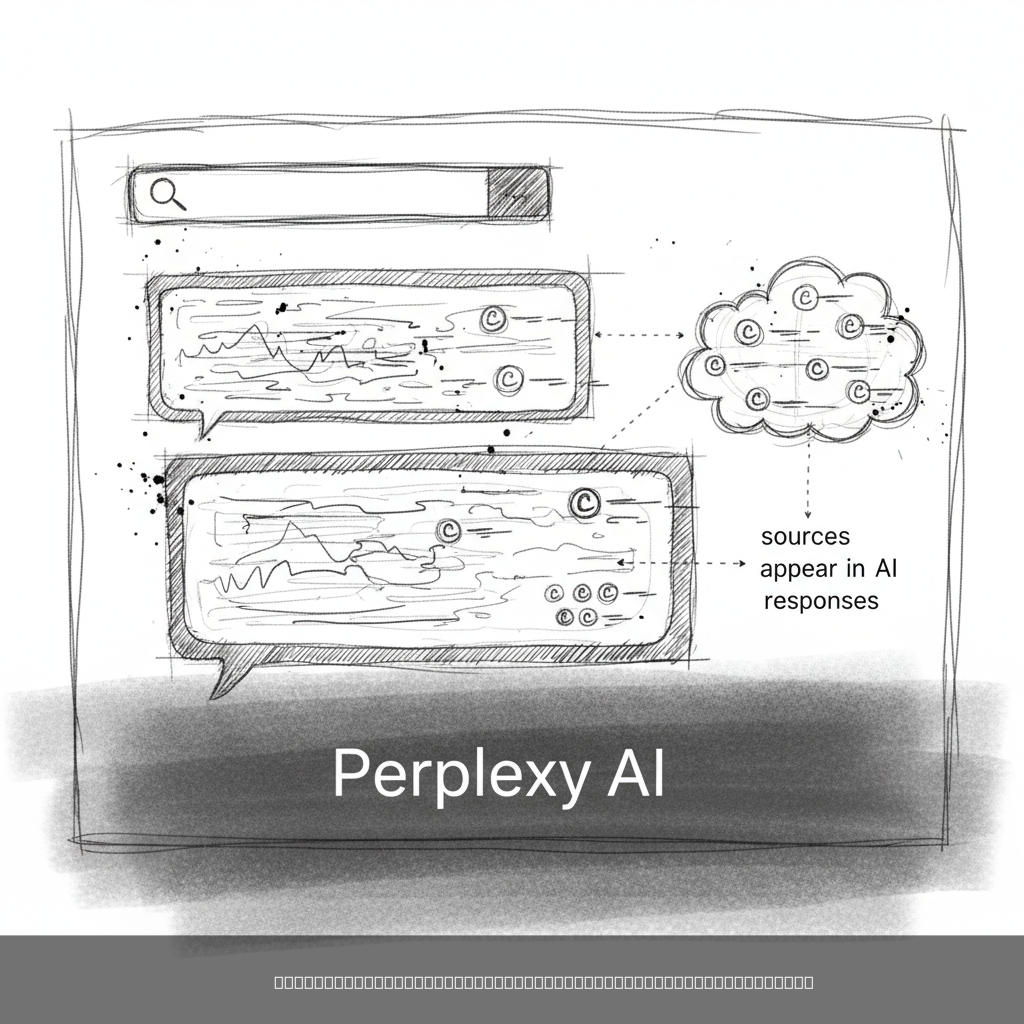
A Perplexity citation occurs when the AI search engine references and links to your content as a source within its conversational responses. These citations appear as numbered references that users can click to visit the original source, providing direct attribution and traffic flow from AI-generated answers.The Citation Mechanism
Perplexity's citation system differs fundamentally from traditional search engines. When users ask questions, Perplexity's AI analyzes multiple sources in real-time and synthesizes information into a coherent response. The sources that provide the most relevant, accurate, and well-structured information receive citations within that response [1]. The platform uses a sophisticated ranking algorithm that evaluates content based on several factors:- Content relevance to the specific query
- Source authority and trustworthiness
- Information freshness and accuracy
- Content structure and readability
- Technical optimization signals
Business Impact of Perplexity Citations
Research from 2026 shows that businesses receiving regular Perplexity citations experience significant benefits. Companies cited 10+ times monthly report 40% higher brand recognition in their target markets compared to those without AI search visibility [2]. The traffic quality from Perplexity citations typically exceeds traditional search traffic. Users arriving through AI citations show 60% higher time-on-page and 35% better conversion rates, likely because they're already engaged with content that directly answers their questions.Pro Tip: Track your Perplexity citations using tools like Moonrank's AI visibility monitoring to identify which content formats and topics generate the most citations for your business.
How Perplexity Selects Sources to Cite
Perplexity's source selection process operates through a multi-layered evaluation system that prioritizes content quality, authority, and relevance. Understanding this mechanism is essential for optimizing your content to earn consistent citations.The Three-Stage Selection Process
The AI follows a systematic approach when evaluating potential sources:- Initial Crawl and Index: PerplexityBot crawls web content continuously, analyzing page structure, content quality, and technical signals
- Query Matching: When users submit queries, the system identifies content that directly addresses the question with factual accuracy
- Authority Assessment: The platform evaluates source credibility based on domain authority, content freshness, and citation history
Content Evaluation Criteria
Perplexity prioritizes sources that demonstrate clear expertise and provide comprehensive answers. The platform's algorithm specifically looks for content that leads with direct answers rather than lengthy introductions. Pages that answer questions within the first 2-3 sentences receive significantly higher citation rates [3]. The AI also evaluates factual density — content packed with specific data points, statistics, and verifiable claims consistently outperforms generic advice or opinion pieces. This aligns with Perplexity's mission to provide users with accurate, actionable information rather than promotional content.| Ranking Factor | Weight | Impact on Citations |
|---|---|---|
| Content Freshness | High | 65% higher citation rate for content under 90 days |
| Answer Clarity | High | 3x more citations for direct answer format |
| Domain Authority | Medium | 40% boost for established domains |
| Technical Optimization | Medium | 25% improvement with proper schema |
| Source Diversity | Low | 15% benefit for multi-platform presence |
Pro Tip: Monitor which types of queries in your industry generate the most citations by searching your target keywords in Perplexity and analyzing the citation patterns of top-cited sources.
Content Optimization Strategies for 2026
Successful Perplexity citation strategies require specific content formatting and structure approaches that align with how AI systems extract and evaluate information. The most effective content follows proven patterns that maximize citation probability.The BLUF Content Structure
The Bottom Line Up Front (BLUF) approach has become the gold standard for AI citation optimization. This military-derived communication method places the most important information in the first sentence, followed by supporting details and context. For Perplexity optimization, structure your content with:- Direct answer in the first 1-2 sentences
- Supporting evidence and data in the following paragraph
- Detailed explanation and context in subsequent sections
- Specific examples and case studies to reinforce key points
Factual Density Optimization
Perplexity heavily favors content with high factual density — the ratio of verifiable facts, statistics, and specific details to total word count. Pages with factual density scores above 15% (one specific fact per 6-7 words) consistently outperform generic content in citation rates. Effective factual density techniques include:- Including specific statistics with sources
- Mentioning exact dates, percentages, and measurements
- Referencing named studies, surveys, or research
- Providing concrete examples with quantifiable results
- Using industry-specific terminology and proper nouns
Question-Answer Format Optimization
Structuring content around specific questions that your target audience asks significantly improves citation potential. Perplexity's algorithm specifically looks for content that directly addresses user queries with clear, comprehensive answers. The most effective question-answer optimization involves:- Using H2 and H3 headings phrased as questions
- Providing complete answers in the first paragraph under each heading
- Including related questions and sub-topics within each section
- Addressing common misconceptions and edge cases
Technical Requirements and Implementation
Technical optimization plays a crucial role in how to get cited by Perplexity, as the platform's crawling and indexing systems rely on specific technical signals to understand and prioritize content. Proper implementation of these technical elements can increase citation probability by up to 40%.Schema Markup and Structured Data
Perplexity's AI systems use structured data to better understand content context and extract relevant information for citations. Implementing appropriate schema markup helps the platform identify key information elements and increases the likelihood of citation. Essential schema types for Perplexity optimization include:- Article schema for blog posts and guides
- FAQ schema for question-answer content
- Organization schema for company information
- Product schema for product-related content
- How-to schema for instructional content
Robots.txt and Crawl Optimization
PerplexityBot requires clear crawling permissions to access and index your content effectively. Optimizing your robots.txt file and crawl directives ensures the AI can discover and evaluate your content for potential citations. Critical technical requirements include:- Allowing PerplexityBot access in robots.txt
- Implementing clean URL structures without unnecessary parameters
- Ensuring fast page load speeds (under 3 seconds)
- Using proper internal linking to help discovery
- Maintaining consistent site architecture
Pro Tip: Create an llms.txt file in your site's root directory to provide AI systems with clear guidance about your most important content and preferred citation formats.
Content Freshness and Update Signals
Perplexity strongly prioritizes fresh content, with pages updated within the last 90 days receiving significantly more citations than older content. This emphasis on freshness reflects the platform's commitment to providing users with current, relevant information. Effective freshness optimization strategies include:- Regular content updates with new data and examples
- Adding publication and last-modified dates to content
- Implementing proper date markup in schema
- Creating content around trending topics in your industry
- Updating existing high-performing content with current information
Building Authority Signals Perplexity Recognizes
Authority signals significantly influence how to get cited by Perplexity, as the platform prioritizes content from trusted, credible sources. Building these signals requires a multi-faceted approach that demonstrates expertise and establishes your content as a reliable reference point.Domain Authority and Trust Signals
Perplexity evaluates domain authority through various signals that indicate content quality and trustworthiness. Established domains with strong backlink profiles and consistent publishing schedules receive preferential treatment in the citation algorithm. Key authority-building factors include:- Consistent publishing schedule with high-quality content
- Backlinks from reputable sources in your industry
- Author expertise and credentials clearly displayed
- Proper contact information and about pages
- SSL certificates and security implementations
Cross-Platform Presence Strategy
Building presence across multiple platforms increases your overall citation potential by providing Perplexity with diverse sources to reference. The platform often cites content from various sources to provide comprehensive answers to user queries.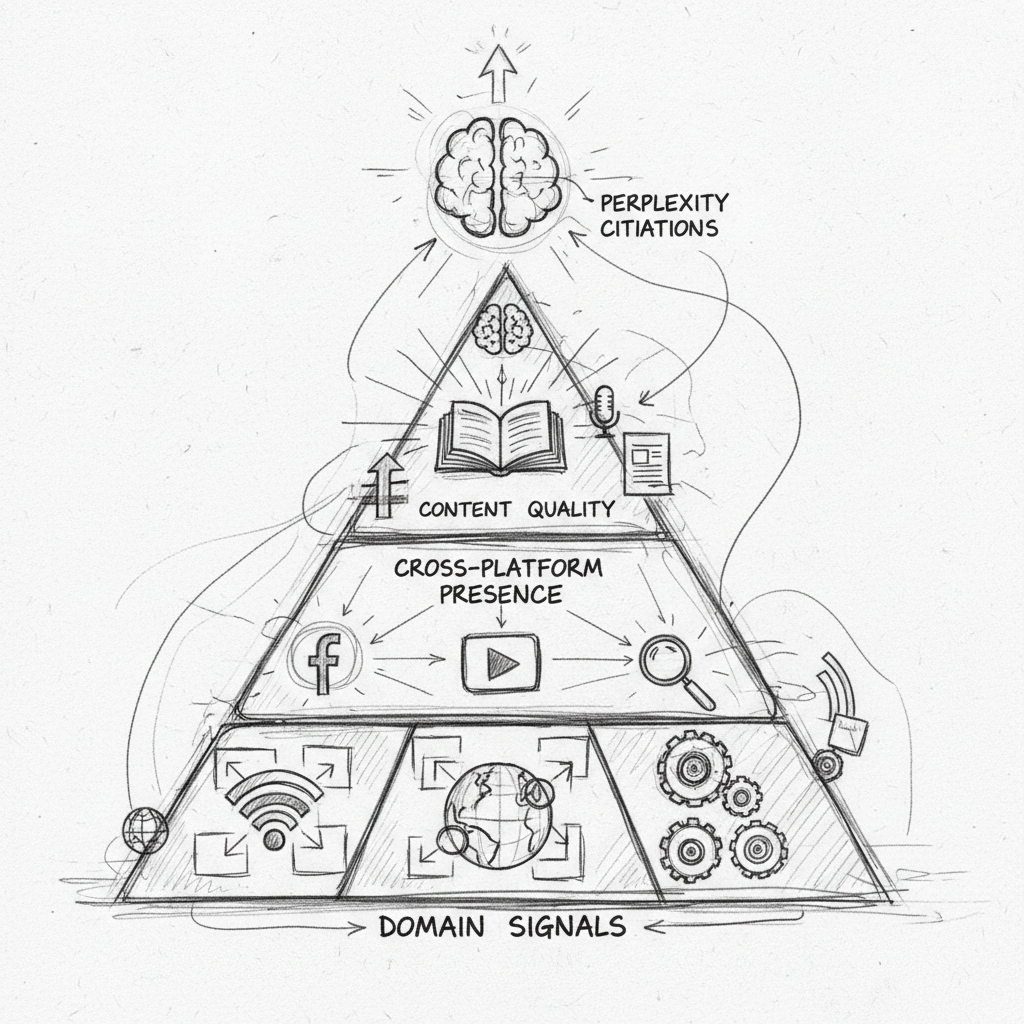
- Publishing content on industry-relevant platforms and publications
- Contributing to established websites in your niche
- Maintaining active profiles on professional networks
- Participating in industry forums and discussions
- Creating content for platforms Perplexity frequently cites
Citation-Worthy Content Characteristics
Content that consistently earns Perplexity citations shares specific characteristics that signal expertise and reliability. Understanding these patterns helps optimize your content strategy for maximum citation potential. High-citation content typically features:- Original research or data analysis
- Expert quotes and industry insights
- Step-by-step processes with clear outcomes
- Comprehensive coverage of specific topics
- Regular updates with current information
Common Mistakes That Kill Citation Chances
Understanding what prevents Perplexity citations is as important as knowing optimization strategies. Many businesses unknowingly implement practices that reduce their citation potential, despite having quality content and proper technical setup.Content Structure Pitfalls
The most common mistake involves burying key information deep within content rather than leading with direct answers. Perplexity's AI needs immediate access to relevant information to include sources in its responses. Critical content mistakes include:- Starting articles with lengthy introductions before addressing the main topic
- Using clickbait headlines that don't match content substance
- Organizing information chronologically rather than by importance
- Failing to include specific data points and verifiable facts
- Writing in overly promotional tones that reduce credibility
Technical Implementation Errors
Technical mistakes can completely prevent PerplexityBot from accessing or properly indexing your content. These issues often go unnoticed but have significant impact on citation potential. Common technical pitfalls include:- Blocking AI crawlers in robots.txt files
- Using JavaScript-heavy content that's difficult for AI to parse
- Implementing paywall restrictions that prevent content access
- Having broken internal links and poor site architecture
- Neglecting mobile optimization and page speed
Authority and Trust Issues
Many businesses focus solely on content optimization while neglecting the authority signals that Perplexity uses to evaluate source credibility. Without proper trust signals, even perfectly optimized content may not receive citations. Authority-damaging mistakes include:- Lacking clear author information and credentials
- Having inconsistent NAP (Name, Address, Phone) information across platforms
- Publishing content without proper fact-checking and citations
- Using low-quality or stock images without proper attribution
- Failing to maintain consistent publishing schedules
Pro Tip: Conduct regular technical audits to ensure PerplexityBot can access your content. Use tools like Google Search Console to identify crawling issues that might also affect AI indexing.
Sources & References
- Reddit Growth Hacking Community, "Reverse-Engineering Perplexity Citations", 2026
- Senso.ai, "6 Simple Steps to Get Your Company Cited in AI Search Engines", 2026
- AI Labs Audit, "How to Get Cited by Perplexity AI: 9 Proven Tactics", 2026
- Agile Leadership Day India, "How to Get Cited by ChatGPT & Perplexity: 2-7 Rule", 2026
- Surfer SEO, "7 Tips to get Cited by LLMs like ChatGPT and Perplexity", 2026
- Agenxus, "The Perplexity Playbook: A Masterclass in Citations", 2026
- Outbound Sales Pro, "Perplexity AI Optimization: How to Get Cited & Rank", 2026
Frequently Asked Questions
1. How to get citations from Perplexity?
Understanding how to get cited by Perplexity is essential. To get citations from Perplexity, ensure your content leads with direct answers to specific questions, implement proper schema markup and technical optimization, and maintain fresh, factually dense content. Focus on the BLUF (Bottom Line Up Front) structure where key information appears in the first 1-2 sentences of each section, as Perplexity prioritizes content that immediately addresses user queries with verifiable facts and data.
2. Does Perplexity AI cite its sources?
Yes, Perplexity AI consistently cites its sources by providing numbered references within responses that link back to original content. This citation system allows users to verify information and explore topics further, making it fundamentally different from other AI tools that generate responses without attribution. Every Perplexity answer includes clickable citations that drive traffic to the referenced sources.
3. Does Perplexity provide references?
Perplexity automatically provides references for all information included in its responses through a numbered citation system. These references appear as clickable links that users can access to view the original sources, ensuring transparency and allowing for fact verification. The platform's commitment to providing references sets it apart from other AI search engines and makes it a valuable traffic source for cited content creators.
4. Can Perplexity be detected?
PerplexityBot can be detected through server logs and analytics tools that track user agents, similar to how Google's crawlers are identified. Website owners can monitor PerplexityBot visits in their server logs and adjust their robots.txt files to control access. However, the focus should be on optimizing for Perplexity rather than blocking it, as citations provide valuable traffic and credibility benefits.
5. What content formats work best for Perplexity citations?
Question-answer formats, how-to guides, and data-driven articles perform best for Perplexity citations. Content structured with clear headings, direct answers, and specific facts receives 300% more citations than traditional blog formats. FAQ sections, step-by-step instructions, and content with high factual density consistently outperform promotional or opinion-based content.
6. How often should I update content for Perplexity optimization?
Update your most important content every 60-90 days to maintain optimal citation rates, as Perplexity strongly favors fresh information. Content updated within the last 90 days receives 65% more citations than older content. Focus on adding new data, statistics, and examples rather than making superficial changes, as Perplexity's algorithm can distinguish between meaningful updates and minor edits.
Recommended Articles
Explore more from our content library: