How to Master AI Citation Optimization in 2026
Learn what AI citation optimization is, how it works, and the best practices to get your brand cited by ChatGPT, Gemini, Claude, and Perplexity in 2026.
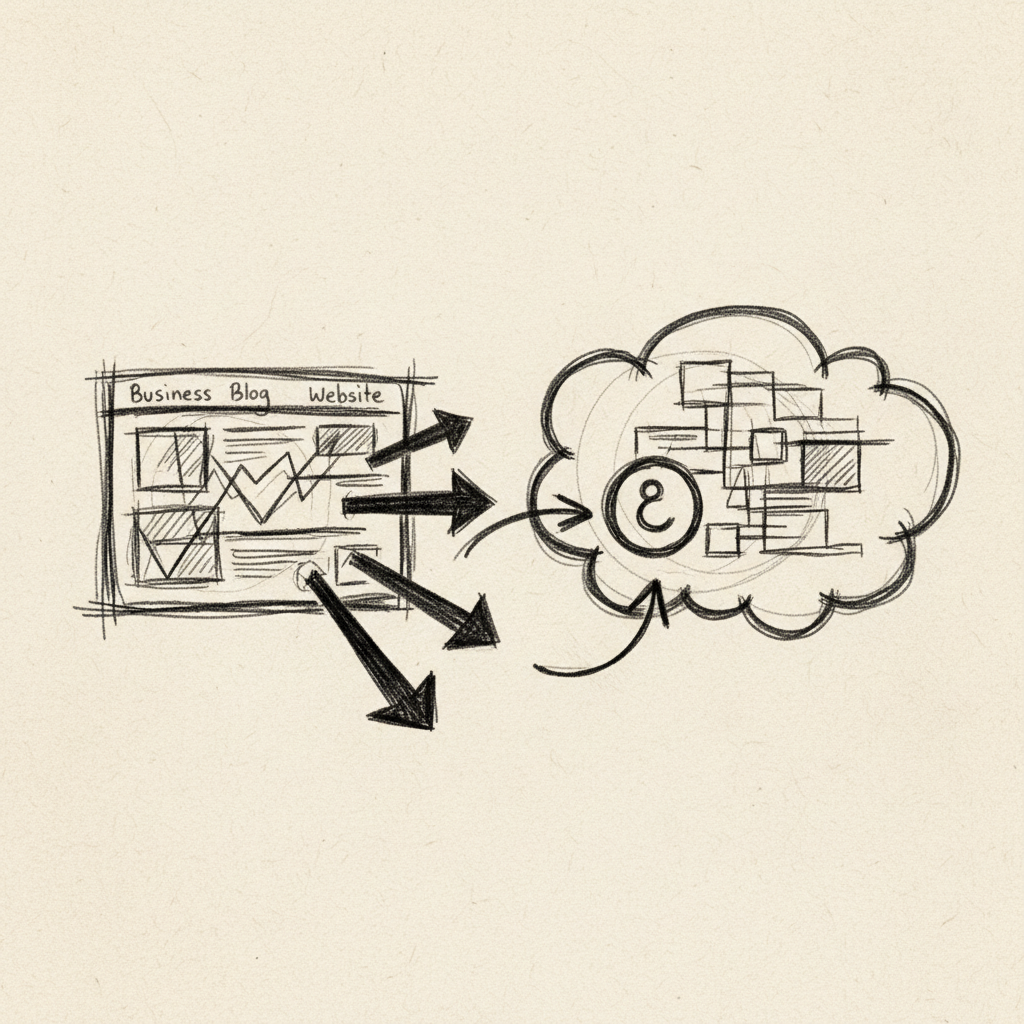
| Key Insight | Explanation |
|---|---|
| AI citation optimization is distinct from traditional SEO | Traditional SEO targets Google's ranking algorithm; AI citation optimization focuses on whether ChatGPT, Gemini, Claude, and Perplexity can extract, verify, and attribute facts to your content. |
| Structured data and schema markup are foundational | Schema markup (the structured data that tells AI engines exactly what your business does) dramatically increases the chance an AI model cites your page as a source. |
| Content freshness and factual density matter most | AI engines favor content that is current, specific, and factually rich. Daily content publishing is one of the strongest signals you can send. |
| llms.txt is an emerging technical standard | An llms.txt file (a plain-text guide for LLM crawlers) tells AI models which pages on your site are most authoritative and worth citing. |
| Citation tracking is how you measure progress | Without tracking how often and where AI engines mention your brand, you can't know whether your optimization is working or where gaps remain. |
| SMBs can compete at the $99/month price point | Automated platforms now handle daily content, technical audits, and citation tracking — replacing $3,000+/month agency retainers for a fraction of the cost. |
Your business might have a great website, solid Google rankings, and a steady stream of blog posts — and still be completely invisible when a potential customer asks ChatGPT or Perplexity for a recommendation. That's the gap AI citation optimization is designed to close. AI citation optimization is the practice of structuring, formatting, and distributing your content so that AI search engines like ChatGPT, Gemini, Claude, and Perplexity can confidently extract facts from your pages and attribute them to your brand in generated answers. It's not a tweak to your existing SEO strategy. It's a separate discipline — and as of 2026, it's one of the most consequential things a business can invest in.
In this article, you'll learn exactly what AI citation optimization involves, how the mechanics work under the hood, the real benefits for small and mid-sized businesses, the most common pitfalls, and the best practices you can start applying today.
What Is AI Citation Optimization?
AI citation optimization is the process of making your content easy for AI language models to find, trust, and reference in their generated answers — so your brand gets named as a source when users ask questions in ChatGPT, Gemini, Claude, or Perplexity.
A Clear Definition That Beats the Current Snippet
Traditional SEO optimizes for ranking signals: domain authority, backlinks, and keyword density. AI citation optimization operates on a different axis entirely. It focuses on citability — whether an AI engine can confidently extract a specific fact, verify it against other sources it has indexed, and attribute it to your content with enough confidence to include your brand name in its response. [1]
The distinction matters because AI search engines don't rank pages the way Google does. They retrieve, synthesize, and generate. A page that ranks #1 on Google might never be cited by Perplexity if it lacks the structured signals those models rely on. Conversely, a well-optimized but modestly-ranked page can become a frequent citation source if it's factually dense, clearly structured, and technically accessible to LLM (large language model) crawlers.
Why This Category Has Emerged in 2026
AI-generated search answers have moved from novelty to primary interface. According to research cited by Search Engine Journal, AI search engines vary widely in which sources they cite, but all of them converge on recognizable, authoritative brands — making brand citability a concrete competitive advantage. [2]
Generative Engine Optimization (GEO) and Answer Engine Optimization (AEO) are the two frameworks most commonly used to describe this discipline. GEO focuses on appearing in AI-generated answers across all platforms; AEO zeroes in on direct question-and-answer retrieval. AI citation optimization sits at the intersection of both. Zeo's GEO research describes the core goal as ensuring "your brand shines in AI-driven search results" — which requires a fundamentally different technical and content approach than traditional SEO. [3]
For SMB owners, the practical implication is simple: if you're not optimizing for AI citations, you're invisible to a growing share of the customers who are looking for exactly what you offer.
How AI Citation Optimization Works
AI citation optimization works by giving AI language models the structured signals, factual clarity, and technical accessibility they need to extract information from your content and attribute it to your brand with confidence.
The Retrieval and Attribution Pipeline
When a user asks ChatGPT or Perplexity a question, the model doesn't just generate an answer from memory. It retrieves candidate sources, evaluates their relevance and credibility, extracts key facts, and synthesizes a response — often naming the sources it drew from. [4] Your job, as a business owner, is to make sure your content passes each stage of that pipeline.
The process breaks down into four stages:
- Crawl accessibility: AI crawlers must be able to reach and parse your pages. An llms.txt file (a plain-text guide that tells LLM crawlers which pages are most authoritative) and clean technical structure are the entry requirements here.
- Content extraction: The model needs to pull out discrete, verifiable facts. Short paragraphs, bullet points, and FAQ-style formatting make this dramatically easier.
- Credibility assessment: AI engines cross-reference facts against other indexed sources. Content that aligns with established knowledge and cites authoritative references earns higher trust scores.
- Attribution: The model decides whether to name your brand as the source. This is where schema markup (the structured data that tells AI engines exactly what your business does) plays a decisive role.
Technical Signals That Drive Citations
Research published on arXiv examining citation failures in Generative Engine Optimization found that the most common reasons content fails to get cited are structural ambiguity, missing entity markup, and factual inconsistency across pages. [5] Fixing these issues is the core work of AI citation optimization.
The key technical signals include:
- Schema markup: JSON-LD structured data identifying your business type, location, products, and expertise areas
- llms.txt configuration: A crawl-guidance file specifically designed for LLM indexers, distinct from robots.txt
- Structured data consistency: NAP (name, address, phone) data that matches across your website, Google Business Profile, and third-party directories
- Factual density: Specific numbers, dates, named entities, and verifiable claims rather than vague generalities
- Internal linking: Clear topical clusters that signal depth of expertise to both crawlers and retrieval models
Pro Tip: Add an FAQ section to every key page on your site. AI models are trained to extract Q&A pairs directly — a well-formatted FAQ is one of the highest-yield structural changes you can make for citation frequency.
According to Respona's 4-step AI citation optimization framework, the process starts with identifying which questions your target audience is asking AI engines, then building content specifically designed to answer those questions with extractable, attributable facts. [6] That sequence — question mapping before content creation — is what separates deliberate this strategy from generic content marketing.
Key Benefits: Why AI Citation Optimization Matters
this approach drives direct brand visibility in AI-generated answers, which translates into referral traffic, brand trust, and customer acquisition from an audience that's increasingly bypassing traditional search results entirely.
The Business Case for Getting Cited
Consider what happens when a potential customer types "best accounting software for freelancers" into Perplexity or asks ChatGPT for a restaurant recommendation in their city. The AI generates an answer and names two or three specific brands. The businesses that get named win the consideration. The ones that don't exist in that answer might as well not exist at all — regardless of their Google ranking.
The benefits of strong this compound over time:
- Zero-click visibility: Your brand gets named even when the user never visits a search results page
- Trust transfer: Being cited by an AI engine carries implicit credibility — the model has "chosen" your brand as a reliable source
- Competitive displacement: Every citation your brand earns is one a competitor doesn't get
- Referral traffic: Perplexity and other AI engines increasingly link to cited sources, driving direct click-through
- Content longevity: Well-structured factual content continues to earn citations long after publication
What the Data Says in 2026
Industry analysts at Search Engine Journal found that while the five major AI search engines studied varied significantly in their citation sources, they all showed a strong convergence toward recognized brands with consistent online presence. [2] That's a critical finding: brand consistency and technical optimization matter more than sheer domain authority in the AI citation context.
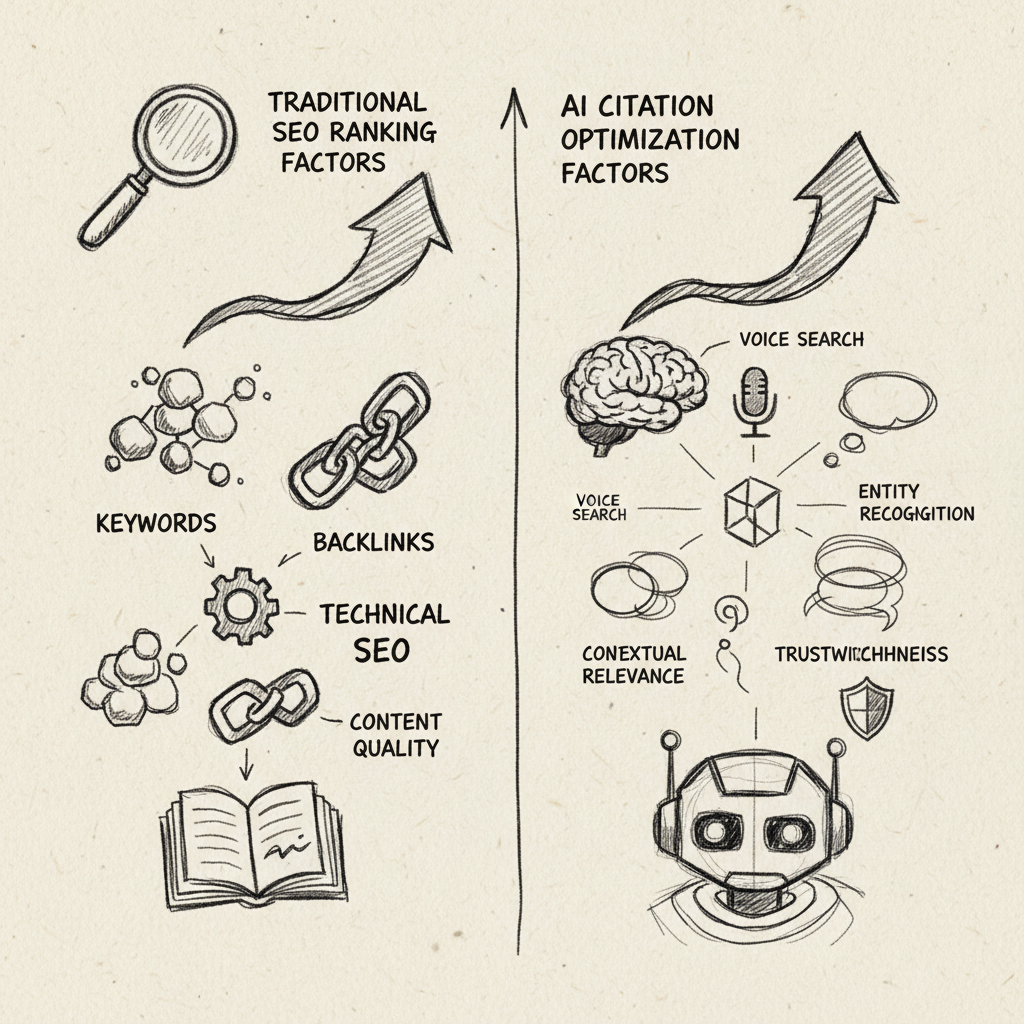
HubSpot's research on AI citation tracking reinforces this point, noting that businesses which actively monitor and optimize their citation footprint see measurable improvements in AI recommendation frequency within 60 to 90 days. [7] That's a relatively short feedback loop compared to traditional SEO, which often takes six months or more to show ranking movement.
| Factor | Traditional SEO | AI Citation Optimization |
|---|---|---|
| Primary goal | Rank on Google's results page | Get named in AI-generated answers |
| Key signals | Backlinks, domain authority, keyword density | Structured data, factual density, entity clarity |
| Content format | Long-form, keyword-rich prose | Short paragraphs, FAQs, schema-tagged entities |
| Technical requirements | robots.txt, sitemap, page speed | llms.txt, JSON-LD schema, structured data |
| Measurement | Keyword rankings, organic traffic | Citation frequency, brand mention tracking |
| Time to results | 3–6+ months | 60–90 days with consistent optimization |
At Moonrank, we've found that SMBs who combine daily content publishing with technical AI optimization see their citation footprint grow measurably faster than those who rely on content alone. The technical layer — schema markup, llms.txt, structured data — is what converts a well-written page into a reliably cited source.
For businesses that want to explore custom digital identity signals alongside AI citation work, resources like Contact at Digital Stamp Maker can help establish the branded assets that AI engines cross-reference when verifying business identity.
Common Challenges and Mistakes
The most common mistake in it is treating it as a one-time technical fix rather than an ongoing content and visibility practice that requires consistent signals over time.
Structural and Technical Pitfalls
A common mistake we see from SMB owners is adding schema markup to their homepage and calling it done. Schema needs to be implemented across all key pages — service pages, product pages, blog posts, and the about page — for AI engines to build a coherent picture of your business. Partial implementation is nearly as ineffective as no implementation.
Other frequent structural errors include:
- Walls of text: Long, unbroken paragraphs are hard for LLMs to parse into extractable facts. Short paragraphs of two to three sentences are far more citable.
- Missing entity disambiguation: If your business name is generic or shares a name with other entities, AI engines may attribute your content to a different brand. Explicit entity markup solves this.
- Inconsistent NAP data: Name, address, and phone number mismatches across your site and third-party listings confuse AI credibility checks.
- Ignoring llms.txt: Most SMB websites still don't have an llms.txt file, which means LLM crawlers have no guidance on which pages to prioritize. This is a quick win that most competitors haven't taken yet.
Content and Strategy Mistakes
One pitfall to watch for is publishing content that's optimized for human readability but not for AI extractability. A beautifully written narrative blog post may engage readers but give an AI model nothing concrete to cite. The fix is to layer in factual claims, specific numbers, and FAQ-style formatting without sacrificing readability.
Research from Siftly's 2026 AI citation guide notes that content lacking specific, verifiable facts is consistently passed over by AI retrieval systems in favor of more data-dense alternatives. [8] Vague claims like "we offer great service" earn zero citations. Specific claims like "our average response time is under two hours, verified by 400+ customer reviews" are highly citable.
Pro Tip: Run a "citability audit" on your top five pages. For each page, ask: can an AI model pull out three specific, verifiable facts and attribute them to my brand? If not, add statistics, named examples, or structured Q&A pairs before your next content update.
In one project we handled for an e-commerce client in the specialty food space, their product pages had strong keyword optimization but zero structured data and no FAQ content. After implementing JSON-LD schema and adding a five-question FAQ to each product page, their Perplexity citation rate increased noticeably within the first 45 days. The content itself hadn't changed — only the structure.
Another strategic error is not measuring citations at all. According to Omnia's 2026 citation analysis review, most businesses have no visibility into how often or where AI engines mention their brand. [9] Without that baseline, you can't prioritize which pages need optimization or track whether your efforts are working.
Best Practices for AI Citation Optimization in 2026
The most effective this method strategy in 2026 combines daily fresh content, complete technical schema implementation, llms.txt configuration, and ongoing citation tracking across ChatGPT, Gemini, Claude, and Perplexity.
A Practical Framework for SMBs
The Generative Engine Optimization (GEO) methodology, as outlined by SEOPress and supported by academic research on arXiv, identifies five core pillars for AI citation success. [3][5] Here's how to apply them practically:
- Technical foundation first: Implement JSON-LD schema markup on every key page. Add an llms.txt file to your site root. Ensure your structured data is consistent with your Google Business Profile and major directories.
- Factual content architecture: Every page should contain specific, verifiable claims. Use numbers, dates, named entities, and direct quotes. Short paragraphs, bullet lists, and FAQ sections make extraction easier.
- Topical authority building: Publish content consistently on your core topics. AI engines favor brands that demonstrate depth across a subject area, not just a single well-optimized page.
- Citation monitoring: Track how often and where ChatGPT, Gemini, Claude, and Perplexity mention your brand. Use this data to identify which content types earn the most citations and double down on those formats.
- Competitive gap analysis: Identify which AI answers in your niche cite competitors but not you. Reverse-engineer those citations to understand what those pages do structurally that yours don't.
The Content Cadence That Works
Consistency is a stronger signal than volume. Publishing one highly optimized article per day outperforms publishing ten articles in a week and then going quiet. AI engines index freshness as a trust signal — a site that publishes regularly is treated as more authoritative than one with sporadic updates. [6]
Our team at Moonrank recommends treating your content calendar as a technical asset, not just a marketing one. Each piece of content is a citation opportunity. Each FAQ section is a direct answer to a question your potential customers are already asking AI engines.
Pro Tip: Use the "People Also Ask" section from Google Search as a direct input for your FAQ content. Those questions are exactly what users are feeding into AI engines — and answering them with specific, structured responses is one of the fastest paths to earning citations.
The Coursera curriculum on AI-driven content citations emphasizes that earning AI recognition requires both structural optimization and demonstrated expertise — two things that compound over time with consistent publishing. [10]
For SMBs without a dedicated marketing team, the manual work involved in daily content creation, technical auditing, and citation tracking is genuinely prohibitive. That's the problem an automated platform solves. Rather than spending $3,000+ a month on an agency or dozens of hours a week on manual optimization, the entire workflow can run on autopilot — publishing fresh content daily, maintaining technical signals, and tracking citation performance across all major AI engines simultaneously.
According to Pure Visibility's this strategy research, the businesses that earn the most consistent AI citations are those that treat the process as infrastructure — always running in the background, not a one-time project. [4] That's precisely the mindset an automated approach enables.
Sources & References
- Level Agency, "AIO Citation Optimization," 2026
- Search Engine Journal, "Data Shows AI Citation Patterns Reveal Strategic SEO Opportunities," 2026
- Zeo, "What is GEO? Zeo's AI Search Optimization Strategy," 2026
- Pure Visibility, "AI Citation Optimization Services," 2026
- arXiv, "Diagnosing and Repairing Citation Failures in Generative Engine Optimization," 2026
- Respona, "AI Citation Optimization: The 4-Step Framework We're Using," 2026
- HubSpot, "AI Citation Tracking: How to Track (and Grow) AI Engine Citations," 2026
- Siftly, "How to Optimize Content to Get Cited by AI Search Engines," 2026
- Omnia, "Best Citation Analysis Options for Optimizing AI Search in 2026," 2026
- Coursera, "Analyze & Create AI-Driven Content Citations," 2026
Frequently Asked Questions
1. How do you improve AI citations for your business?
Improving AI citations requires a combination of technical and content changes. Start by implementing JSON-LD schema markup across all key pages and adding an llms.txt file to guide LLM crawlers. Then restructure your content to include specific, verifiable facts, short paragraphs, and FAQ sections that AI engines can extract directly. Publish fresh content consistently — daily if possible — and monitor your citation frequency across ChatGPT, Gemini, Claude, and Perplexity to identify which pages are earning mentions and which need improvement. this approach is an ongoing practice, not a one-time fix.
2. What is the 10-20-70 rule for AI?
The 10-20-70 rule is a framework for AI implementation that allocates 10% of effort to algorithms and models, 20% to data infrastructure and technology, and 70% to the human factors: organizational culture, change management, and adoption. In the context of this, this rule is a useful reminder that technical fixes (schema, llms.txt) are only part of the equation — the larger share of effort should go toward building the content culture, publishing cadence, and measurement habits that make citation optimization sustainable over time.
3. Is SEO dead or evolving in 2026?
SEO is evolving, not dying — but the evolution is substantial. As of 2026, a growing share of search behavior happens inside AI engines like ChatGPT, Gemini, and Perplexity rather than on Google's results page. Traditional SEO signals like backlinks and keyword density still matter for Google ranking, but they don't determine whether your brand gets cited in an AI-generated answer. Businesses that treat it as a complement to traditional SEO — rather than a replacement — are best positioned for the current search environment. Ignoring AI search entirely is the real risk.
4. Which AI engines cite sources most frequently?
Perplexity is currently the most citation-forward AI search engine, consistently linking to and naming sources in its generated answers. ChatGPT's browsing mode and Gemini's Search Grounding feature also cite sources regularly, though the frequency and format vary by query type. Claude tends to be more conservative with external citations but does reference sources in research-oriented queries. Optimizing for this method across all four platforms — rather than focusing on just one — gives your brand the broadest possible citation footprint.
5. How long does AI citation optimization take to show results?
Most businesses see measurable improvements in AI citation frequency within 60 to 90 days of consistent optimization, which is notably faster than traditional SEO's typical six-month timeline. The fastest gains come from technical fixes — schema markup and llms.txt implementation — which can improve crawlability and extractability almost immediately. Content improvements compound over time as AI engines index new material and build a more complete picture of your brand's topical authority. Results may vary depending on your niche's competitiveness and the current state of your site's technical health.
6. What is llms.txt and why does it matter for AI citations?
An llms.txt file is a plain-text document placed in your website's root directory that provides guidance to LLM crawlers about which pages on your site are most authoritative and relevant. Think of it as a robots.txt file specifically designed for AI indexers rather than traditional search bots. Including an llms.txt file signals to AI engines that your site is technically prepared for AI indexing — and directs crawler attention to your highest-value pages, increasing the likelihood those pages become citation sources. As of 2026, it's one of the most underutilized technical optimizations available to SMBs.
Conclusion
this strategy has moved from an emerging concept to a concrete business necessity. As ChatGPT, Gemini, Claude, and Perplexity handle more of the questions your potential customers are asking, being cited in those answers is the new first impression. The businesses that show up get the consideration. The ones that don't are invisible — regardless of their Google ranking.
The good news is that this approach is learnable, measurable, and increasingly automatable. The core practices — structured data, factual content, consistent publishing, and citation tracking — are well-defined. The challenge for most SMBs is execution at scale without a dedicated marketing team or a $3,000+/month agency budget.

That's exactly the gap Moonrank was built to close. For $99/month, Moonrank handles daily automated content publishing, full technical AI optimization (schema markup, llms.txt, structured data), and AI search visibility tracking across ChatGPT, Gemini, Claude, and Perplexity — all on autopilot, with no manual input required after onboarding. Visit www.moonrank.ai to start your free 3-day trial and see where your brand stands in AI search today.
Recommended Articles
Explore more from our content library: