How to Master AI Content Referencing in 2026
Learn how AI content referencing works, how to cite AI-generated text correctly, and how to get your brand referenced by ChatGPT, Gemini, and Perplexity.

| Key Insight | Explanation |
|---|---|
| AI content referencing has two distinct meanings | It covers both citing AI-generated content in academic or professional work AND getting AI engines like ChatGPT to cite your brand in their answers. |
| Citation style depends on your context | APA, MLA, and Chicago each have specific formats for AI-generated text; APA 7th edition is the most widely adopted standard as of 2026. |
| AI engines hallucinate citations | AI tools like ChatGPT can fabricate plausible-looking but nonexistent sources; always verify every reference independently before publishing. |
| Structured data drives AI brand citations | Schema markup, llms.txt files, and consistent entity signals help AI search engines understand and recommend your business in their responses. |
| Disclosure is increasingly mandatory | Many institutions, publishers, and government bodies now require explicit acknowledgment when AI tools contributed to content creation. |
| $99/month automation exists for AI visibility | Platforms like Moonrank automate the technical optimization needed to get your brand cited by ChatGPT, Gemini, Claude, and Perplexity — without agency costs. |
AI content referencing is one of the most misunderstood topics in both academic writing and digital marketing right now. On one hand, researchers, students, and professionals need to know how to properly cite content that was generated by tools like ChatGPT, Claude, or Gemini. On the other hand, business owners need to understand a completely different challenge: how to get AI engines to reference their brand when answering a user's question. Both problems matter. Both require a clear, practical approach. This guide covers the full picture — from formatting an APA citation for a ChatGPT output to optimizing your website so Perplexity recommends you by name. You'll leave with a step-by-step process you can act on today, whether you're a student submitting a paper or a founder who wants to show up in AI search answers. Estimated time: 30-45 minutes to implement the core steps.
What Is AI Content Referencing?
AI content referencing describes two related but distinct practices: citing AI-generated content in your own work, and optimizing your content so AI systems cite your brand in their outputs. Understanding both definitions is essential before choosing the right approach for your situation.
Definition 1: Citing AI-Generated Content
The first meaning covers academic and professional citation. When you use a generative AI tool — ChatGPT, Claude, Gemini, or Perplexity — to produce text, images, data analysis, or code that ends up in your published work, most style guides and institutions now require you to acknowledge that contribution [1].
The American Psychological Association (APA) formalized guidance in 2023, treating AI-generated text similarly to personal communications or software outputs. As of 2026, this guidance has been widely adopted across universities, journals, and government agencies [2].
According to the APA Style guidelines, the core elements of an AI reference are:
- The name of the AI company as the author (e.g., OpenAI, Google, Anthropic)
- The year the content was generated or the tool was last updated
- The name of the specific AI model or product
- A description of the content type (text, image, data)
- A URL if the output is shareable, or an appendix with the prompt and output if not
Definition 2: Getting AI Engines to Reference Your Brand
The second meaning is increasingly critical for businesses. When someone asks ChatGPT "what's the best project management tool for small teams?" or asks Perplexity "which local restaurant serves authentic Thai food near me?", the AI's answer is itself a form of referencing. It cites specific brands, websites, and sources in its response.
This is called Generative Engine Optimization (GEO) or Answer Engine Optimization (AEO) — the practice of structuring your content and technical signals so AI engines understand, trust, and recommend your business [3]. Industry analysts suggest that as of 2026, roughly 40% of Google searches result in zero clicks as users shift toward AI-generated answers, making this second form of AI content referencing commercially urgent for any SMB.
What You'll Need / Prerequisites
Before working through the steps below, gather the right tools and information to avoid wasted effort partway through the process.
For Citing AI-Generated Content
- The name of the specific AI tool you used (ChatGPT-4o, Claude 3.5, Gemini 1.5 Pro, etc.)
- The exact date you generated the content
- A copy of the prompt you used (required if the output isn't shareable)
- The style guide required by your institution or publisher (APA 7th, MLA 9th, Chicago 17th)
- Access to your institution's citation guidelines — many universities have published specific AI citation policies in 2025-2026
For Getting AI Engines to Reference Your Brand
- A website with crawlable, well-structured content
- Google Search Console access (to monitor indexing)
- Schema markup capability (via a plugin or developer)
- An understanding of your target keywords and niche
- An AI visibility tracking tool (more on this in Step 5)
Pro Tip: Keep a running log of every AI tool you use in a project, including the date and the prompt. Reconstructing this information after the fact is time-consuming and error-prone. A simple spreadsheet works fine.
Step 1: Identify Your AI Tool and Output Type
Correctly identifying the AI tool and the type of output it produced is the foundation of accurate AI content referencing — different tools and output types require different citation formats.
Map Your Tool to Its Publisher
Each major AI tool has a parent company that serves as the "author" in most citation styles. Here's a quick reference:
| AI Tool | Parent Company (Author) | Output Types | Shareable URL? |
|---|---|---|---|
| ChatGPT | OpenAI | Text, code, images (DALL-E) | Yes (shared link feature) |
| Claude | Anthropic | Text, code, document analysis | Limited |
| Gemini | Google DeepMind | Text, images, multimodal | Limited |
| Perplexity | Perplexity AI | Text with inline citations | Yes (page URLs available) |
| Copilot | Microsoft | Text, images, code | Partial |
The Duke University Libraries guide recommends citing generative AI whenever you use its content — text, images, or data — and acknowledging functional uses like editing or translation, even when the AI didn't generate the final text directly [4].
Determine Whether the Output Is Shareable
- Open the AI tool and locate any "share" or "export" feature for the specific conversation or output.
- If a shareable URL exists, copy and save it immediately — these links can expire or change.
- If no shareable URL exists, copy the exact prompt you used and the full AI output into a document you can reference later or attach as an appendix.
- Note the model version if visible (e.g., GPT-4o, Claude 3.5 Sonnet) — this affects reproducibility and citation accuracy.
Step 2: Format Your Citation Correctly by Style Guide
Formatting an AI citation correctly requires matching the specific requirements of your style guide — APA, MLA, and Chicago each handle AI-generated content differently as of 2026.
APA 7th Edition Format
APA is the most widely used standard for AI content referencing in academic and professional contexts [2]. The APA's own guidance on citing generative AI specifies this structure:
Reference list format:
Author (Company Name). (Year). Name of AI model (version) [Large language model]. URL
Example:
OpenAI. (2026). ChatGPT (GPT-4o) [Large language model]. https://chat.openai.com
In-text citation:
(OpenAI, 2026)
The Brown University Library guide notes that APA treats AI output as the product of an algorithm rather than a human author, which is why the company name serves as the author entity [3].
MLA and Chicago Formats
MLA 9th edition, updated to address generative AI, uses a container-based format:
MLA format:
"Prompt text or description of output." ChatGPT, OpenAI, 2 May 2026, chat.openai.com.
Chicago style (17th edition) treats AI tools similarly to software, with a note-bibliography format:
Chicago note:
OpenAI, ChatGPT, response to prompt "[your prompt]," May 2, 2026, https://chat.openai.com.
The Purdue University OWL guide and the University of Maryland Library guide both provide updated templates for all three major style guides, and are worth bookmarking for reference [1][5].
Pro Tip: When your institution hasn't specified a format, default to APA 7th edition. It's the most comprehensive and the most frequently updated to address new AI tools — and most reviewers will recognize it immediately.
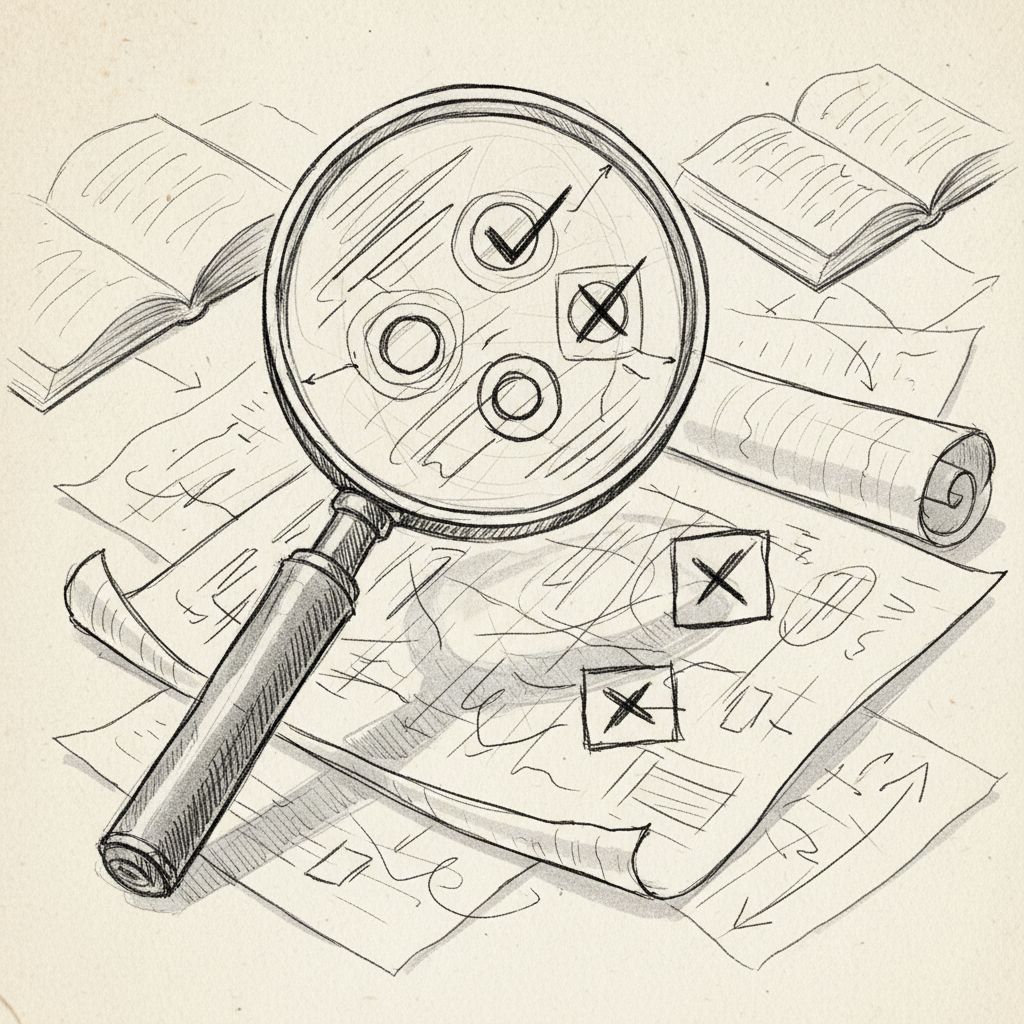
Step 3: Verify AI-Generated References Before Using Them
Never use a citation that an AI tool generated without independently verifying it — AI models frequently produce plausible-looking but entirely fabricated references, a phenomenon known as hallucination.
Why AI Hallucination Is a Citation Crisis
The Cleveland Institute of Art Library warns explicitly that "generative AI tools can create fake citations" and may cite real pieces of writing while misrepresenting the actual content [6]. This isn't a minor edge case. Research from multiple universities in 2024-2026 found hallucinated citations appearing in student papers, legal briefs, and even published articles.
A common real-world scenario: a founder asks ChatGPT to "find three studies supporting the claim that content marketing increases conversion rates." ChatGPT returns three plausible journal citations with real-sounding author names, journal titles, and volume numbers. None of them exist. The founder publishes a blog post with these fake citations, damaging credibility when a reader checks the sources.
A Practical Verification Checklist
- Copy each AI-generated citation into Google Scholar and search for the exact title.
- If found, confirm the author names, publication year, journal, and page numbers match exactly.
- Click through to the actual source and verify the cited claim appears in the original text.
- For books, check the ISBN via a library catalog or WorldCat.
- For URLs, visit the link directly — don't trust that an AI-generated URL points to what the AI claims it does.
The Reddit thread on r/AskAcademia reflects the academic community's consensus: AI is a writing algorithm, not a reliable research database. Use Google Scholar, PubMed, or your institution's library databases for source discovery [7].
Step 4: Optimize Your Content So AI Engines Reference You in 2026
Getting AI engines like ChatGPT, Gemini, Claude, and Perplexity to reference your brand in their answers requires deliberate technical and content optimization — this is the business-side of AI content referencing.
Technical Signals That Drive AI Citations
AI search engines don't crawl the web the same way Google does. They rely on structured data, entity recognition, and content authority signals to decide which businesses to mention in their responses. At Moonrank, we've found that the following technical elements have the highest impact on whether an AI engine references your brand:
- Schema markup: Structured data (the code that tells AI engines exactly what your business does, where it's located, and what it offers) dramatically improves AI comprehension of your brand.
- llms.txt file: A relatively new standard (similar to robots.txt but designed for large language models) that explicitly tells AI crawlers what content on your site is authoritative and citable.
- Consistent entity signals: Your business name, address, phone number, and category should appear identically across your website, Google Business Profile, and third-party directories.
- Citation building: Getting mentioned in authoritative third-party sources — industry publications, review sites, local directories — gives AI engines corroborating evidence that your brand is legitimate and relevant.
- Content freshness: AI engines favor sources that publish regularly. Daily or weekly content signals active authority in your niche.
Content Structure That AI Engines Extract
AI engines like Perplexity and ChatGPT with web browsing extract structured, factual content more reliably than dense prose. Format your content so it's easy to parse:
- Use clear H2 and H3 headings that answer specific questions
- Start each section with a direct, factual statement
- Use bullet points and numbered lists for multi-part information
- Include specific data points, prices, locations, and named entities
- Write FAQ sections — AI engines frequently pull from Q&A-formatted content
According to the Georgia AI guidance for state organizations, the fundamental principle of AI content referencing is attribution and transparency — the same principle applies in reverse when you want AI engines to attribute content back to your brand [8].
Pro Tip: Add an FAQ section to every major page on your website. Perplexity and ChatGPT frequently extract Q&A pairs directly from web pages when answering user questions. Each FAQ entry is a potential AI citation opportunity for your brand.
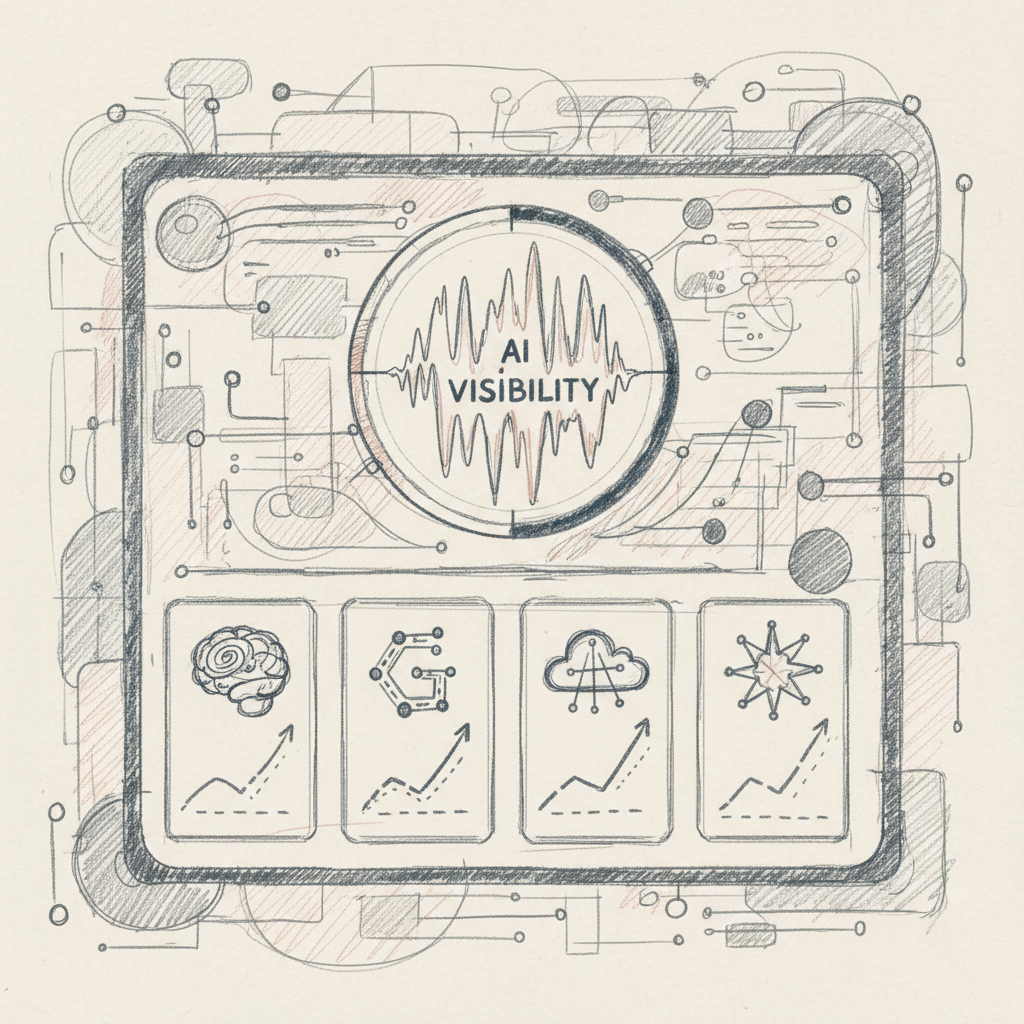
Step 5: Track Your AI Visibility and Citations
Tracking how and when AI engines reference your brand is the only way to know whether your optimization efforts are working — and to identify gaps before competitors fill them.
What AI Visibility Tracking Measures
Traditional SEO tracking tools measure Google rankings. AI visibility tracking measures something different:
- Whether your brand name appears in AI-generated answers for relevant queries
- How your brand is described when AI engines do mention it
- Which competitors are being cited instead of you
- Which query types trigger mentions of your brand vs. your competitors
- Trends over time as you add content and improve technical signals
Setting Up a Tracking System
- Define 10-20 queries your target customers are likely to ask AI engines (e.g., "best [your product category] for small businesses").
- Run these queries manually across ChatGPT, Gemini, Claude, and Perplexity at least weekly to establish a baseline.
- Note which brands are cited, how they're described, and what sources the AI references.
- Implement an automated tracking tool to do this at scale — manual tracking across four AI platforms is impractical beyond a small initial audit.
- Review results weekly and connect changes in visibility to specific content or technical updates you've made.
Our team at Moonrank recommends treating AI visibility as a separate KPI from Google rankings. A business can rank on page one of Google and still be completely invisible to ChatGPT and Perplexity — because these systems use different signals. Tracking both gives you the full picture of your search presence in 2026.
Common Mistakes to Avoid
The most costly errors in AI content referencing fall into two categories: citation errors that damage academic or professional credibility, and optimization errors that keep your brand invisible to AI search engines.
Citation Mistakes
- Omitting the AI tool entirely: Many writers use AI to draft or edit content and never disclose it. Most institutions and publishers now treat this as a form of academic dishonesty, regardless of intent.
- Using AI-generated citations without verification: As covered in Step 3, this is the single most dangerous mistake. Fake citations have ended careers and retracted publications.
- Citing the wrong model version: "ChatGPT" alone isn't specific enough — GPT-3.5 and GPT-4o produce meaningfully different outputs, and the version matters for reproducibility.
- Treating AI output as a primary source: AI-generated text is a secondary or tertiary source at best. It synthesizes information from training data; it doesn't produce original research.
AI Visibility Optimization Mistakes
- Optimizing only for Google: Traditional SEO and AI search optimization overlap but aren't the same. Schema markup, llms.txt, and entity consistency matter more for AI engines than keyword density.
- Inconsistent business information: If your business name appears differently across your website, Google Business Profile, and Yelp, AI engines get conflicting signals and may avoid citing you.
- Publishing content infrequently: AI engines favor active, regularly updated sources. A site that hasn't published new content in six months signals low authority.
- Ignoring competitor analysis: If a competitor is being cited by ChatGPT for your target queries, you need to understand why before you can displace them. This requires systematic tracking, not guesswork.
Sources & References
- Purdue University Libraries, "Artificial Intelligence (AI): How to Cite AI Generated Content," 2026
- American Psychological Association, "AI references — APA Style," 2026
- Brown University Library, "Generative Artificial Intelligence: Citation and Attribution," 2026
- Duke University Libraries, "Citing Sources: Citing Artificial Intelligence (AI)," 2026
- University of Maryland Libraries, "How do I cite AI correctly?" 2026
- Cleveland Institute of Art Library, "Citing AI Sources," 2026
- Reddit r/AskAcademia, "Best AI for fishing for references and citations?" 2023
- Georgia AI, "How to Properly Cite AI-Generated Content," 2026
- American Psychological Association, "Citing generative AI in APA Style: Part 1 — Reference formats," 2023
Frequently Asked Questions
1. What is AI content referencing, and why does it matter in 2026?
AI content referencing covers two things: properly citing AI-generated content in academic or professional work, and optimizing your own content so AI engines like ChatGPT, Gemini, Claude, and Perplexity cite your brand in their answers. Both matter in 2026 because AI-generated answers now influence purchasing decisions, academic standards, and professional credibility in ways that were marginal just two years ago. Getting either one wrong has real consequences — from retracted papers to invisible businesses.
2. Is it okay to use AI for referencing?
You can use AI tools to help locate or format references, but you must independently verify every citation an AI produces before using it — AI models frequently hallucinate plausible-looking but nonexistent sources. If AI contributed substantively to your content (not just spell-checking), you're also required to disclose and cite that contribution under most institutional and publisher policies as of 2026. The short answer: AI can assist the referencing process, but it can't replace human verification, and its own outputs must be cited when used.
3. What is the 10-20-70 rule for AI?
The 10-20-70 rule is a framework for understanding where AI implementation effort actually goes in organizations. Only 10% of the work involves the AI algorithms themselves, 20% covers data infrastructure and technology, and the remaining 70% — the largest share by far — involves people, organizational culture, and change management. For businesses applying this to AI content referencing, the implication is clear: the technical tools are the easy part. Getting your team to adopt consistent citation practices and content optimization habits is where most of the real work happens.
4. How do I cite Claude AI in APA format?
To cite Claude in APA 7th edition, use Anthropic as the author entity, the year of the content generation as the date, and specify the model version if known. The format is: Anthropic. (2026). Claude (Claude 3.5 Sonnet) [Large language model]. If the conversation isn't shareable via URL, include your prompt and the AI's response in an appendix and reference the appendix in your citation. The APA Style website provides the authoritative template for all major AI tools.
5. How do I get ChatGPT or Perplexity to reference my business?
Getting AI engines to reference your business requires a combination of technical optimization and consistent content publishing. Implement schema markup (structured data that tells AI engines what your business does), configure an llms.txt file, maintain consistent entity signals across all platforms, and publish fresh content regularly. AI engines favor authoritative, well-structured sources. Tracking your visibility across ChatGPT, Gemini, Claude, and Perplexity weekly lets you measure progress and adjust your strategy based on real data rather than assumptions.
6. Do I need to cite AI-generated images differently from AI-generated text?
Yes. AI-generated images require a slightly different citation approach than text. For APA 7th edition, treat the AI tool as the author and describe the image as a generated work, including the prompt used. For example: OpenAI. (2026). DALL-E 3 [AI image generation tool]. Image generated from prompt: "[your prompt]." https://openai.com. The University of Maryland Libraries guide addresses image citation specifically and notes that copyright considerations for AI-generated images remain an evolving legal area as of 2026.
Conclusion
AI content referencing isn't a single skill — it's two distinct disciplines that both demand attention in 2026. The first is academic and professional: knowing how to properly cite ChatGPT, Claude, Gemini, or Perplexity outputs using APA, MLA, or Chicago format, and always verifying any references these tools generate before you publish them. The second is commercial: structuring your website, technical signals, and content so that AI engines reference your brand when answering the questions your customers are asking.
Here's a quick summary of the steps covered:
- Identify your AI tool and output type before attempting any citation
- Format citations correctly using the appropriate style guide for your context
- Verify every AI-generated reference independently — never trust hallucinated citations
- Optimize your content technically (schema markup, llms.txt, entity consistency) so AI engines can reference your brand
- Track your AI visibility across ChatGPT, Gemini, Claude, and Perplexity to measure progress
If you're a business owner who wants to get recommended by AI search engines without spending $3,000+ a month on an agency, Moonrank automates the entire technical and content side of this at $99/month. Visit www.moonrank.ai to start your free 3-day trial and see where your brand currently stands across the AI engines your customers are already using.
Recommended Articles
Explore more from our content library: