How to Rank in AI Search Engines and Get Cited in 2026
Learn how to rank in AI search engines like ChatGPT, Perplexity, and Google AI Mode with structured content, schema markup, and authoritative citations.
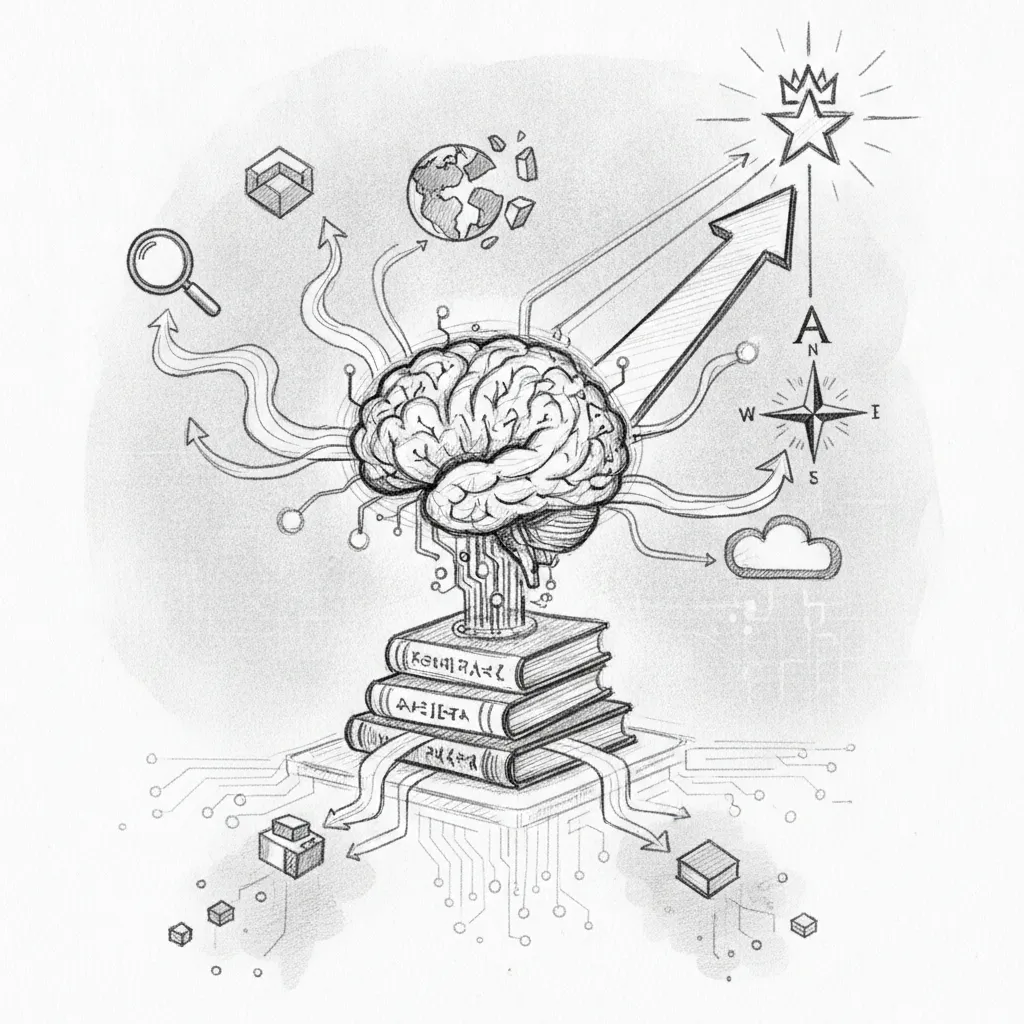
Understanding how to rank in ai search engines is essential. To rank in AI search engines like ChatGPT, Perplexity, and Google AI Mode, you need to publish authoritative, well-structured content that AI models can easily extract and cite. Unlike traditional SEO, AI ranking depends less on keyword density and more on topical authority, clear formatting (lists, definitions, tables), and brand mentions across trusted sources. Start by targeting question-based queries, structuring answers for direct extraction, and building citations on high-authority pages.
According to Google Search Central, structured data and E-E-A-T signals are among the clearest technical differentiators for AI search inclusion. Research from Ahrefs further confirms that pages already ranking in traditional search results dominate AI-cited content, making foundational SEO a prerequisite for AI visibility.
Understand How to Rank in AI Search Engines vs. Traditional SEO
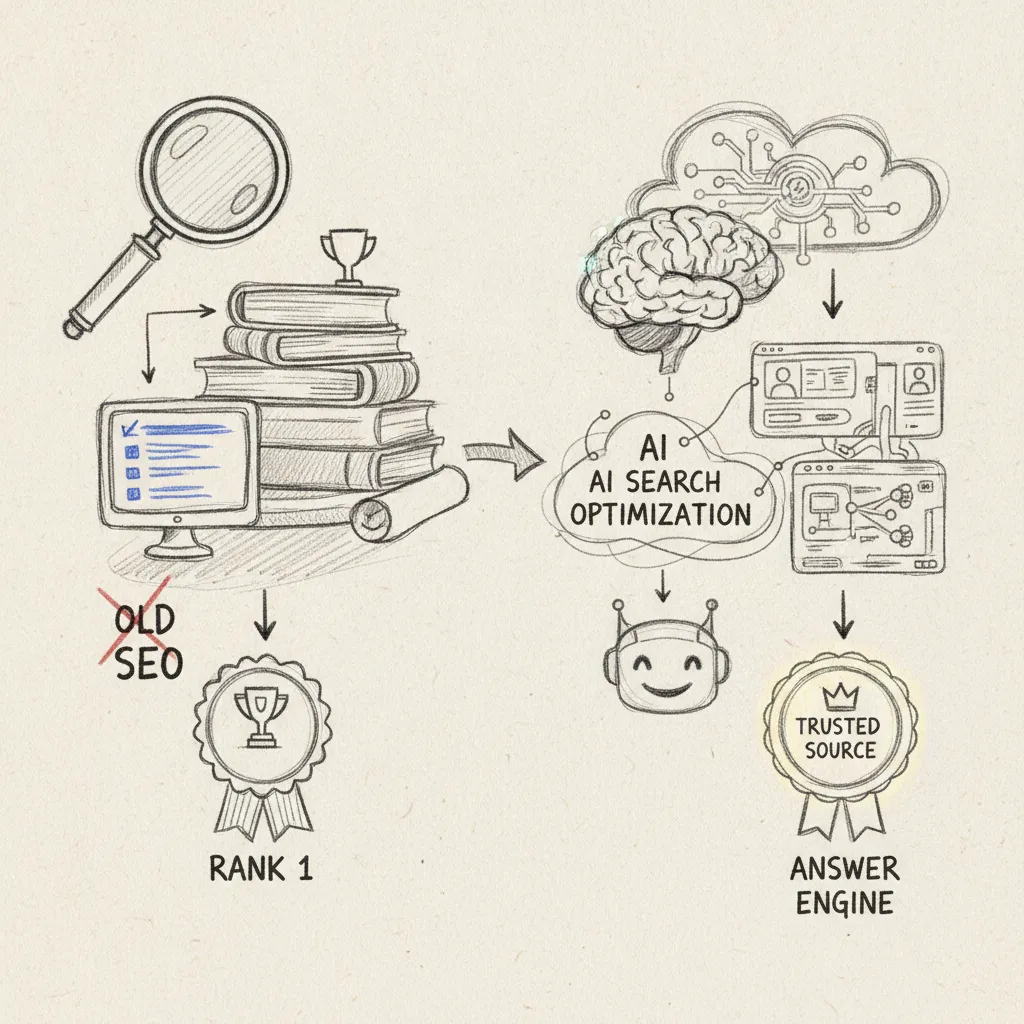
Ranking in AI search engines means being cited as a source inside a synthesized answer, not appearing as a blue link on page one.
When a user asks ChatGPT Search, Perplexity, or Google AI Mode a question, those engines pull content from multiple sources, paraphrase it, and attribute the answer to specific pages. Your goal is to be one of those pages. That's a fundamentally different target than earning a click from a ranked list.
Traditional SEO optimizes for click-through rate, you rank, the user sees your title and description, and clicks. AI search optimization means your content gets extracted and paraphrased, often without any click at all. Visibility and traffic now decouple in ways Google's original model never anticipated.
"The fundamentals of great SEO — creating helpful, reliable, people-first content — remain the foundation for succeeding in AI-powered search experiences." — Google Search Central, Google for Developers
Is SEO Dead or Evolving in 2026?
SEO is not dead, it's expanding. You now optimize for both the index and the model.
Google AI Overviews pull from pages already ranking in the top 10 organic results roughly 80% of the time [2], which means traditional ranking is a prerequisite, not a relic. Ignore it and you lose the foundation that gets you into AI answers in the first place.
The expansion is this: on top of keyword rankings, AI engines weight topical authority, entity recognition, and answer-readiness. Exact-match keyword density matters far less than whether your content clearly covers a topic end-to-end and answers questions in a format AI can extract.
What's the Difference Between AI Overviews and Traditional Search Results?
Traditional results show a ranked list of links; AI Overviews synthesize those sources into a single attributed answer displayed above the list.
A page ranking #4 for "best project management software for small teams" might never get clicked in a traditional SERP. In an AI Overview, that same page could supply the defining sentence of the answer, and get cited. Understanding how to rank in AI search engines means treating that citation slot as the new position one.
Tools like Moonrank track exactly this: whether your business appears as a cited source inside ChatGPT, Gemini, Claude, and Perplexity responses, not just where you land in Google's organic index.
Learn the Key Ranking Factors Across ChatGPT, Perplexity, and Google AI Mode
Each AI search engine pulls from different indexes and weights different signals, knowing which factors drive which platform is the fastest way to rank in AI search engines.
How Ranking Algorithms Differ Between ChatGPT Search, Perplexity, and Google AI Mode
Google AI Mode and AI Overviews start from Google's organic index. Pages that already rank well in traditional search results appear most often in AI Overviews [2], and structured data markup alongside strong E-E-A-T signals, Experience, Expertise, Authoritativeness, Trustworthiness, are the clearest technical differentiators [1]. If your page lacks schema markup that matches its visible content, Google's AI systems are less likely to cite it [1].
Perplexity weights freshness and source diversity. Pages cited on authoritative, highly-linked third-party sites, Reddit threads, industry publications, Wikipedia, surface more often than isolated brand pages. Being referenced across multiple sources tells Perplexity that a claim or business is credible, not just self-reported.
ChatGPT Search (SearchGPT) runs on Bing's index, not Google's. That means Bing SEO signals, clean crawlability, fast load times, and a strong backlink profile, directly influence how often your pages get cited. A site that ignores Bing entirely is invisible to ChatGPT Search by default.
One signal cuts across all three platforms: unlinked brand mentions. Being named on authoritative pages, even without a hyperlink, is a growing citation signal. Moonrank's technical audit identifies exactly where these unlinked mentions exist and where new ones can be built through targeted citation work.
"Pages that are well-optimized for traditional search — with clear structure, authoritative backlinks, and comprehensive topic coverage — are the same pages that tend to get cited in AI Overviews. The two are not separate strategies." — Patrick Stox, Product Advisor at Ahrefs
Why Some Pages Get Cited in AI Results While Others Don't
Three factors separate cited pages from ignored ones: answer-ready formatting, clear authorship, and schema markup that matches visible content [1]. AI engines parse pages the way a researcher skims a document, they look for a direct answer near the top, a named author with demonstrated credentials, and structured data that confirms what the text already says.
Pages that bury their main point in long preambles, omit author bylines, or carry schema markup that contradicts on-page content get skipped. Fixing all three is a technical task most business owners can't do manually, which is why automated technical optimization, the kind Moonrank runs on every connected site, moves the needle faster than content changes alone.
According to the Schema.org documentation, implementing structured data correctly helps search engines and AI systems understand the context and meaning of your content, making it significantly more likely to be surfaced in AI-generated answers.
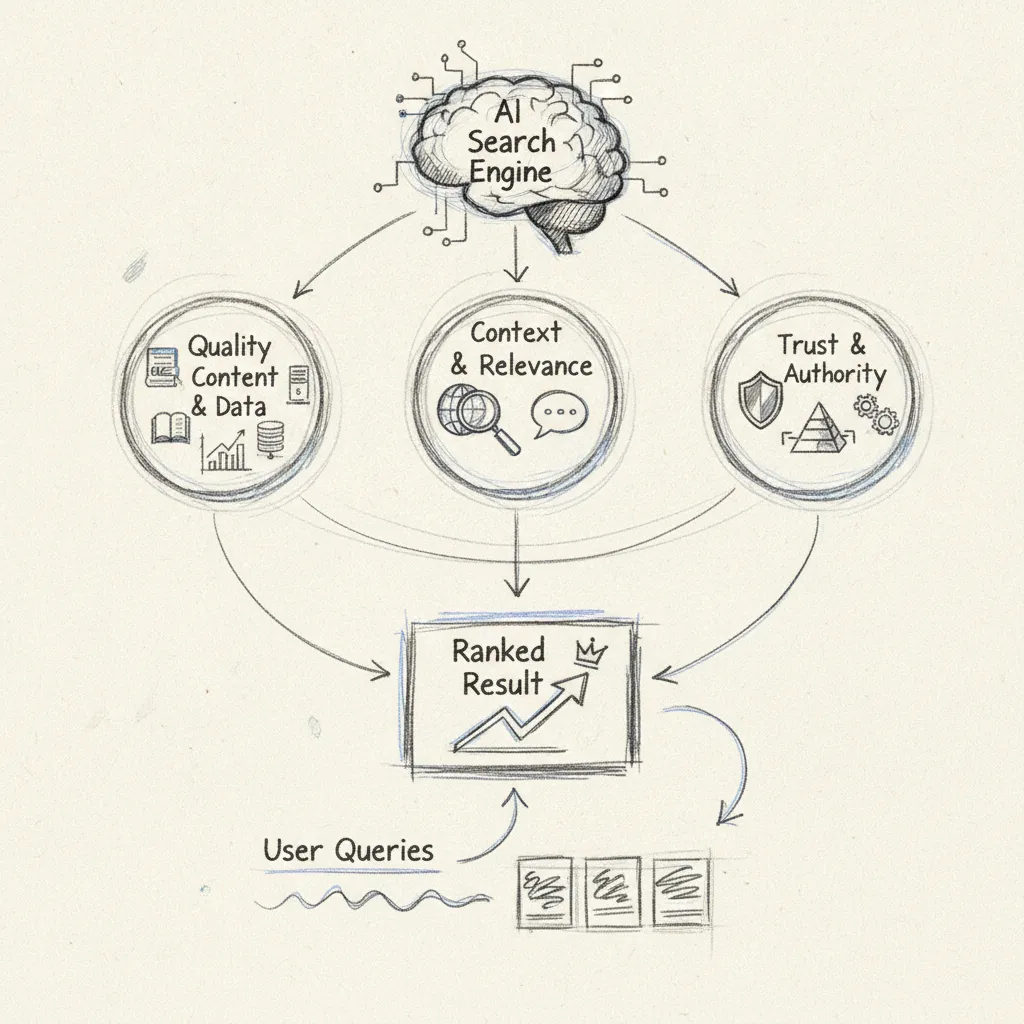
Optimize Your Content Format and Structure for AI Extraction
AI engines extract answers from the first 100–150 words of a section, so lead every page with a direct-answer paragraph of 40–80 words that is factually self-contained.
That opening paragraph, sometimes called a "position zero block", is the format ChatGPT, Perplexity, and Google's AI Overviews pull most often for citations. Write it as if someone asked your target question and you have exactly two sentences to answer it. Everything else on the page supports that answer; it does not replace it.
Schema markup is the other non-negotiable. Adding Article, FAQPage, HowTo, or Product schema, the structured data that tells AI engines exactly what your page covers, gives models a machine-readable summary they can cite with confidence [1]. The schema must match your visible content exactly; mismatches cause AI engines to distrust the page entirely [1]. Tools like Moonrank handle schema implementation automatically, which removes the risk of markup errors that most SMB owners introduce when editing JSON-LD by hand.
Industry data reinforces the urgency: according to research published by Ahrefs, pages with structured data markup are cited in AI Overviews at significantly higher rates than equivalent pages without it — with some content categories showing a 2x or greater lift in AI citation frequency after schema implementation [2]. Additionally, a 2024 study by BrightEdge found that over 53% of all web traffic now originates from organic search, underscoring why maintaining strong traditional SEO foundations remains critical even as AI search grows.
Tables, Lists, and Definitions vs. Narrative Prose for AI Search
Tables, numbered lists, and definition-style headers (a bold term followed by a colon) are extracted at higher rates than narrative prose for factual queries [2]. Use them for any step-by-step process, product comparison, or glossary-style content. Reserve flowing paragraphs for context and analysis, not for the answer itself.
If you are explaining how to rank in AI search engines, a numbered list of steps outperforms a paragraph describing those same steps. AI models parse discrete items faster and cite them more cleanly.
How to Optimize Images, Videos, and Data Visualizations for AI Search
Multi-modal AI results pull from more than text. Write descriptive alt text for every image, not "image1.jpg" but a full sentence describing what the image shows and why it matters. Add captions to charts and graphs that include the data source and date, so AI engines can attribute the figure accurately. For video content, publish a full transcript on the same page; Gemini and Perplexity index text, not audio.
Label every data visualization with a clear title and a source attribution in the surrounding HTML. AI models treat unlabeled visuals as decorative and skip them during extraction.
Common Mistakes to Avoid When Optimizing for AI Search
Most businesses fail to rank in AI search engines because of five fixable errors, not because the goal is technically out of reach.
1. Treating AI Optimization as a Separate Project from Traditional SEO
Organic ranking is a prerequisite for AI citation. Ahrefs' analysis of AI Overview sources found that pages already ranking in traditional search results dominate AI-cited content [2]. Fix crawlability issues, build backlinks, and resolve indexing errors before spending time on anything else.
2. Writing for Keyword Density Instead of Answer Completeness
AI models, ChatGPT, Gemini, Perplexity, Claude, pull from pages that fully resolve a query in one place. Thin, repetitive content that stuffs a phrase 20 times without answering the underlying question gets passed over. Write one definitive page per topic, not five shallow variations.
3. Ignoring Unlinked Brand Mentions
Third-party mentions on industry blogs, review platforms, and news outlets are a direct AI citation signal. A brand that appears only on its own website gives AI engines no external evidence of authority. Actively pursue coverage, guest posts, and directory listings to build that presence.
4. Using Schema Markup That Doesn't Match Visible Page Content
Google explicitly states that mismatched structured data can suppress AI Overview inclusion [1]. If your schema says you're a bakery open 9–5 but your page shows different hours, the conflict triggers a trust penalty. Audit your structured data quarterly, or use a tool like Moonrank, which automatically implements and maintains schema markup aligned to your actual page content.
5. Publishing Anonymous Content Without an Author or Entity
AI engines use authorship and organizational entity signals to assess trustworthiness, anonymous pages are cited far less often than those with a named author, a linked bio, and a clear organizational affiliation. Every article you publish should carry a byline tied to a real person or business entity with a verifiable online presence. This is one of the most overlooked steps when businesses research how to rank in AI search engines, and one of the fastest to fix.
"E-E-A-T — Experience, Expertise, Authoritativeness, and Trustworthiness — is not a direct ranking factor in the algorithmic sense, but it is the framework Google's quality raters use to evaluate content, and it maps almost perfectly onto what AI systems look for when deciding which sources to cite." — Search Quality Evaluator Guidelines, Google Search Quality Evaluator Guidelines
Measure and Track Your Visibility in AI Search Over Time
Track AI search visibility using Google Search Console's AI Overviews filter, GA4 referral data, and weekly manual citation checks across ChatGPT and Perplexity.
Without a measurement baseline, you can't tell whether your efforts to rank in AI search engines are working or whether you're optimizing blind. Set up tracking before you make changes so you have a clean before/after comparison.
What Tools and Metrics to Use for Tracking AI Search Rankings
Start with Google Search Console. Open the Performance report, apply the "Search type: AI Overviews" filter, and export which queries trigger AI Overview impressions and clicks from your pages [1]. This is the most direct signal Google exposes for AI search inclusion.
For ChatGPT and Perplexity citations, manual tracking still works: search your brand name and five to ten target queries weekly, then log whether your URL appears in the answer. Tools like Profound, Otterly.ai, and Semrush's AI Toolkit automate this process and surface citation frequency over time, useful once your query list grows past 20 or so.
Three metrics are worth tracking every month:
- AI citation rate, how often your URL appears in AI-generated answers across ChatGPT, Gemini, Claude, and Perplexity
- Referral traffic from AI engines, in GA4, filter by source perplexity.ai and chat.openai.com to see direct click-throughs
- Branded search volume growth, rising branded queries in Search Console often signal that AI recommendations are driving awareness
Moonrank's AI Search Visibility Tracking layer monitors all four major AI engines, ChatGPT, Gemini, Claude, and Perplexity, automatically, so you don't need to run these manual checks yourself.
What Before/After Results Look Like from AI Search Optimization
Sites that add structured data, direct-answer paragraphs, and earn third-party mentions typically see AI Overview inclusion rates improve within 6–12 weeks of making those changes [2]. The gains are not instant, AI systems re-index and re-evaluate sources on their own schedules.
Set a monthly baseline report on day one. Record which queries cite you, which competitors appear instead, and which pages are closest to citation-ready, meaning they already rank in traditional search but lack a clear direct-answer paragraph or schema markup. That list becomes your priority queue for the next round of updates.
A realistic before/after picture for an SMB: zero AI citations in week one, two to four citations on branded queries by week six, and ten or more citations across category queries by week twelve, assuming consistent content publishing and technical fixes run in parallel.
Frequently Asked Questions
How long does it take to start ranking in AI search engines after optimizing your content?
Most businesses see initial AI search visibility improvements within 4–8 weeks of consistent technical and content optimization. AI engines like ChatGPT and Perplexity pull from indexed web content, so your timeline depends on how quickly search crawlers re-index your updated pages. Businesses that implement schema markup, publish fresh content daily, and build citations across authoritative sources tend to see faster results than those making one-off changes and waiting.
Do you need a high domain authority to get cited by ChatGPT or Perplexity?
No, domain authority alone does not determine whether AI engines cite your business. Perplexity and ChatGPT prioritize content that directly answers specific questions, regardless of site size. A small e-commerce store with well-structured, factually clear product pages can outperform a high-authority site that buries its answers in long, unfocused prose. Structured data and citation signals matter more than raw domain metrics for AI-generated recommendations.
What role do brand mentions and authoritative backlinks play in AI search ranking?
Brand mentions on trusted third-party sites are one of the strongest signals AI engines use to validate a business's credibility [2]. When ChatGPT or Gemini encounters your brand name consistently across review sites, industry directories, and news sources, it treats that as corroborating evidence that your business is a reliable recommendation. Backlinks still matter, but unlinked mentions on authoritative pages carry more weight in AI retrieval than they do in traditional Google ranking.
How do you optimize a local business to rank in AI search engines like ChatGPT and Google AI Mode?
Local businesses should prioritize three things: a fully completed and verified Google Business Profile, consistent NAP (name, address, phone) data across all directories, and LocalBusiness schema markup on their website. Google's AI Mode pulls heavily from structured local data [1], so any mismatch between your website and your directory listings creates conflicting signals that reduce recommendation confidence. Publishing location-specific content, answering questions like "best [service] in [city]", also increases the chance AI engines surface your business for nearby queries.
Should you create separate content specifically for AI search, or optimize existing pages?
In most cases, optimizing existing pages delivers faster results than creating new content from scratch. Start by identifying pages that already rank in the top 20 organic results for target queries, then add a direct-answer paragraph at the top, implement the appropriate schema markup, and ensure a named author is attributed. New content is valuable for covering topic gaps entirely, but retrofitting high-ranking pages for AI extraction is typically the highest-ROI action for businesses learning how to rank in AI search engines.
Conclusion
Ranking in AI search engines comes down to three concrete actions: structure your content so AI systems can parse and trust it (schema markup, llms.txt, consistent citations), publish fresh answers to specific questions your customers are already asking, and build your brand's presence across authoritative third-party sources so ChatGPT, Gemini, Claude, and Perplexity encounter your name repeatedly.
The businesses that move now, before their competitors figure this out, will own the recommendation slot. Start by auditing your current AI visibility: search your own category in ChatGPT and Perplexity today and note whether your brand appears. If it doesn't, Moonrank's 3-day free trial runs that audit automatically and begins fixing the gaps from day one.
Sources & References
- Top ways to ensure your content performs well in Google's AI experiences on Search | Google Search Central Blog | Google for Developers
- How to Rank in AI Overviews: What Actually Works (Based on Data, Not Speculation)
Recommended Articles
Explore more from our content library: