Semantic Search AI: How It Works and Why It Matters
Learn how semantic search AI understands intent, powers AI engines like ChatGPT and Gemini, and why optimizing for it matters for your business in 2026.
| Key Insight | Explanation |
|---|---|
| Meaning over keywords | Semantic search AI interprets the intent behind a query, not just the exact words typed, delivering far more relevant results. |
| Vector embeddings are the engine | Text is converted into numerical vectors so AI can measure conceptual similarity between a query and available content. |
| Powers ChatGPT, Gemini, and Perplexity | Major AI search engines use semantic understanding to decide which brands and pages to surface in their recommendations. |
| Traditional SEO is no longer enough | Keyword stuffing and backlink counts matter less when AI engines evaluate topical authority and contextual relevance. |
| Structured data accelerates visibility | Schema markup and llms.txt help AI systems parse and trust your content, increasing the chance of being recommended. |
| SMBs can compete affordably | Automated tools like Moonrank make AI search optimization accessible at $99/month, without needing an agency or technical skills. |
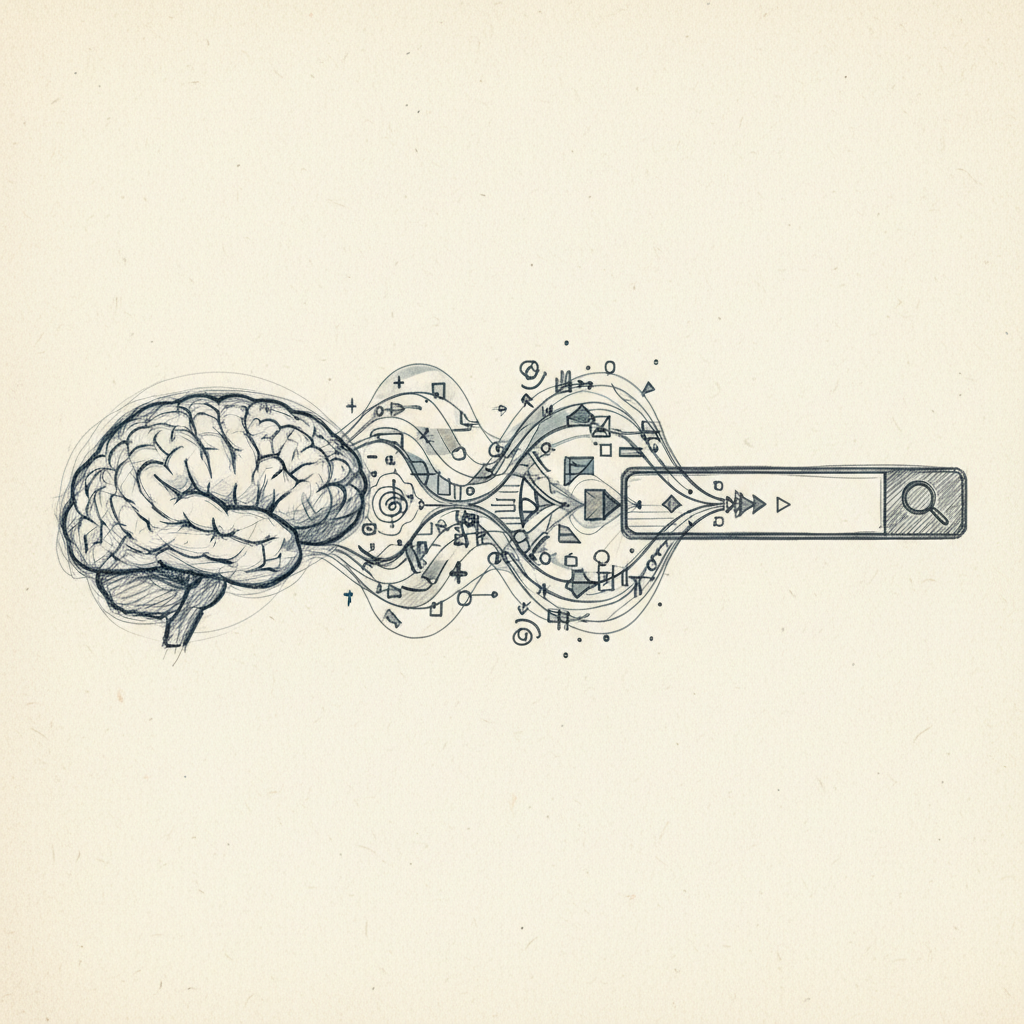
A customer opens ChatGPT and types, "Where can I find the best handmade leather bags near me?" They don't get a list of blue links. They get a recommendation — probably a competitor you've never heard of. That's semantic search AI at work. Semantic search AI is the technology that enables AI-powered engines to understand the meaning and intent behind a query, not just match it to keywords. It's the reason ChatGPT, Gemini, Claude, and Perplexity can answer nuanced questions with surprising accuracy. And as of 2026, it's reshaping how customers find businesses entirely. This article explains exactly how semantic search AI works, why it matters for your business, what mistakes to avoid, and what you can do right now to make sure AI engines recommend you instead of your competitors.
What Is Semantic Search AI?
this approach is a search technique that uses artificial intelligence to understand the contextual meaning and intent behind a query, rather than matching exact words, enabling more accurate and relevant results for users.
Traditional keyword search is simple in principle. You type "best coffee shop downtown," and the engine looks for pages containing those exact words. Semantic search works differently. It asks: what does the person actually want? Are they looking for ambiance, speed, price, or proximity? The engine interprets the full context of the question before returning results [1].
The Shift from Keywords to Concepts
According to Wikipedia's overview of semantic search, the approach "seeks to improve search accuracy by understanding the searcher's intent and the contextual meaning of terms as they appear in the searchable dataspace" [2]. That's a precise definition worth holding onto. It means the engine builds a model of what you mean, not just what you typed.
This shift has enormous implications. A query like "fix slow computer" and "improve PC performance" might use completely different words, but this method recognizes they express the same need. It can match both queries to the same high-quality answer, even if that answer never uses the phrase "fix slow computer" verbatim.
Why It Matters for Businesses Right Now
As of 2026, this strategy is no longer a background technology. It's the core engine inside the tools your customers use every day. Perplexity reported over 100 million weekly queries by late 2024, and that number has grown substantially since. ChatGPT, Gemini, and Claude handle hundreds of millions of queries per month. When someone asks these systems for a product recommendation, a local service, or a comparison between brands, this approach decides who gets mentioned.
If your website's content doesn't signal clear topical authority in a way AI systems can parse, you simply won't appear. That's the new reality for SMB owners, and it's why understanding this technology has become a business-critical skill, not just a technical curiosity.
Pro Tip: Don't confuse semantic search with simple synonym matching. True semantic search AI builds a conceptual understanding of your entire content corpus, not just individual pages. That means your site's overall topical depth matters as much as any single article.
How Semantic Search AI Works
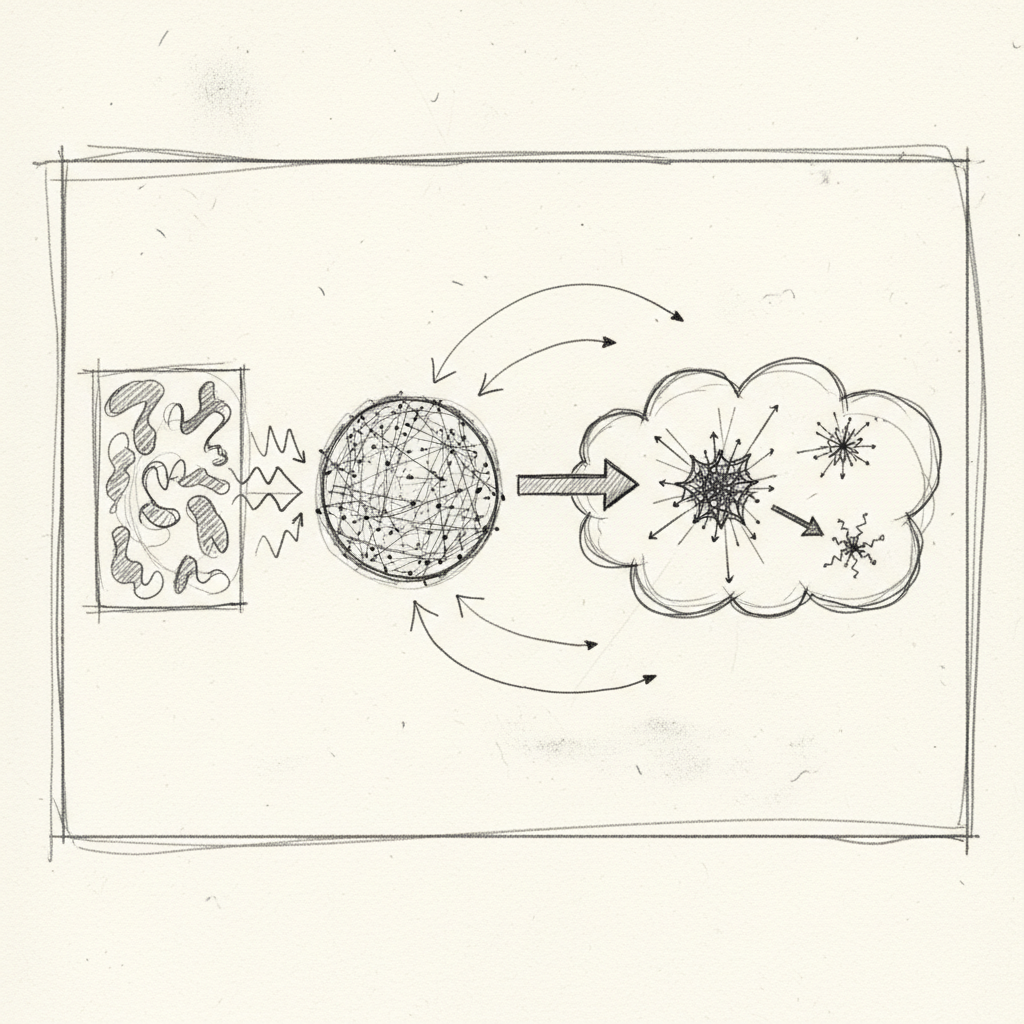
this works by converting text into numerical vector representations, then measuring the mathematical similarity between a query vector and stored content vectors to find the most conceptually relevant matches.
The mechanics are worth understanding, even if you're not an engineer. At its core, semantic search relies on a process called vector embedding (converting words and sentences into lists of numbers that represent their meaning in multi-dimensional space). Two pieces of text that mean similar things end up with vectors that are numerically close to each other [3].
From Text to Vectors: The Core Process
Here's how the process works in practice:
- Ingestion: Your content (web pages, articles, product descriptions) is fed into an embedding model, such as Google's BERT or OpenAI's text-embedding models.
- Encoding: The model converts each piece of content into a dense vector, a list of hundreds or thousands of floating-point numbers representing its semantic meaning [4].
- Storage: These vectors are stored in a vector database (systems like OpenSearch or SingleStore are commonly used for this purpose) [5].
- Query processing: When a user submits a query, it's encoded into a vector using the same model.
- Similarity search: The system computes the mathematical distance between the query vector and all stored content vectors, returning the closest matches.
- Ranking and response: The AI engine assembles a response using the most semantically relevant content it finds, often combining multiple sources.
According to OpenSearch's documentation on semantic search, "semantic search creates a dense vector (a list of floats) and ingests data into a vector index," which is then used for similarity-based retrieval [5]. This is fundamentally different from keyword indexing, where documents are cataloged by the specific terms they contain.
The Role of Large Language Models
Large language models (LLMs) like GPT-4o and Gemini Ultra add another layer. They don't just retrieve semantically similar content; they synthesize it into a coherent, conversational answer. This is why AI search engines can respond to complex, multi-part questions with nuanced answers that no single web page explicitly contains.
Industry analysts note that the combination of semantic retrieval and LLM generation is what makes tools like ChatGPT and Perplexity so effective at answering questions. The semantic layer finds the right raw material; the LLM assembles it into something useful. For your business to be included in that assembly, your content needs to be semantically clear, well-structured, and technically accessible to AI crawlers [6].
Key Benefits of Semantic Search AI
it delivers more relevant results, reduces search friction for users, and creates new opportunities for businesses to be discovered through intent-based queries rather than exact-match keywords.
The benefits split neatly into two categories: what users gain, and what businesses gain. Both matter if you're thinking about AI search optimization.
Benefits for Users
- Intent-accurate results: Users get answers that match what they meant, not just what they typed. A query like "something to help me sleep" surfaces relevant products and advice without requiring the user to know the exact terminology.
- Natural language queries: People can search the way they speak. No need to strip queries down to robotic keyword strings [7].
- Cross-lingual understanding: Advanced semantic models can match content across languages, expanding access to information globally.
- Better handling of ambiguity: Semantic systems use context to disambiguate. "Apple" in a recipe query means something different than "Apple" in a tech query, and the AI handles that distinction automatically.
Benefits for Businesses
- Discovery through long-tail intent: Your business can be found through conversational queries you never explicitly optimized for, as long as your content clearly establishes topical authority.
- Reduced dependence on exact-match keywords: Content that genuinely answers customer questions performs well, even without obsessive keyword placement.
- Higher-quality traffic: Visitors who arrive via semantic queries tend to have clearer intent, which often translates to better conversion rates.
- AI recommendation eligibility: Businesses whose content is semantically rich and well-structured are more likely to be cited by ChatGPT, Gemini, Claude, and Perplexity when users ask for recommendations [8].
| Search Type | Keyword Search | Semantic Search AI |
|---|---|---|
| Matching method | Exact or partial word match | Conceptual similarity via vectors |
| Handles synonyms | Poorly, requires manual mapping | Naturally, by design |
| Natural language queries | Struggles with conversational phrasing | Handles them accurately |
| Context awareness | Limited or none | High, uses surrounding context |
| Best for | Known-item searches, exact lookups | Exploratory, conversational, intent-driven queries |
| Used by | Legacy search engines, basic site search | ChatGPT, Gemini, Perplexity, Claude, modern Google |
Research from Bloomreach indicates that semantic search significantly improves product discovery in e-commerce environments, with retailers reporting measurable lifts in conversion when semantic capabilities replace traditional keyword search [8]. The same principle applies to any business trying to be found by AI-powered recommendation engines.
Common Challenges and Mistakes
The most common mistake businesses make with this method is continuing to optimize exclusively for keyword density while ignoring the topical depth, content structure, and technical signals that AI engines actually evaluate.
From experience working with SMB owners navigating AI search visibility, a few patterns show up repeatedly. Understanding them can save you months of wasted effort.
Mistake 1: Treating AI Search Like Traditional SEO
A SaaS client recently faced a frustrating situation: strong Google rankings but near-zero visibility in ChatGPT and Perplexity recommendations. The reason was clear on inspection. Their content was optimized for keyword density and backlink signals, but it lacked the structured, question-answering format that semantic AI systems prefer. Their pages answered no specific questions; they just described features.
Traditional SEO targets Google's crawler, which weighs backlinks, page authority, and keyword placement heavily. AI search engines use completely different signals: topical completeness, entity clarity, structured data, and how well content answers specific user intents [9].
Mistake 2: Ignoring Technical AI Readability
A common pitfall is assuming that if humans can read your website, AI engines can too. That's not accurate. this strategy systems need structured signals to parse your content reliably. Specifically:
- Schema markup (structured data that tells AI engines exactly what your business does, where it's located, and what it offers) is frequently missing from SMB websites.
- llms.txt (a configuration file that tells large language model crawlers how to interpret your site) is a newer standard that most businesses haven't implemented.
- Unstructured content (long walls of text with no headings, lists, or clear hierarchy) is harder for semantic models to parse accurately.
- Missing entity signals (clear mentions of your business name, location, product categories, and industry) leave AI engines uncertain about what your brand actually represents.
Mistake 3: Publishing Inconsistently
this approach systems build trust in sources through repeated, consistent signals. A business that publishes one article a month sends weaker topical authority signals than one that publishes fresh, relevant content daily. Research from SingleStore notes that the quality and frequency of content directly influences how well a source is represented in semantic indexes [3].
Pro Tip: Audit your existing content for question-answer clarity. For every page on your site, ask: "Does this page directly answer a specific question a customer would ask?" If the answer is no, restructure it. AI engines extract Q&A pairs from content; give them clear ones to work with.
Best Practices for Semantic Search AI Optimization in 2026
Optimizing for this in 2026 requires a combination of content depth, technical structure, and consistent publishing — all aligned with how AI engines evaluate topical authority and entity relevance.
At Moonrank, we've found that SMBs who focus on these five areas see measurable improvements in AI search visibility within their first 30 to 60 days. Results will vary depending on your niche and competitive landscape, but the framework is consistent.
Content and Structure Best Practices
- Write for intent clusters, not individual keywords. Group related questions and topics into comprehensive content pieces that cover a subject from multiple angles. AI engines reward depth.
- Use clear heading hierarchies. H1, H2, and H3 headings act as semantic signals that help AI systems understand the structure and priority of your content [4].
- Answer questions directly and early. Place the direct answer to your content's implied question within the first two sentences of each section. AI engines extract these for featured answers.
- Publish daily or near-daily. Consistent content output builds topical authority over time. This is one of the most significant factors in AI recommendation eligibility, and it's also the hardest for time-poor business owners to maintain manually.
- Use specific entities. Name your location, your product categories, your industry, and relevant related brands or concepts. Specificity helps AI engines place your business in the right semantic neighborhood [6].
Technical Optimization Best Practices
- Implement schema markup. At minimum, add LocalBusiness, Product, or Organization schema to your key pages. This structured data gives AI engines a machine-readable summary of what you do.
- Configure llms.txt. This emerging standard tells LLM crawlers (the bots used by ChatGPT and similar systems) how to interpret your site. Most businesses haven't done this yet, which means early adopters gain a real advantage.
- Build citation signals. Being mentioned on authoritative third-party sites increases the likelihood that AI engines will trust and surface your brand. Tools like Semantic Scholar illustrate how citation networks signal authority in AI-powered retrieval systems [10].
- Optimize page load speed and crawlability. If AI crawlers can't access your content reliably, it won't be indexed semantically regardless of quality.
- Track your AI search visibility. You can't improve what you don't measure. Monitoring how often ChatGPT, Gemini, Claude, and Perplexity mention your brand is essential for understanding whether your optimization efforts are working.
Pro Tip: Our team at Moonrank recommends treating your website's content strategy as a topical map, not a list of individual keywords. Identify 5 to 10 core topic clusters relevant to your business, then build out content that covers each cluster from every meaningful angle. AI engines reward businesses that clearly own a topic area.
The challenge for most SMB owners is that executing all of this consistently requires either significant time or significant budget. Traditional SEO agencies charge $3,000 or more per month for comparable services. Moonrank automates the entire stack, including daily content generation, technical optimization (schema markup, llms.txt, structured data), and AI visibility tracking across ChatGPT, Gemini, Claude, and Perplexity, for $99/month. It's a practical option for businesses that want to compete in AI search without hiring a team to do it.
Sources & References
- Google Cloud, "What is semantic search, and how does it work?", 2026
- Wikipedia, "Semantic search", 2026
- SingleStore, "Semantic Search: What Is It + How Does It Work?", 2026
- Elastic, "What is Semantic Search?", 2026
- OpenSearch Documentation, "Semantic search", 2026
- Parallel.ai, "What is semantic search and how does it work?", 2026
- Slack, "What Is Semantic Search? How It Works, and Why It Matters", 2026
- Bloomreach, "What Is Semantic Search? How It Works + Examples", 2026
- Typesense, "Semantic Search", 2026
- Semantic Scholar, "AI-Powered Research Tool", 2026
- Coalition for Networked Information, "Leveraging Generative AI Tools and Semantic Search for Digital Collections", 2026
- Google Cloud / Medium, "Building Semantic Search into Your AI Agents", 2026
Frequently Asked Questions
1. What is semantic search AI in simple terms?
it is technology that understands the meaning and intent behind a search query, not just the specific words used. Instead of matching exact keywords, it interprets what the user actually wants and returns results that are conceptually relevant. It's the reason AI engines like ChatGPT and Gemini can answer natural language questions accurately.
2. How is semantic search AI different from traditional keyword search?
Traditional keyword search matches the exact words in a query to the words in indexed documents. this method converts both the query and the documents into vector representations and measures conceptual similarity. This means semantic search handles synonyms, natural language, and ambiguous queries far more effectively than keyword-based systems.
3. Does Google use semantic search AI?
Yes. Google has incorporated semantic search capabilities since introducing the BERT model in 2019 and has continued expanding its use of neural matching and AI-driven understanding. As of 2026, Google's search algorithm uses a combination of semantic understanding and traditional ranking signals. However, AI-native engines like Perplexity and ChatGPT rely on this strategy even more fundamentally, as their entire response generation depends on it.
4. How can my business be found through semantic search AI?
To be found through this approach, your content needs to clearly establish topical authority, answer specific customer questions, and be technically structured so AI systems can parse it. This means implementing schema markup, publishing consistent and relevant content, using clear heading hierarchies, and ensuring your site is accessible to AI crawlers. Tools like Moonrank automate all of this, tracking your visibility across ChatGPT, Gemini, Claude, and Perplexity in real time.
5. What are vector embeddings and why do they matter for semantic search?
Vector embeddings are numerical representations of text that capture semantic meaning. When text is converted to a vector, similar meanings produce numerically similar vectors. this uses this property to find content that is conceptually close to a query, even if the exact words don't match. According to OpenSearch documentation, this is the foundational mechanism behind modern AI-powered search systems.
6. Is semantic search AI only relevant for large businesses?
Not at all. it is highly relevant for SMBs, because AI engines like ChatGPT and Perplexity don't automatically favor large brands. They surface whoever has the most semantically relevant, well-structured content for a given query. A small local business with clear, comprehensive content can outperform a large competitor in AI recommendations if its content better matches user intent.
7. What is Generative Engine Optimization (GEO) and how does it relate to semantic search AI?
Generative Engine Optimization (GEO), also called Answer Engine Optimization (AEO), is the practice of optimizing content specifically to be retrieved and cited by AI-powered search engines. Since these engines rely on this method to find and evaluate content, GEO is essentially the application of semantic optimization principles to the goal of AI visibility. It's the emerging discipline that tools like Moonrank are built around.
8. How long does it take to see results from semantic search AI optimization?
Results vary depending on your niche, competition, and starting point. In practice, businesses that implement consistent content publishing, technical optimization (schema markup, llms.txt, structured data), and entity clarity often begin seeing measurable improvements in AI search visibility within 30 to 60 days. One limitation is that AI search indexes update at different rates across platforms, so Perplexity may reflect changes faster than ChatGPT in some cases.
Conclusion

this strategy has fundamentally changed how customers find businesses. The era of stuffing keywords into pages and waiting for Google to rank you is giving way to something more sophisticated: AI engines that understand intent, evaluate topical authority, and recommend brands based on the quality and clarity of their content. That's the new playing field, and it rewards businesses that communicate clearly, publish consistently, and structure their content for machine understanding.
The good news is that you don't need a large budget or a technical background to compete. You need a clear content strategy, solid technical foundations, and a way to track whether AI engines like ChatGPT, Gemini, Claude, and Perplexity are actually recommending you. this approach levels the field for SMBs that act early.
Moonrank exists specifically to make this accessible. For $99/month, it handles daily content generation, technical AI optimization, and visibility tracking across the AI engines your customers are already using. No agency, no manual work, no guesswork. Visit www.moonrank.ai to start your free 3-day trial and see where you stand in AI search today.
Recommended Articles
Explore more from our content library: