SEO Tips for Beginners: 12 Essential Strategies for 2026
Discover 12 essential SEO tips for beginners in 2026. Learn keyword research, content optimization, technical SEO, and link building strategies to boost your ra
| Key Insight | Explanation |
|---|---|
| Keyword Research is Foundation | Understanding what your audience searches for drives all other SEO efforts and content decisions. |
| Content Quality Beats Quantity | Search engines prioritize comprehensive, helpful content over frequent but shallow publishing. |
| Technical SEO Enables Success | Site speed, mobile optimization, and proper structure create the foundation for rankings. |
| AI Search Optimization Matters | As of 2026, optimizing for AI search engines like ChatGPT and Gemini is crucial for visibility. |
| Local SEO Drives Business | For local businesses, Google My Business optimization can generate immediate traffic and customers. |
| Consistency Creates Authority | Regular content publishing and ongoing optimization build domain authority over time. |
Understanding SEO Basics for 2026: SEO tips for beginners
Search engine optimization is the practice of improving your website's visibility in search engine results pages (SERPs) through organic, non-paid methods. Modern SEO focuses on creating valuable content that matches user intent while ensuring your site meets technical standards that search engines can easily crawl and understand.How Search Engines Work
Search engines use automated programs called crawlers or spiders to discover and index web pages across the internet. These crawlers follow links from page to page, analyzing content, structure, and relevance signals. When someone searches for information, the search engine's algorithm evaluates billions of indexed pages to deliver the most relevant and authoritative results. Google's algorithm considers over 200 ranking factors, including content quality, site speed, mobile-friendliness, backlink authority, and user experience signals [1]. Understanding these fundamentals helps you make informed decisions about where to focus your optimization efforts.SEO vs. Paid Advertising
Unlike paid advertising where you pay for each click or impression, SEO generates organic traffic that doesn't require ongoing ad spend. While SEO takes longer to show results (typically 3-6 months), it builds sustainable, long-term visibility that continues generating traffic and leads over time. The compound effect of SEO makes it particularly valuable for small businesses and startups with limited marketing budgets. Once you achieve strong rankings for relevant keywords, you'll receive consistent traffic without the ongoing costs associated with pay-per-click advertising.1. Master Keyword Research Strategies
Effective keyword research forms the foundation of all successful SEO campaigns by identifying the specific terms and phrases your target audience uses when searching for products, services, or information related to your business.Understanding Search Intent
Modern keyword research goes beyond search volume to focus on search intent, which falls into four main categories:- Informational intent: Users seeking knowledge or answers (e.g., "how to optimize website speed")
- Navigational intent: Users looking for specific websites or brands (e.g., "Google Analytics login")
- Commercial intent: Users researching products or services before purchasing (e.g., "best SEO tools 2026")
- Transactional intent: Users ready to make a purchase or take action (e.g., "buy SEO audit tool")
Keyword Research Tools and Techniques
Start your keyword research using free tools like Google Keyword Planner, Google Trends, and Answer the Public to identify relevant terms and understand search volume trends. For more comprehensive data, consider premium tools like Ahrefs, SEMrush, or Moz Keyword Explorer.Pro Tip: Focus on long-tail keywords (3-4 words) with lower competition but higher commercial intent. These often convert better than broad, high-volume keywords that are dominated by large competitors.Analyze your competitors' keyword strategies by examining which terms drive traffic to their sites. This competitive intelligence reveals opportunities you might have overlooked and helps you understand the content gaps you can fill to gain a competitive advantage.
2. Optimize Page Titles and Meta Descriptions
Page titles and meta descriptions serve as your website's first impression in search results, directly influencing click-through rates and initial ranking signals that search engines use to evaluate relevance.Crafting Compelling Page Titles
Your page title should accurately describe the content while incorporating your primary keyword near the beginning. Keep titles under 60 characters to prevent truncation in search results, and make them compelling enough to encourage clicks over competing results. Effective title formulas include:- Primary Keyword + Benefit + Year (e.g., "SEO Tips for Beginners: 12 Strategies for 2026")
- How-to + Primary Keyword (e.g., "How to Optimize Website Speed for Better Rankings")
- Number + Primary Keyword + Promise (e.g., "7 Link Building Techniques That Actually Work")
Writing Effective Meta Descriptions
Meta descriptions don't directly influence rankings but significantly impact click-through rates from search results. Write compelling descriptions between 150-160 characters that summarize your content's value proposition and include a clear call-to-action. Include your primary keyword naturally in the meta description, as search engines bold matching terms in search results. This visual emphasis can increase the perceived relevance of your result and improve click-through rates compared to competitors [2].3. Create High-Quality, User-Focused Content
Content quality remains the most important ranking factor in 2026, with search engines increasingly sophisticated at evaluating whether content genuinely helps users accomplish their goals.Content Depth and Comprehensiveness
Create comprehensive content that thoroughly addresses your topic from multiple angles rather than producing superficial articles that barely scratch the surface. Research shows that longer, more detailed content tends to rank higher and generate more backlinks naturally. Structure your content using clear headings, bullet points, and short paragraphs to improve readability. Include relevant examples, case studies, and actionable advice that readers can implement immediately. This approach increases engagement metrics like time on page and reduces bounce rates, which are positive ranking signals.Content Freshness and Updates
Search engines favor fresh, up-to-date content, especially for topics where information changes frequently. Regularly update your existing content with new information, statistics, and examples to maintain its relevance and authority.Pro Tip: Set calendar reminders to review and update your top-performing content every 6-12 months. Add new sections, update statistics, and refresh examples to keep content current and valuable.Implement a content calendar that balances new content creation with updates to existing high-performing pages. This strategy maximizes your SEO investment by improving both new and established content rather than only focusing on publishing frequency.

4. Master Technical SEO Fundamentals
Technical SEO ensures that search engines can efficiently crawl, index, and understand your website's content and structure, creating the foundation upon which all other optimization efforts build.Site Speed Optimization
Page loading speed directly impacts both user experience and search rankings, with Google using Core Web Vitals as official ranking factors since 2021. Optimize your site speed through several key techniques:- Compress images using WebP format or tools like TinyPNG
- Minimize HTTP requests by combining CSS and JavaScript files
- Enable browser caching to store static resources locally
- Use a content delivery network (CDN) to serve files from geographically closer servers
- Choose quality web hosting with fast server response times
URL Structure and Site Architecture
Create clean, descriptive URLs that include relevant keywords and follow a logical hierarchy. Use hyphens to separate words and avoid unnecessary parameters, session IDs, or dynamic strings that can confuse search engines. Implement a clear site architecture with logical navigation that helps both users and search engines understand your content organization. Create an XML sitemap and submit it to Google Search Console to ensure all important pages are discovered and indexed properly [3].5. Optimize Images and Media Files
Image optimization improves page loading speed while creating additional opportunities to rank in image search results and provide better accessibility for all users.Image File Optimization
Optimize image file sizes without sacrificing visual quality by choosing appropriate file formats and compression levels. Use WebP format when possible, as it provides superior compression compared to JPEG and PNG while maintaining image quality. Implement descriptive file names that include relevant keywords before uploading images to your website. Instead of generic names like "IMG_1234.jpg," use descriptive names like "seo-keyword-research-tools-comparison.jpg" that provide context about the image content.Alt Text and Structured Data
Write descriptive alt text for every image that explains the visual content and its relevance to the surrounding text. Alt text serves dual purposes: improving accessibility for visually impaired users and providing search engines with context about your images.| Image Type | Recommended Format | Optimization Tips |
|---|---|---|
| Photos/Complex Images | WebP, JPEG | Compress to 80-90% quality, use responsive images |
| Graphics/Simple Images | WebP, PNG | Minimize colors, use compression tools |
| Icons/Logos | SVG, WebP | Vector format preferred, scalable |
| Screenshots | WebP, PNG | Crop unnecessary areas, compress appropriately |
6. Build Quality Backlinks Naturally
Backlinks from authoritative websites signal to search engines that your content is valuable and trustworthy, making link building one of the most important ranking factors in Google's algorithm.Earning Natural Backlinks
Focus on creating linkable assets that naturally attract backlinks from other websites. These include comprehensive guides, original research, industry surveys, useful tools, and unique insights that provide genuine value to your industry or niche. Effective link-earning strategies include:- Publishing original research or industry studies
- Creating comprehensive resource pages and guides
- Developing free tools or calculators for your industry
- Contributing expert insights to industry publications
- Building relationships with journalists and bloggers in your field
Guest Posting and Outreach
Guest posting on relevant, high-authority websites in your industry can generate valuable backlinks while establishing your expertise and reaching new audiences. Focus on providing genuine value rather than simply promoting your own content. When conducting outreach, personalize your communications and clearly explain how your content would benefit the target website's audience. Build genuine relationships with other content creators and industry professionals rather than treating link building as a purely transactional activity [4].7. Improve User Experience Signals
User experience signals have become increasingly important ranking factors as search engines prioritize websites that provide positive experiences for visitors.Core Web Vitals and Page Experience
Google's Core Web Vitals measure specific aspects of user experience including loading performance, interactivity, and visual stability. These metrics directly impact your search rankings and should be monitored regularly:- Largest Contentful Paint (LCP): Measures loading performance, should occur within 2.5 seconds
- First Input Delay (FID): Measures interactivity, should be less than 100 milliseconds
- Cumulative Layout Shift (CLS): Measures visual stability, should be less than 0.1
Navigation and Site Structure
Design intuitive navigation that helps users find information quickly and easily. Implement breadcrumb navigation, clear menu structures, and internal linking that guides users through related content on your site.Pro Tip: Use the "three-click rule" as a guideline: users should be able to reach any page on your site within three clicks from the homepage. This improves both user experience and search engine crawling efficiency.Create a logical site hierarchy that reflects your content organization and business structure. This helps search engines understand the relationship between different pages and can improve your chances of earning sitelinks in search results.
8. Optimize for Local SEO
Local SEO is crucial for businesses that serve specific geographic areas, as it helps you appear in local search results and Google Maps when potential customers search for nearby services.Google Business Profile Optimization
Claim and optimize your Google Business Profile (formerly Google My Business) with complete, accurate information including your business name, address, phone number, hours of operation, and business categories. Upload high-quality photos of your location, products, and team. Encourage satisfied customers to leave reviews on your Google Business Profile, as positive reviews improve your local search rankings and influence potential customers' decisions. Respond professionally to all reviews, both positive and negative, to demonstrate your commitment to customer service.Local Citations and NAP Consistency
Ensure your business name, address, and phone number (NAP) are consistent across all online directories, social media profiles, and website pages. Inconsistent information can confuse search engines and potential customers, negatively impacting your local search performance. Build citations on relevant local directories, industry-specific platforms, and review sites. Focus on quality over quantity by prioritizing authoritative directories that are relevant to your business type and location [5].9. Ensure Mobile Optimization
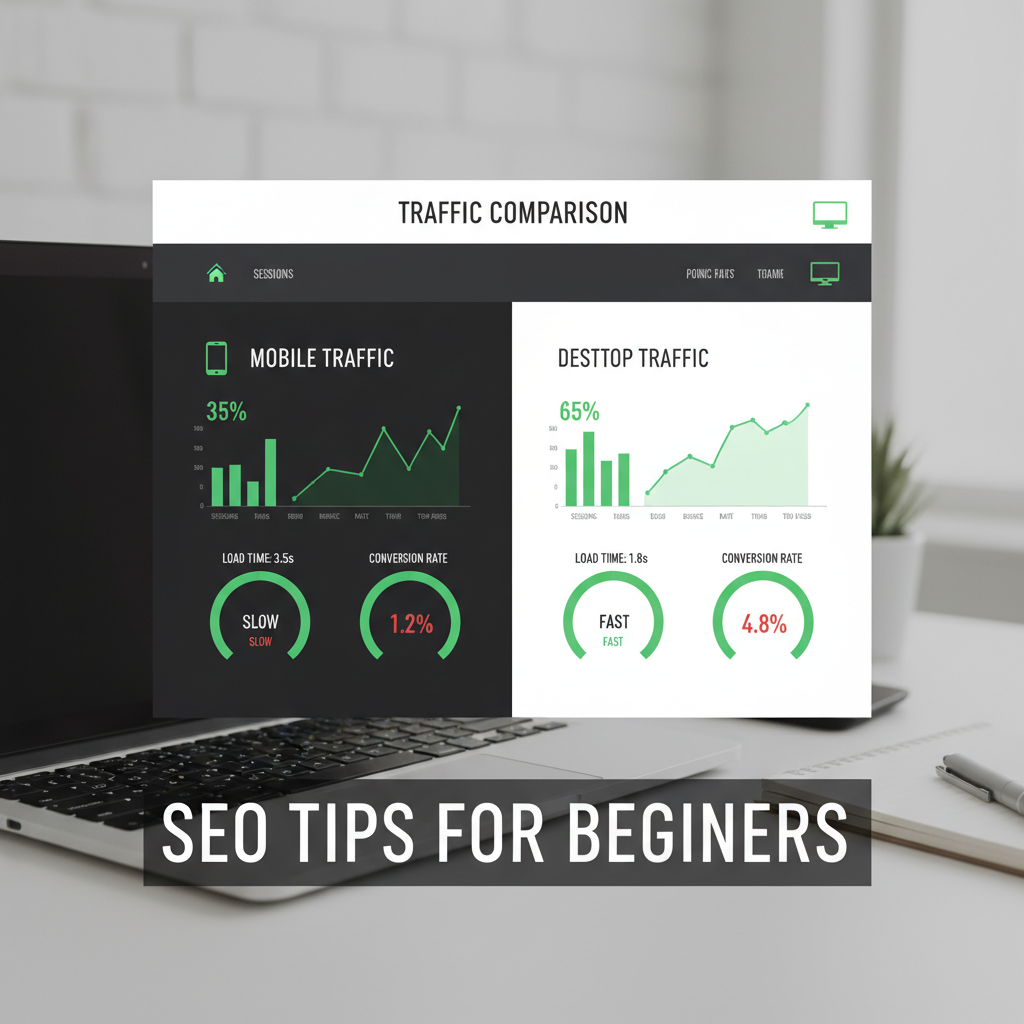
Mobile optimization is essential in 2026, as mobile devices generate the majority of web traffic and Google uses mobile-first indexing to evaluate and rank websites.Responsive Design Implementation
Implement responsive web design that automatically adapts your website's layout and content to different screen sizes and devices. This ensures optimal user experience across smartphones, tablets, and desktop computers without requiring separate mobile websites. Test your website's mobile performance using Google's Mobile-Friendly Test tool and address any issues that affect usability on mobile devices. Common problems include text that's too small to read, clickable elements that are too close together, and content that extends beyond the screen width.Mobile Page Speed Optimization
Mobile users expect fast-loading pages even more than desktop users, as they're often using slower cellular connections. Optimize your mobile page speed by:- Minimizing server response times
- Compressing images and using next-generation formats
- Eliminating render-blocking resources
- Implementing accelerated mobile pages (AMP) for content-heavy sites
- Using efficient caching strategies
10. Track and Analyze Performance
Regular monitoring and analysis of your SEO performance enables data-driven optimization decisions and helps you identify which strategies are generating the best results for your specific situation.Essential SEO Metrics to Monitor
Track key performance indicators that directly relate to your business goals and SEO success:- Organic traffic: Total visitors from search engines
- Keyword rankings: Position in search results for target keywords
- Click-through rates: Percentage of searchers who click your results
- Bounce rate: Percentage of visitors who leave after viewing one page
- Conversion rate: Percentage of visitors who complete desired actions
- Page loading speed: Time required for pages to fully load
Reporting and Optimization Cycles
Establish regular reporting schedules to review your SEO performance and identify optimization opportunities. Monthly reports should focus on traffic trends, ranking changes, and conversion performance, while weekly monitoring can catch technical issues or sudden ranking drops. Create optimization cycles based on your performance data. If certain pages are generating traffic but not converting visitors, focus on improving their content and calls-to-action. If you're ranking well for some keywords but not others, analyze the differences in your optimization approach.11. Optimize for AI Search Engines
As of 2026, AI-powered search engines like ChatGPT, Gemini, Claude, and Perplexity have become significant sources of traffic and recommendations, requiring new optimization strategies beyond traditional SEO.Structured Data for AI Understanding
Implement comprehensive structured data markup to help AI systems understand your content's context, relationships, and key information. This includes schema markup for articles, products, services, reviews, and business information that AI engines can easily parse and reference. AI search engines rely heavily on structured data to provide accurate, contextual responses to user queries. Websites with proper markup are more likely to be cited and recommended by AI systems when users ask relevant questions.Content Optimization for AI Recommendations
Create content that directly answers common questions in your industry, as AI search engines prioritize comprehensive, authoritative responses that can be easily extracted and summarized. Structure your content with clear headings, bullet points, and concise explanations.Pro Tip: Include FAQ sections in your content that directly address common user questions. AI search engines often pull from these sections when providing answers to user queries, increasing your visibility in AI-generated responses.Focus on building topical authority by creating comprehensive content clusters around your core business topics. AI systems favor sources that demonstrate deep expertise and consistent quality across related subjects.
12. Avoid Common SEO Mistakes
Understanding and avoiding common SEO mistakes can save you significant time and prevent penalties that could harm your search rankings and organic traffic growth.Keyword Stuffing and Over-Optimization
Avoid cramming keywords unnaturally into your content, titles, and meta descriptions. Modern search engines are sophisticated enough to understand context and synonyms, making keyword stuffing not only unnecessary but potentially harmful to your rankings. Focus on writing naturally for human readers while incorporating keywords where they fit logically. Use variations and related terms rather than repeating the exact keyword phrase multiple times throughout your content.Neglecting Technical Issues
Technical problems can severely impact your SEO performance even if your content is excellent. Common technical issues that hurt rankings include:- Broken internal and external links
- Duplicate content across multiple pages
- Missing or poorly written title tags and meta descriptions
- Slow page loading speeds
- Mobile usability problems
- Incorrect robots.txt or noindex directives
How to Choose the Right SEO Approach
Selecting the most effective SEO strategy depends on your business type, resources, timeline, and specific goals, requiring a customized approach rather than a one-size-fits-all solution.DIY SEO vs. Professional Help
Consider your available time, technical expertise, and budget when deciding between handling SEO yourself or hiring professional help. DIY SEO works well for small businesses with limited budgets and owners who enjoy learning new skills, but requires significant time investment and ongoing education. Professional SEO services or tools make sense when you need faster results, lack technical expertise, or want to focus your time on core business activities. Modern solutions like automated SEO platforms can provide professional-level optimization at a fraction of traditional agency costs.Prioritizing Your SEO Efforts
Start with high-impact, low-effort optimizations that can generate quick wins while building toward long-term strategies. Priority areas typically include:- Fixing critical technical issues that prevent proper indexing
- Optimizing existing high-traffic pages for better conversions
- Creating content around low-competition, high-intent keywords
- Building local SEO presence for location-based businesses
- Establishing consistent publishing and optimization routines
| Business Type | Priority Focus | Key Metrics |
|---|---|---|
| E-commerce | Product pages, category optimization, reviews | Organic revenue, conversion rate, product visibility |
| B2B SaaS | Educational content, feature pages, case studies | Lead generation, trial signups, content engagement |
| Local Business | Google Business Profile, local citations, reviews | Local rankings, phone calls, store visits |
| Content/Blog | Content quality, topic authority, engagement | Organic traffic, time on page, social shares |
Sources & References
- Google, "Search Engine Optimization (SEO) Starter Guide", 2026
- Moz, "Beginner's Guide to SEO (Search Engine Optimization)", 2026
- Towson University, "Beginner's Guide to SEO", 2026
- Ahrefs, "SEO: The Complete Guide for Beginners", 2026
- Michigan Technological University, "Six Ways to Improve Your Site's Ranking (SEO)", 2026
- Forbes, "10 SEO Tips For Beginners", 2024
Frequently Asked Questions
1. What are the top 5 SEO strategies for beginners?
Understanding SEO tips for beginners is essential. The top 5 SEO strategies for beginners include keyword research to understand what your audience searches for, creating high-quality content that provides genuine value, optimizing page titles and meta descriptions for better click-through rates, ensuring your website loads quickly and works well on mobile devices, and building quality backlinks through valuable content and relationship building. These foundational strategies provide the strongest return on investment for new SEO practitioners.
2. How long does SEO take to show results?
SEO typically takes 3-6 months to show significant results, though some improvements may be visible sooner. The timeline depends on factors like your website's current authority, competition level in your industry, content quality, and consistency of optimization efforts. New websites generally take longer to rank than established sites with existing authority. This is particularly relevant for SEO tips for beginners.
3. What's the difference between SEO and SEM?
SEO (Search Engine Optimization) focuses on earning organic, unpaid visibility in search results through content optimization and technical improvements. SEM (Search Engine Marketing) includes both SEO and paid advertising like Google Ads. SEO provides long-term, sustainable traffic growth, while SEM can generate immediate results but requires ongoing ad spend. When considering SEO tips for beginners, this point stands out.
4. Do I need to hire an SEO agency as a beginner?
Most beginners can start with DIY SEO using free tools and resources, especially for basic optimizations like improving page titles, creating quality content, and fixing technical issues. Consider professional help when you need faster results, lack technical expertise, or want to focus on running your business rather than learning SEO. Modern automated SEO tools offer a middle ground between DIY and expensive agencies. For those exploring SEO tips for beginners, this matters.
5. How important is keyword density in 2026?
Keyword density is much less important in 2026 than it was in earlier years of SEO. Modern search engines understand context and synonyms, focusing more on content quality and user satisfaction than keyword frequency. Aim for natural keyword usage that serves readers rather than targeting specific density percentages, and focus on comprehensive topic coverage instead. This directly impacts SEO tips for beginners outcomes.
6. What are the most common SEO mistakes beginners make?
Common beginner SEO mistakes include keyword stuffing, neglecting technical issues like slow page speed, creating thin or duplicate content, ignoring mobile optimization, and expecting immediate results. Many beginners also focus too heavily on search engines rather than creating content that genuinely helps their target audience solve problems or achieve goals. This is particularly relevant for SEO tips for beginners.
7. How do I optimize for AI search engines like ChatGPT?
Optimize for AI search engines by implementing structured data markup, creating comprehensive content that directly answers common questions, building topical authority through content clusters, and focusing on factual accuracy with proper citations. AI systems favor authoritative sources with clear, well-organized information that can be easily extracted and summarized for user queries. When considering SEO tips for beginners, this point stands out.

Recommended Articles
Explore more from our content library: