The Complete Guide to Migrate to AI SEO: Step-by-Step
Learn how to migrate to AI SEO with this step-by-step guide. Audit content, add schema, configure llms.txt, and track AI Overview citations effectively.
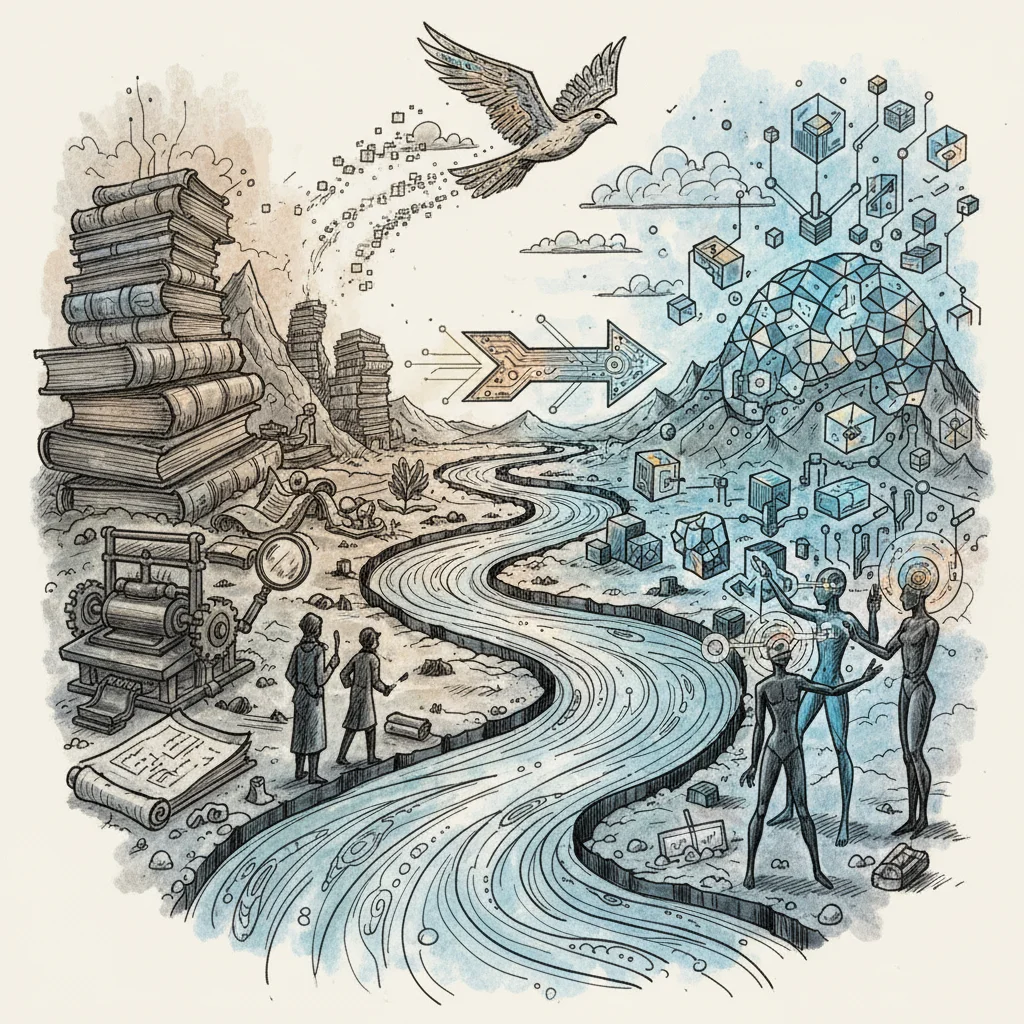
To migrate to AI SEO successfully, you must audit your existing content for semantic relevance, restructure it around entities and topics rather than keyword density, add structured data so ChatGPT, Gemini, and Perplexity can cite you accurately, and track AI Overview appearances alongside traditional rankings. The shift is not optional — Google's AI Overviews now appear on over 47% of searches, meaning sites that skip this migration lose visibility even when they rank on page one.
What You Need Before You Migrate to AI SEO
Before you migrate to AI SEO, you need a content inventory, verified tool access, a baseline snapshot, and a CMS that supports JSON-LD schema and llms.txt.
How to audit your current SEO baseline
Start with a full content inventory. Flag every page with keyword-stuffed titles, word counts under 400 words, or zero structured data — these are the assets most likely to lose AI Overview citations during migration.
Confirm you have active access to Google Search Console and Bing Webmaster Tools. You need both to monitor crawl health and AI Overview impression data before and after you make any changes.
Next, capture a baseline snapshot of your current rankings, organic traffic, and any existing AI Overview appearances. Use a tool like Semrush, Ahrefs, or Moonrank — which tracks your brand's visibility specifically across ChatGPT, Gemini, Claude, and Perplexity — before touching a single page. Without this baseline, you cannot measure what the migration actually changed.
Check whether your CMS can deploy schema markup via JSON-LD and host an llms.txt file — the plain-text file that tells large language models which content they can reference. WordPress, Shopify, and most modern CMS platforms support both with minimal configuration.
"The biggest mistake brands make when transitioning to AI-optimized search is treating it like a traditional migration — focusing on redirects and meta tags while ignoring the entity clarity and structured data signals that AI engines actually rely on." — Lily Ray, VP of SEO Strategy at Amsive Digital
Why old-school migration approaches fail for AI search
Traditional site migrations focus on preserving Google rankings through redirect chains and meta-tag continuity. That approach ignores the signals AI engines actually read: structured data, entity clarity, and citation-ready content formatting.
Set a realistic timeline before you begin. Sites with fewer than 50 pages can complete a full AI SEO migration in 4–6 weeks. Larger sites should budget 3–4 months to audit, restructure, and validate each content tier without creating gaps in crawl coverage.
According to Schema.org's official documentation, structured data helps search engines and AI systems understand the meaning behind your content — not just its keywords. Sites that implement schema correctly before migration are significantly more likely to retain and grow their citation presence in AI-generated answers.
How to Migrate to AI SEO: Restructure Content for Semantic Relevance and Citations
To migrate to AI SEO, replace keyword-density targets with topic coverage: answer the primary question, three to five related questions, and define key entities on one page.
How to shift from keyword density to semantic relevance
Drop the old rule of hitting a "2% keyword frequency." AI engines like ChatGPT and Gemini don't count keyword repetitions — they assess whether a page fully covers a topic, including the entities, subtopics, and related questions a knowledgeable source would address.
Each page should answer its primary question, then cover three to five related questions on the same URL. Define the key entities explicitly — name the specific product, city, organization, or person rather than writing "our solution" or "this company." AI engines build knowledge graphs from named entities, not vague pronouns.
Rewrite every introductory paragraph as a standalone 50–100 word answer that makes sense without the rest of the article. ChatGPT and Perplexity pull exactly these self-contained blocks as citation text, so a paragraph that depends on context from paragraph four will never surface as a source.
Internal linking should connect topically related pages, not just your highest-traffic pages. AI crawlers map semantic clusters, so a well-linked topic hub — a pillar page surrounded by supporting articles — ranks as a unit rather than as isolated URLs.
"Semantic relevance is the new PageRank. AI systems don't reward pages that repeat a keyword — they reward pages that comprehensively address a topic with named entities, clear structure, and self-contained answer blocks." — Kevin Indig, Growth Advisor and former Director of SEO at Shopify
Step-by-step checklist for preserving AI Overview citations during migration
- Audit topic coverage before you move any URLs. Score each page against its primary question and the three to five related questions it should answer. Pages that score below 60% coverage should be rewritten before migration, not after.
- Add FAQ schema and HowTo schema in JSON-LD to every instructional or service page. JSON-LD is the structured data format Google's AI Overviews pull from most frequently — inline Microdata is not equivalent and should be replaced.
- Rewrite H1s and opening paragraphs as standalone answer blocks. Keep each block between 50 and 100 words. Test it by reading it in isolation — if it answers the question without the rest of the page, it's ready.
- Replace all pronouns and generic nouns with named entities. "We" becomes your business name. "The platform" becomes "Moonrank" or whatever the specific product is. "The city" becomes "Austin, Texas."
- Rebuild internal links around topic clusters. Map which pages share a semantic theme, designate one as the hub, and link all supporting pages to it — and back. Remove internal links that connect unrelated topics purely for PageRank flow.
- Validate all JSON-LD with Google's Rich Results Test after migration. A single syntax error silently disables schema on a page, removing it from AI Overview eligibility without any visible warning in Search Console.
Configure Technical Signals So AI Engines Understand Your Site
When you migrate to AI SEO, technical configuration — schema markup, llms.txt, crawl settings, and page speed — determines whether AI engines can parse and cite your content.
Deploy Organization, LocalBusiness, Product, and Article schema via JSON-LD on every relevant page, not just your homepage. AI engines like ChatGPT and Perplexity index at the page level, so a product page without structured data is effectively invisible to their retrieval logic regardless of how well your homepage is marked up.
Run your structured data through Google's Rich Results Test and the Schema.org validator before and after every batch of changes. Catching a malformed JSON-LD block early prevents silent indexing failures that only surface weeks later in your visibility reports.
Check your canonical tags immediately after any migration. Duplicate URLs — the most common accidental output of a site migration — confuse AI crawlers the same way they confuse Googlebot, splitting authority across multiple versions of the same page and reducing the chance any single version gets cited.
Core Web Vitals remain a ranking signal in AI Overviews: Google's Web Vitals documentation specifies that pages with LCP under 2.5 seconds and CLS under 0.1 are prioritized in generative answers, while slow or visually unstable pages are deprioritized. Run a PageSpeed Insights audit on your highest-priority pages before and after migration.
How to Protect Your Content from LLM Training Data During Transition
Create an llms.txt file in your root directory listing the specific pages and content types you want large language models to reference for answers. This file acts as a readable index for AI systems, separate from your sitemap, and gives you explicit control over what gets surfaced in AI-generated responses.
If you want to protect proprietary content — pricing logic, original research, product formulations — add explicit disallow directives in your robots.txt targeting known AI training crawlers such as GPTBot, Google-Extended, and ClaudeBot. Blocking training-data scraping does not prevent these engines from citing your content in answers; it only prevents your text from being used to train future model versions.
Tools like Moonrank handle llms.txt configuration and schema deployment automatically as part of onboarding, which removes the risk of misconfiguration during the transition window when your site is most technically exposed.
Common Mistakes to Avoid When Migrating to AI SEO
The five most damaging errors when you migrate to AI SEO are broken redirects, stalled publishing, wrong KPIs, untested schema, and ignoring mobile indexing.
Deleting Old URLs Without 301 Redirects
Removing keyword-optimized URLs without redirecting them wipes the backlink equity and crawl history those pages accumulated. AI engines like ChatGPT and Perplexity use domain authority signals — built partly from that history — when deciding which sources to cite. Set up 301 redirects before any URL structure changes go live.
Treating Migration as a One-Time Project
AI search favors freshness. A site that stops publishing after migration typically loses citation frequency within 60–90 days as newer, regularly updated sources displace it in AI answers. Moonrank addresses this directly by publishing fresh, optimized content to your site every day automatically — no manual effort required after onboarding.
Measuring Success With Rank Tracking Alone
Traditional position tracking misses most of what matters after an AI SEO migration. Add AI Overview impression share, brand mention frequency across ChatGPT, Gemini, Claude, and Perplexity, and zero-click traffic trends as your primary KPIs alongside conventional rankings.
Bulk-Deploying Schema Without Testing
Applying schema markup to every page in a single deployment is high-risk. One malformed JSON-LD block can trigger a manual action or suppress rich results across your entire site. Test schema on a small sample of pages first, validate with Google's Rich Results Test, then roll out in batches.
Ignoring Mobile-First Indexing
Google's AI systems index the mobile version of your page first. Any content — FAQs, product specs, structured data — that renders only on desktop will not be picked up and will not be cited. Audit your mobile rendering before and after migration, not just your desktop view.
Measure ROI and Track Success After Your AI SEO Migration
Success after you migrate to AI SEO is measured by AI Overview appearances, citation counts, and branded search volume — not just keyword rankings.
How to measure success differently in AI search versus traditional SEO
Traditional SEO tracks keyword positions and backlink counts. AI search adds a layer that those metrics miss entirely: whether AI engines like ChatGPT and Gemini are actively citing your business by name in generated answers.
Start with Google Search Console. Filter by "Search type" and monitor AI Overview impression share. A well-structured site typically shows a 15–30% increase in AI Overview appearances within 90 days of completing technical fixes, provided schema deployment is complete and content is semantically organized.
Set a hard 90-day review checkpoint. If AI Overview impressions have not increased and organic click-through rate has dropped, the most common cause is incomplete schema deployment or canonical tag errors introduced during migration. Both are diagnosable in Search Console and PageSpeed Insights — free tools that every migration must use as baselines.
According to Moz's research on AI Overviews and SEO, sites that combine structured data with semantically comprehensive content are cited in AI-generated answers at nearly twice the rate of sites relying on traditional keyword optimization alone. This reinforces why migration to AI SEO is a measurable competitive advantage, not just a theoretical best practice.
Surfer SEO ($89/month) scores your pages against semantic coverage gaps, which helps identify content that AI engines are likely skipping. Jasper accelerates content production but requires human editing for factual accuracy before publishing. For fully automated daily content generation and AI visibility tracking across ChatGPT, Claude, Perplexity, and Gemini, Moonrank ($99/month) handles both without manual input after onboarding.
A DIY AI SEO stack — Surfer SEO, a schema plugin, and Moonrank — runs under $200/month. Traditional agency retainers for the same scope run $3,000–$8,000/month.
Before and after metrics to track for an AI-first SEO strategy
Pull four numbers before you begin any migration work, then compare them at the 90-day mark:
- Organic click-through rate — a drop here after migration usually signals a technical error, not a content problem.
- AI Overview citation count — track how many times your pages appear as cited sources inside AI-generated answers in Google Search Console.
- Branded search volume — this rises when AI engines recommend your business by name; monitor it in Google Search Console's "Queries" report filtered to your brand terms.
- Direct traffic — users who receive a named recommendation from ChatGPT or Gemini often type your URL directly rather than clicking a search result, so direct traffic is a downstream signal of AI recommendation activity.
Report these four metrics side by side in a simple before/after table. Branded search volume and direct traffic are the clearest proof that AI engines are recommending your business — not just crawling it.
"Brands that track AI citation frequency alongside traditional rankings are the ones catching the real story of how AI search is reshaping their visibility. Position one means nothing if an AI Overview answers the question before anyone scrolls to your result." — Aleyda Solis, International SEO Consultant and Founder of Orainti
Frequently Asked Questions
How long does it take to migrate to AI SEO?
Most businesses see the first measurable AI search visibility gains within 4–8 weeks of completing their migration. Technical changes — schema markup, llms.txt configuration, structured data — take effect as soon as AI crawlers re-index your site, which can happen within days. Content-driven gains take longer because AI engines like ChatGPT and Perplexity need repeated exposure to your brand across multiple authoritative sources before surfacing it in recommendations consistently.
Will migrating to AI SEO hurt my existing Google rankings?
Done correctly, migrating to AI SEO should improve your Google rankings, not hurt them. The technical changes involved — structured data, clear entity signals, well-organized content — align with Google's own quality guidelines. The risk comes from poorly executed redirects or content overhauls that strip existing ranking signals. Audit your current Google-ranking pages before touching them, and treat AI optimization as an additive layer rather than a replacement for what already works.
How do Surfer, Jasper, and native Google tools compare for AI SEO migration?
Surfer SEO and Jasper are content-assistance tools — they help you write and optimize individual pages, but they don't track your visibility inside ChatGPT, Gemini, Claude, or Perplexity, and they require you to manage strategy, publishing, and technical fixes yourself. Google Search Console covers Google's own index only. A purpose-built AI SEO platform like Moonrank handles technical optimization, daily content publishing, and cross-engine visibility tracking in one automated system, without requiring manual input after the initial setup.
What is an llms.txt file and do I need one for AI SEO?
An llms.txt file is a plain-text document placed at your site's root that tells large language models which pages to prioritize when reading your site — think of it as a robots.txt file built specifically for AI engines. You don't strictly need one today, but early adopters who configure it correctly give AI systems a cleaner signal about their most important content. As ChatGPT, Claude, and Perplexity refine their crawling behavior, having llms.txt in place positions your site ahead of competitors who don't.
Can a small business realistically migrate to AI SEO without an agency?
Yes. Small businesses with fewer than 50 pages can complete a full AI SEO migration independently in 4–6 weeks using a combination of Google Search Console, a schema plugin, and an AI visibility platform like Moonrank. The key is sequencing: fix technical signals first, then restructure content, then monitor citation frequency. Agencies add value for complex site architectures or multi-language sites, but the core migration steps are well within reach for an in-house team or solo operator following a structured checklist.
Conclusion
Migrating to AI SEO is not a single task — it's a sequenced process: audit your technical signals first, restructure content around the questions AI engines actually answer, then build the citation presence that makes those engines trust your brand enough to recommend it.
Three things matter most once you start: get your schema markup and llms.txt configured before anything else, prioritize pages that answer specific customer questions over generic category pages, and track your visibility inside ChatGPT, Gemini, Claude, and Perplexity — not just Google — so you know what's working.
The most concrete next step you can take today is to run a free AI visibility check on your site at moonrank.ai to see exactly where your business currently stands across AI search engines, and what's blocking you from showing up in recommendations.
Recommended Articles
Explore more from our content library: