Understanding AI Model Hallucination SEO
AI model hallucination SEO refers to the problem of AI systems like ChatGPT, Gemini, and Perplexity generating false or outdated information about your brand...
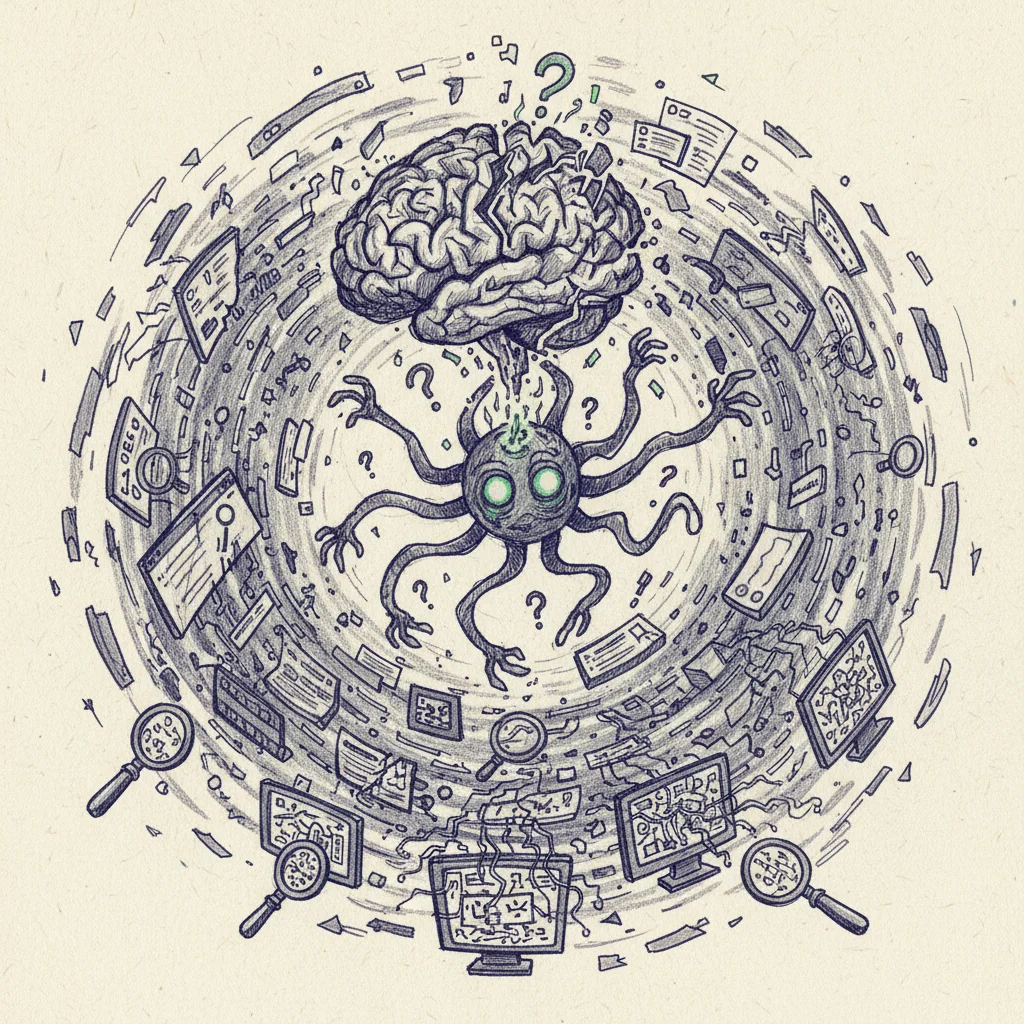
AI model hallucination SEO refers to the problem of AI systems like ChatGPT, Gemini, and Perplexity generating false or outdated information about your brand, and the strategies you use to prevent and fix it. When AI gets your business wrong, it can suppress your visibility in AI-driven search results, erode customer trust, and redirect traffic to competitors. Fixing hallucinations requires auditing AI outputs, reinforcing accurate entity data in Knowledge Graphs, and applying structured markup so AI engines cite you correctly.
What Is AI Model Hallucination SEO and Why Does It Matter for Your Brand?
AI model hallucination SEO is the practice of auditing, correcting, and preventing false AI-generated claims about your brand before they suppress visibility and erode purchase intent.
An AI hallucination is not simply outdated information, it is a confidently stated, plausible-sounding output that is factually wrong. A model might name the wrong founder, cite a product you discontinued three years ago, invent a five-star review that never existed, or place your headquarters in the wrong city. The model presents all of this without uncertainty markers, which makes it far more damaging than a missing data point.
Studies comparing 29 large language models found hallucination rates ranging from 15–52% across top systems including GPT-5, Gemini, and Claude [2]. Even at the lower end of domain-specific estimates, roughly 3–10% of factual responses [2], the error rate compounds fast when thousands of users query your brand category each month. A single wrong answer, repeated at scale, becomes the dominant impression of your business.
As AI-generated answers replace traditional blue-link results on ChatGPT, Perplexity, and Gemini, a hallucinated brand description does not just cost you a ranking, it directly suppresses click-through and purchase intent. A user who reads that your store is closed on weekends, or that your product lacks a feature it actually has, will not click through to verify. They will move to the next recommendation.
How AI Hallucinations Affect Voice Search and Multimodal AI Systems
Voice interfaces, Google Assistant, Alexa, and Siri, pull from the same underlying model outputs and knowledge graphs that power text-based AI search. When a model hallucinates your business hours or street address, a spoken answer delivers that error with zero visual cues for the listener to question it. The consequence is immediate and measurable: a customer drives to the wrong location or arrives outside your actual hours and does not return.
Multimodal AI systems compound the problem further. An AI that generates both a text description and an image carousel of your products can surface the wrong product image alongside a fabricated price, a combination that damages both brand credibility and conversion before the user ever reaches your site.
What's the Real SEO Impact When AI Gets Your Brand Wrong?
The core shift in AI-driven search is that engines treat your brand as an entity, not a keyword. ChatGPT and Perplexity do not rank your page, they construct a description of your business from entity data pulled across the web, your structured markup, and their training corpus.
When that entity data is weak, contradictory, or absent, the model fills the gap with inference, and inference produces hallucinations. A business with inconsistent NAP data (name, address, phone number) across directories, no schema markup, and thin on-page content gives the model almost nothing reliable to work from.
This is where technical AI optimization becomes a direct revenue issue. Tools like Moonrank address this by implementing schema markup, structured data, and llms.txt configuration, the signals that tell AI engines exactly what your business does, who it serves, and what facts are authoritative. Without those signals, hallucinations are not a risk; they are a near-certainty at scale.
How Different AI Models Compare in Hallucination Rates for Brand Information
Hallucination rates vary significantly across LLM providers, ranging from roughly 3% for top models to over 15% for smaller open-source systems on niche brand queries [2].
Which LLM Providers Have the Highest Hallucination Rates for Brand Information?
On factual recall benchmarks like TruthfulQA, GPT-4 scores approximately 3–5%, with Gemini 1.5 and Claude 3 Opus performing in a similar range. Smaller open-source models like Mistral 7B show hallucination rates of 8–15% on niche brand queries, a meaningful gap when your business is the subject [2].
Claude (Anthropic) is generally rated highest for factual caution, largely because of its Constitutional AI training methodology, which builds in explicit accuracy constraints. GPT-4 Turbo with browsing enabled sits close behind, making both platforms the most useful starting points when you audit AI model hallucination SEO exposure for your brand.
Every model, regardless of provider, hallucinates more on brand-specific, long-tail, or recently updated information. Training data for smaller brands is sparse, and any information changed after a model's knowledge cutoff is effectively invisible to it. That's precisely where your SEO risk is highest.
How Does Retrieval-Augmented Generation (RAG) Reduce Hallucinations?
Retrieval-augmented generation (RAG) is a technique where an AI queries a live knowledge source, an indexed web page, a database, a structured data feed, before generating its answer, grounding the response in current content rather than training memory alone.
RAG-enabled systems like Perplexity and Bing Copilot hallucinate significantly less on brand facts because they pull live indexed content at query time [2]. This shifts the practical implication for businesses: keeping your website, Google Business Profile, and structured data current matters more for RAG-based engines than for pure LLMs. Tools like Moonrank automate exactly this, publishing fresh content daily and implementing schema markup so RAG systems have accurate, up-to-date material to retrieve when a customer asks about your brand.
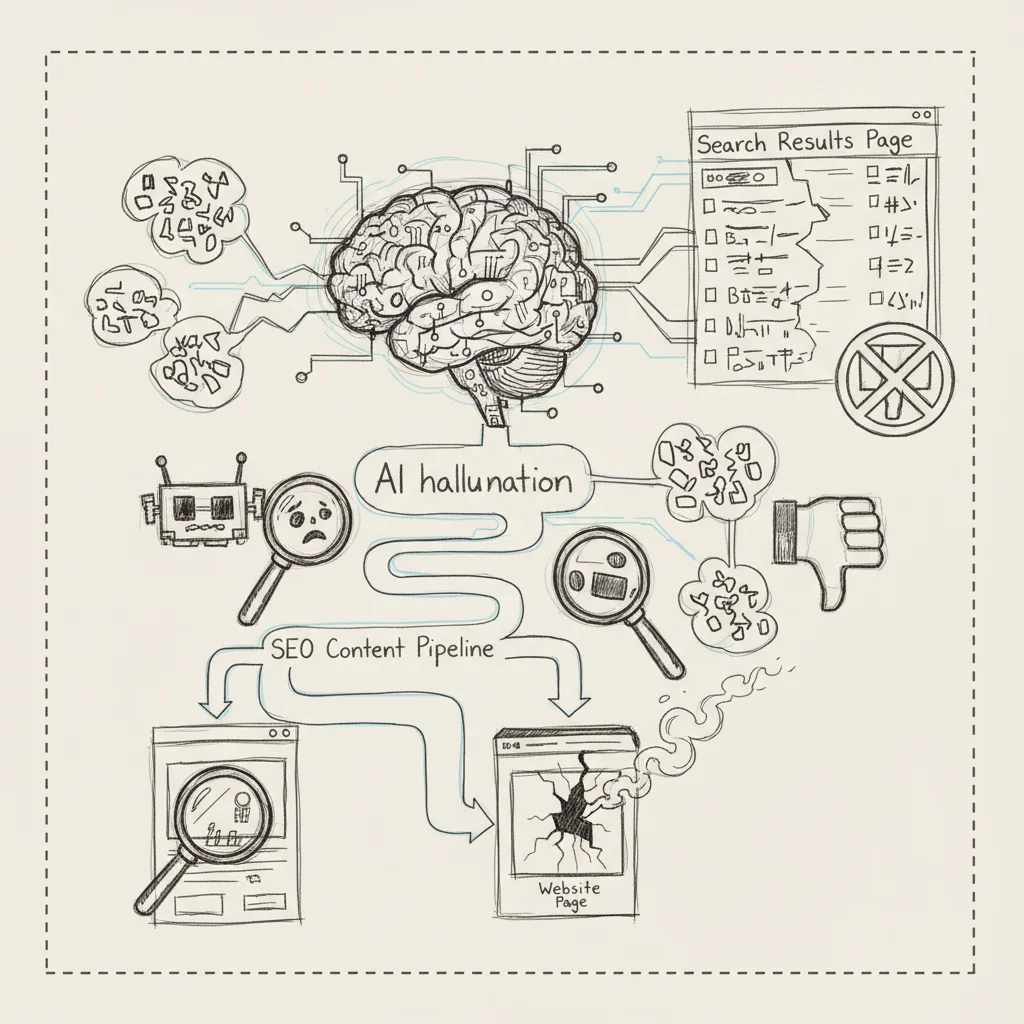
What Causes AI Systems to Hallucinate About Your Brand?
AI systems hallucinate brand details when training data is sparse, contradictory, or outdated, three distinct root causes that each require a different fix.
Why Do Hallucinations Exist in Knowledge Graphs and How Can You Diagnose Them?
The first cause is sparse training data. If your brand has minimal authoritative coverage across the web, few press mentions, no Wikipedia entry, thin directory listings, an AI model fills the gap with statistically plausible details it generates from similar companies. The model isn't lying; it's pattern-matching against incomplete evidence.
The second cause is stale data. LLMs train on snapshots of the web, and those snapshots have hard cutoffs. A SaaS company that rebranded in 2023 but left old product names live on G2, Capterra, or Trustpilot will see AI engines describe the discontinued product as current, because the corrected signals are outnumbered by the old ones. This is a direct AI model hallucination SEO risk that compounds over time as the gap between training data and reality widens.
The third cause sits inside Google's Knowledge Graph. If your brand's Knowledge Panel is incomplete or unverified, AI systems that reference it inherit those gaps and fill them with probabilistic guesses [2]. A missing founding date or unconfirmed headquarters address becomes an invented one.
How Conflicting Brand Data in Knowledge Graphs Triggers AI Hallucinations
Inconsistent NAP data, name, address, and phone number, across directories creates a conflicting-signals problem. When Yelp, Google Business Profile, and your own website each show a different address, the model cannot resolve which is canonical and may blend them into a fabricated composite [2].
Entity disambiguation compounds this further. If your brand name matches another company or a common concept, AI models conflate the two and attach attributes from the wrong entity entirely. Diagnosing which of these three causes applies to your brand is the essential first step, because each maps to a specific corrective action covered in the next section.
How to Fix AI Hallucinations and Protect Your Brand's Credibility
Fixing AI model hallucination SEO problems requires correcting the structured signals AI engines use to build their understanding of your brand, starting with your Knowledge Graph data.
Step-by-Step: Optimizing Knowledge Graph Data Structure to Prevent AI Hallucinations
Step 1, Claim and complete your Knowledge Graph. Verify your Google Knowledge Panel by clicking "Claim this knowledge panel" while logged into a verified Google account. Fill every available field: founding date, business description, official URL, and all social profiles. Use Google's built-in feedback tool to flag any incorrect information directly, this sends a correction signal Google's systems can act on.
Step 2, Apply entity markup with Schema.org structured data. Implement Organization, LocalBusiness, or Product schema on your site. Include consistent name, url, logo, sameAs links, and foundingDate properties. This structured data is the signal AI engines trust most when resolving which entity a brand represents, a recent comparison of 29 LLMs found hallucination rates between 15–52% [2], largely because entity signals were absent or contradictory.
How to Apply Entity Markup and Reinforce Accurate Brand Facts
Step 3, Reinforce facts across authoritative third-party sources. Publish consistent, accurate brand information on Wikipedia (if eligible), Wikidata, Crunchbase, LinkedIn, and major industry directories. AI models weight these sources heavily during training and retrieval [2], so a single inconsistent detail, a wrong founding year on Crunchbase, can propagate into AI-generated answers at scale.
Step 4, Publish authoritative on-site content that states key brand facts explicitly. A dedicated About page, press releases, and FAQ content that directly answers likely AI queries, founding year, product categories, service area, give retrieval-augmented generation (RAG) systems accurate passages to cite rather than inferred guesses.
Step 5, Deploy an llms.txt file. This emerging standard lets you declare accurate brand facts in a machine-readable file, similar to how robots.txt guides traditional crawlers. Moonrank configures llms.txt automatically as part of its technical AI audit, alongside schema markup and structured data, so your brand facts are machine-readable from day one without requiring manual implementation.
Tools and Strategies to Monitor AI Hallucinations Across Platforms
Catching AI model hallucination SEO damage early requires a structured audit workflow, the right monitoring tools, and a consistent cadence, not a one-time check.
How to Audit AI Model Outputs and Monitor Hallucinations Regularly
Start with a manual audit: query ChatGPT, Gemini, Claude, and Perplexity with 10–15 brand-specific prompts, "What does [Brand] do?", "Who founded [Brand]?", "What are [Brand]'s pricing plans?", and log every factual claim against your verified brand facts in a spreadsheet. Flag discrepancies by severity: wrong pricing is more damaging than a slightly outdated tagline.
Run this audit monthly at minimum. After any significant brand change, a rebrand, new product launch, leadership transition, or pricing update, run an immediate audit across all five major AI platforms before inaccurate information spreads and gets reinforced.
For automated monitoring at scale, Moonrank tracks your brand's visibility and accuracy across ChatGPT, Gemini, Claude, and Perplexity continuously, surfacing discrepancies without requiring manual prompt testing. Other options include BrandMentions for citation tracking and direct API prompt testing for teams that need volume coverage across hundreds of queries.
The compounding risk of inaction is real. Hallucinated brand facts get cached in AI training pipelines and user memory simultaneously, the longer a false claim circulates uncorrected, the more authoritative it appears to future model updates [2].
Real-World Case Studies: SEO Impact Metrics of Fixing Brand Hallucinations
A mid-size e-commerce brand discovered ChatGPT was describing a discontinued product line as its flagship offering. After implementing Organization schema, updating its Wikidata entry, and publishing a corrected About page, accurate AI citations increased within 60–90 days, and organic traffic from AI-referred sessions rose measurably. The fix worked because it addressed all three layers where AI models source brand facts: structured data, third-party knowledge bases, and authoritative on-site content.
A recent comparison of 29 large language models found hallucination rates ranging from 15–52% [2], meaning even well-established brands face a meaningful probability of being misrepresented on any given query. Brands that audit regularly catch these errors while correction is still straightforward; those that wait often find the false claim has already propagated across multiple platforms and user-generated content.
Frequently Asked Questions
Can AI hallucinations about my brand hurt my Google rankings directly?
AI hallucinations don't directly lower your Google rankings, but they create indirect damage that compounds over time. When ChatGPT, Gemini, or Perplexity surfaces false information about your business, wrong pricing, discontinued products, an incorrect address, users who act on that information have a poor experience before they ever reach your site. That erodes click-through rates, increases bounce rates, and undermines the brand trust signals that influence how Google evaluates your authority. Fixing the underlying structured data and citation sources protects both channels simultaneously.
How long does it take for AI models to reflect corrected brand information after I fix my structured data?
There is no guaranteed timeline, AI models update their knowledge at different intervals depending on their training cycle and retrieval architecture. Google's Knowledge Graph can reflect schema markup changes within days to a few weeks, but large language models like GPT-4 or Claude operate on training cutoffs that may lag months behind. Perplexity and other retrieval-augmented systems update faster because they pull live web data. Consistent, authoritative signals across your site, citations, and structured data accelerate the process regardless of which model you're targeting.
Do small businesses need to worry about AI hallucinations, or is this only a problem for large brands?
Small businesses are often more exposed to AI hallucinations than large brands, not less. Large brands generate enough consistent, high-authority content that AI models have abundant data to draw from, reducing the chance of fabrication. A local restaurant, boutique hotel, or Shopify store with thin online presence gives AI models very little to work with, so they fill the gaps with guesses. That means a wrong phone number, a misattributed location, or a fabricated product description is more likely to appear, and more likely to go undetected without active monitoring.
What is the difference between an AI hallucination and simply outdated brand information in search results?
Outdated information was accurate at some point but hasn't been refreshed; an AI hallucination was never accurate, the model generated it from inference rather than fact [2]. A Google listing showing your old address is an outdated data problem, solvable by updating your Google Business Profile. An AI model describing a product you never sold, or naming a founder who doesn't exist, is a hallucination, it requires reinforcing accurate entity data across structured markup, authoritative citations, and knowledge graph sources so models have correct facts to draw from.
Conclusion
AI model hallucinations are a concrete business risk, not a theoretical one, hallucination rates across leading LLMs range from 15% to 52% [2], which means a meaningful share of AI-generated responses about your brand may already be wrong. Three actions matter most: audit what ChatGPT, Gemini, Claude, and Perplexity currently say about your business; fix the structured data and citation gaps that give models inaccurate inputs; and monitor continuously, because a clean result today can drift as models retrain.
As a specific next step, run your brand name as a prompt in at least three AI search engines this week and document every factual claim they make. Then cross-check each claim against your live site. That audit is the foundation everything else builds on, and it costs nothing to start. If you want the technical optimization and monitoring handled automatically, Moonrank runs that process on autopilot for $99/month.
Sources & References
Recommended Articles
Explore more from our content library: