Structured Data AI Search: Engine Recognition
Structured data AI search refers to the practice of embedding machine-readable markup — most commonly JSON-LD schema — into your web pages so AI search...

Structured data AI search refers to the practice of embedding machine-readable markup, most commonly JSON-LD schema, into your web pages so AI search engines like Google AI Overviews, ChatGPT, Perplexity, and Gemini can accurately identify, interpret, and cite your content. Unlike traditional SEO, where keywords drive rankings, AI search engines rely on structured signals to understand entity relationships, business context, and content authority. Getting this right means your business gets recommended, not just indexed.
What Is Structured Data AI Search and How Does It Actually Work?
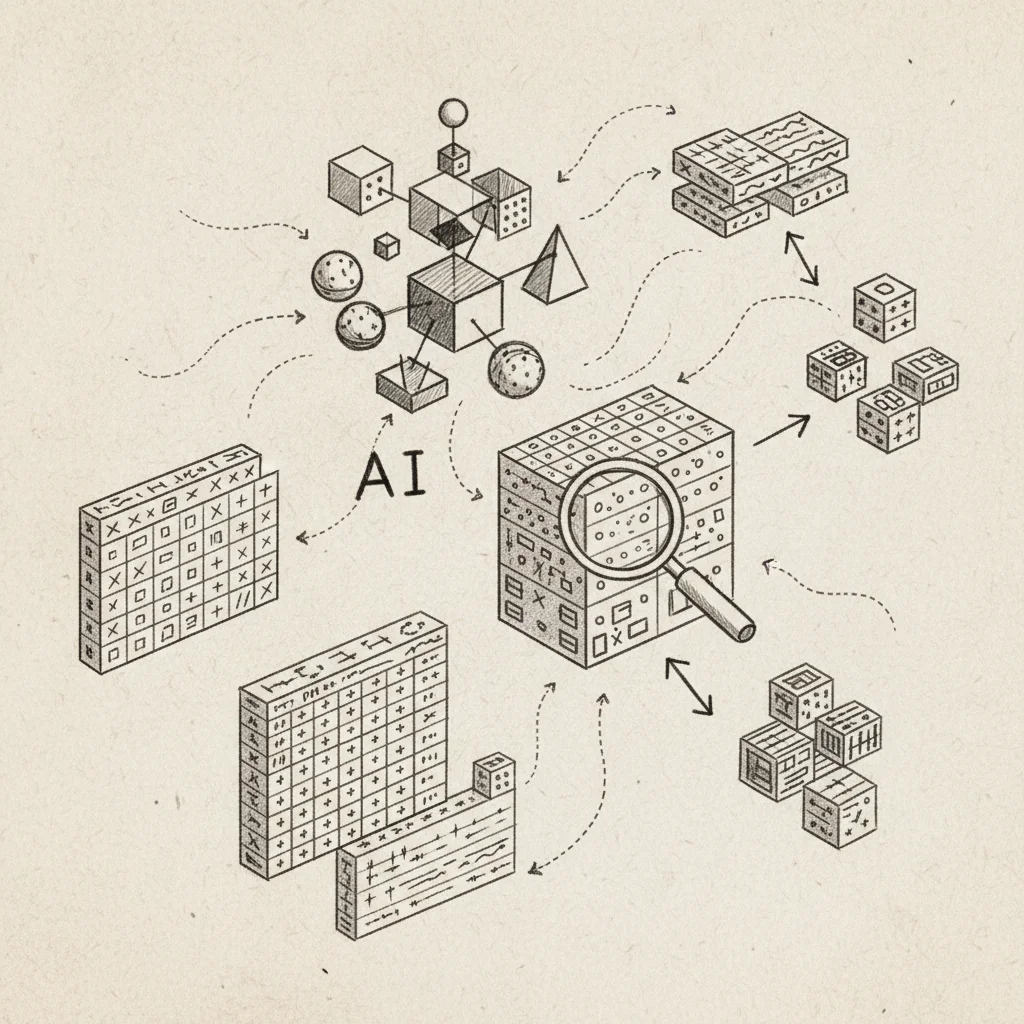
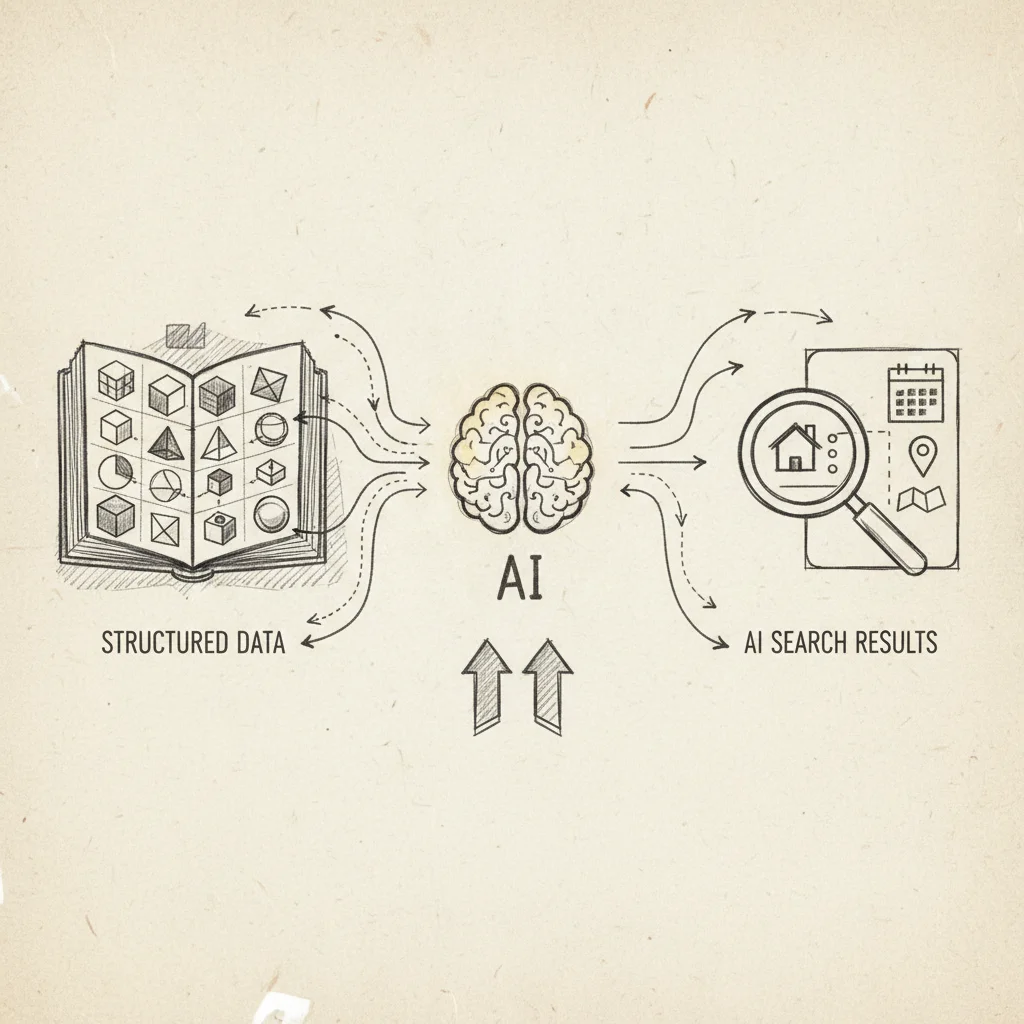
Structured data is machine-readable markup, written in JSON-LD, Microdata, or RDFa, that labels your content so AI engines recognize entities, not just keywords.
In plain terms: instead of leaving an AI engine to guess what your business does, structured data tells it directly. A markup tag doesn't say "here are some words about a restaurant." It says "this is a restaurant entity, it serves Italian cuisine, it opens at 11am, and its price range is $$."
Google's own developer documentation confirms that structured data helps AI Overviews surface rich results [1], making it a foundational signal, not an optional decoration. When you implement Schema.org vocabulary correctly, you're not just helping crawlers; you're feeding the retrieval layer that AI search engines query before generating an answer.
Why AI Search Engines Need Structured Data Even When They Can Read Plain Text
Large language models can parse unstructured prose, but that ability doesn't make structured signals redundant. Structured data reduces ambiguity and increases citation confidence, which is why engines like Perplexity and Google AI Overviews weight it heavily when deciding which sources to reference.
The difference matters in practice. Structured data (explicit Schema.org markup) gives AI engines verified entity attributes. Semi-structured data, HTML tables, definition lists, provides partial context. Unstructured data, plain prose, forces the model to infer meaning, introducing uncertainty. AI models generating answers prefer the source that removes the most guesswork.
Consider a local restaurant that implements Schema.org Restaurant markup with servesCuisine, openingHours, and priceRange properties. When a user asks ChatGPT or Gemini "best Italian restaurant open late near me," that explicit property data surfaces directly in the response, hours, cuisine type, and price range included, because the AI engine found a clean, unambiguous signal rather than having to extract it from a paragraph of prose.
Structured data AI search optimization works precisely because it closes that interpretation gap. Tools like Moonrank implement schema markup automatically as part of their technical optimization layer, so SMB owners get those citation signals without editing a single line of code.
How to Structure Content with JSON-LD and Schema Markup for AI Search
JSON-LD placed in your page's <head> tag is the fastest way to make your structured data AI search-ready in 2025.
Google recommends JSON-LD over inline Microdata [1], and both Perplexity and Bing Copilot crawlers parse <head>-injected JSON-LD more reliably than Microdata embedded inside HTML elements. Microdata requires AI models to reconstruct meaning from scattered HTML attributes, JSON-LD delivers it as a clean, self-contained block.
Which Schema Types and Properties to Prioritize for AI Search Visibility
Six schema types drive the most AI search visibility in 2025: Article, FAQPage, HowTo, LocalBusiness, Product, and BreadcrumbList.
FAQPage markup deserves special attention. It directly feeds Google's AI Overviews answer boxes and featured snippets [1] because it presents question-answer pairs in a format AI engines can extract verbatim. If your page answers a question a user is likely to ask ChatGPT or Gemini, FAQPage markup increases the chance your answer gets cited.
Schema nesting also matters. A Review schema nested inside a Product schema passes richer, connected context than two flat, separate schemas on the same page, AI models read the relationship, not just the individual entities.
The sameAs property is one of the highest-value fields you can populate. Linking it to your Google Business Profile, LinkedIn page, and Wikidata entry strengthens entity recognition across ChatGPT and Gemini, both of which rely on knowledge graph signals to confirm a business is real and authoritative.
Practical JSON-LD Code Examples You Can Deploy Today
The block below shows a minimal but complete LocalBusiness schema. Each property signals something specific to AI crawlers:
<script type="application/ld+json">
{
 "@context": "https://schema.org",
 "@type": "LocalBusiness",
 "name": "Riverside Coffee Co.",
 "description": "Specialty coffee shop in Austin, TX, serving single-origin espresso and seasonal pour-overs.",
 "url": "https://www.riversidecoffee.com",
 "sameAs": [
 "https://g.co/kgs/exampleGBP",
 "https://www.linkedin.com/company/riverside-coffee",
 "https://www.wikidata.org/wiki/Q12345678"
 ]
}
</script>- name, the canonical entity label AI engines use to match your brand across sources.
- description, a plain-English summary AI models can pull directly into answer responses.
- url, confirms the authoritative web address for your entity.
- sameAs, connects your schema to external knowledge graph entries, which ChatGPT and Gemini use to verify entity identity.
Tools like Moonrank automate this entire layer, generating and injecting schema markup, llms.txt configuration, and citation signals without requiring you to edit a single line of code manually.
Which AI Search Platforms Use Structured Data and How They Differ
Each major AI search platform reads structured data differently, Google AI Overviews has the most direct impact, while ChatGPT and Claude rely on indirect signals through third-party indexes.
How Google AI Overviews Uses Structured Data Differently Than ChatGPT or Claude
Google AI Overviews is the most responsive platform to structured data AI search signals. Googlebot reads Schema.org markup directly, using it to populate rich results and AI-generated answer panels [1]. If your product page carries Product, Offer, and Review schema, Google has the clearest possible signal to surface that page in an AI Overview, making this the highest-return implementation priority for e-commerce sites.
Perplexity crawls live URLs and parses structured markup to attribute sources in its citations. Pages marked up with Article or FAQPage schema are cited more consistently than unstructured pages, Perplexity's citation engine rewards content it can parse cleanly and attribute with confidence.
ChatGPT with Browse relies primarily on its training data and the Bing index. Bing's crawler respects Schema.org markup, so structured data improves ChatGPT citation frequency indirectly, better Bing index quality means better ChatGPT retrieval. Claude's base model does not crawl the live web; structured data reaches Claude only through indexed training data and Claude.ai's web search feature, which uses third-party indexes that honor schema.
Does Structured Data Improve Visibility Equally Across All AI Search Platforms?
No, the impact varies significantly by platform. Gemini sits at the far end of the spectrum: tightly integrated with Google's Knowledge Graph, it gives outsized weight to sameAs and Organization schema for entity recognition. A business that correctly marks up its organization with sameAs links to authoritative sources, Wikipedia, Wikidata, Google Business Profile, will see stronger Gemini recognition than a competitor relying on unstructured text alone.
Tools like Moonrank handle this platform-by-platform complexity automatically, implementing the schema types most relevant to each AI engine, so a Shopify store owner doesn't need to audit Bing's index quality separately from Google's Knowledge Graph requirements.
Structured Data Mistakes That Cause AI Models to Ignore or Misinterpret Your Content
The most damaging structured data errors in AI search are mismatched markup, missing required properties, and deprecated schema types that signal low-quality or untrustworthy data.
Mismatched Markup: The Fastest Way to Lose AI Trust
The single most common error is marking up content that doesn't appear on the page. Adding a 5-star AggregateRating with no visible reviews is a clear example, Google's spam policies penalize this [1], and AI models that cross-reference visible page content against schema data will flag the discrepancy and distrust everything else you've marked up.
Duplicate or conflicting schema declarations cause a similar problem. If a page carries both a LocalBusiness and an Organization type with different address values, AI models face an ambiguity they resolve by ignoring both declarations entirely.
Which Schema Types Are Becoming Deprecated or Ignored by Modern AI Models
Not all schema types carry equal weight in structured data AI search. Data-vocabulary.org markup is officially deprecated and should be replaced with Schema.org equivalents immediately. Speakable schema has limited AI support across current engines. Overly generic types, Thing or WebPage with no specific properties, add noise without giving AI models anything useful to extract [1].
Missing Required Properties and Skipping Validation
Using Product schema without an offers property, or Article without datePublished and author, leaves AI engines with incomplete entity data. They'll deprioritize that page in favor of a competitor whose markup is complete.
Syntax errors are equally costly, unclosed brackets or incorrect property names silently break parsing so your markup becomes invisible to AI crawlers. Google's Rich Results Test and the Schema.org Validator catch these errors before they do damage; running both after any implementation change takes under five minutes and prevents weeks of lost visibility.
How to Measure and Maintain Structured Data as AI Search Evolves
Track rich result performance in Google Search Console and brand citation frequency in AI engines, those two signals tell you whether your structured data is working.
What Metrics Show the Real Traffic Impact of Structured Data Implementation
Google Search Console's Enhancements report is your first stop. It shows which schema types, FAQ, HowTo, Product, Review, are eligible for rich results and flags any markup errors blocking them. Filter by Search Appearance to isolate impressions and click-through rate for each rich result type; a CTR lift of even 2–3 percentage points on a high-volume page is a measurable return on your schema investment.
For AI-specific visibility, Google Search Console shows nothing. You need to track how often ChatGPT, Perplexity, Gemini, and Claude cite your brand in direct responses. Manual spot-checks, querying your product category weekly and recording whether your brand appears, give a baseline. Tools like Moonrank's AI visibility tracking automate this across all four engines daily, so you can correlate a rise in cited appearances with a specific schema deployment rather than guessing.
How to Update Structured Data as AI Search Algorithms Change in 2025–2026
Schema.org releases updates roughly quarterly [1]. In 2025, new properties for AI-specific contexts, including isBasedOn and expanded speakable support, are being tested for how AI engines attribute and read content. Subscribe to the Schema.org GitHub changelog to catch deprecations before they break your markup silently.
Run a full site schema audit quarterly using Screaming Frog or a similar crawler. Also audit immediately whenever you update page content, a changed address or price not reflected in your schema is an instant trust signal failure for AI engines parsing your data [1].
The bigger shift to watch through 2025–2026: Google has signaled that entity authority, how consistently your structured data connects your brand to a single knowledge graph entity, will carry more weight in AI Overviews than keyword-level schema optimization alone. Structured data AI search optimization is moving from tagging individual pages to building a coherent, machine-readable identity across your entire site.
Frequently Asked Questions
What is a simple example of structured data used in AI search?
A Product schema on an e-commerce page is one of the clearest examples, it labels your item's name, price, availability, and review rating in JSON-LD so AI engines can read those fields directly [1]. When ChatGPT or Perplexity answers a query like "best noise-canceling headphones under $100," it can pull that structured product data and surface your listing with accurate details, rather than guessing from unstructured paragraph text.
Does adding schema markup guarantee your content appears in AI Overviews or ChatGPT answers?
No, schema markup improves your chances but does not guarantee inclusion in AI-generated answers. Structured data makes your content easier for AI systems to parse and trust [1], but final selection depends on content quality, topical authority, citation signals, and how well your page answers the specific query. Think of schema as a prerequisite that gets you into consideration, not a ticket that confirms your seat.
How long does it take for structured data changes to impact AI search visibility?
Most sites see crawl-level changes reflected within one to four weeks after implementing or correcting schema markup, though AI search visibility shifts can take longer to register. Unlike traditional Google rankings, AI engine retrieval indexes update on their own schedules, Perplexity and ChatGPT do not publish crawl frequency data publicly. Consistent content publishing alongside technical fixes tends to accelerate the timeline.
Is JSON-LD better than Microdata or RDFa for AI search optimization?
JSON-LD is the recommended format for AI search optimization, Google explicitly prefers it [1], and it is easier to implement without touching your HTML structure. Microdata and RDFa embed markup directly into page elements, which increases the risk of errors during site updates. For SMBs without a dedicated developer, JSON-LD placed in a <script> block is the most maintainable and AI-readable option available.
Conclusion
Structured data is the clearest signal you can send to AI search engines, it tells ChatGPT, Gemini, Claude, and Perplexity exactly what your business does, what you sell, and why you're a credible source. Three actions move the needle most: implement Organization and Product schemas in JSON-LD, add FAQPage markup to your highest-traffic pages, and publish fresh content consistently so AI crawlers have current material to index.
If you want all three handled automatically, schema markup, daily content, and AI visibility tracking across every major engine, start a free 3-day trial at moonrank.ai and see where your business currently stands in AI search results.
Sources & References
Recommended Articles
Explore more from our content library: