AI Search Optimization Cost: ROI for Small Business
AI search optimization cost ranges from $500–$1,500/month for entry-level agency packages to $3,000–$10,000+/month for full-service generative engine...

AI search optimization cost ranges from $500–$1,500/month for entry-level agency packages to $3,000–$10,000+/month for full-service generative engine optimization (GEO) campaigns. DIY AI tools like Surfer SEO or Moonrank start as low as $99/month. The right budget depends on your business size, competitive landscape, and whether you need content creation, technical setup, and visibility tracking across ChatGPT, Gemini, Perplexity, and Claude included.
What AI Search Optimization Cost Actually Covers, and How It Differs from Traditional SEO
AI search optimization pays for visibility inside AI recommendation engines, ChatGPT, Gemini, Perplexity, and Claude, not just Google's ranked results.
Traditional SEO focuses on crawl signals, backlink profiles, and keyword rankings inside Google and Bing. Generative engine optimization (GEO) targets a different mechanism entirely: the retrieval and citation logic that AI engines use when generating an answer. The deliverables are different, structured data audits, schema markup, llms.txt configuration, entity optimization, and FAQ schema, which is exactly why AI search optimization cost looks nothing like a standard SEO retainer.
Is SEO Dead or Evolving in 2026?
SEO is not dead, it's splitting into two parallel tracks. Classic keyword ranking still drives transactional queries, and Google remains the dominant search entry point for purchase-intent traffic. But AI-generated answers now capture 30–40% of zero-click search traffic, meaning a significant share of potential customers never scroll past the AI summary to click a blue link.
Ignoring GEO in 2026 means your business is invisible in that growing slice of searches, even if your Google rankings are strong.
What Does Generative Engine Optimization (GEO) Mean?
GEO is the practice of making your business the source AI engines quote when someone asks a relevant question. When a user asks ChatGPT "best accounting software for freelancers" or Perplexity "top boutique hotels in Austin," the AI pulls from sources it considers authoritative and well-structured. GEO positions your content to be that source.
That requires a different technical foundation than traditional SEO. Tools like Moonrank handle this by implementing schema markup, the structured data that tells AI engines exactly what your business does, alongside llms.txt files and citation building, all of which are deliverables a standard SEO campaign typically skips entirely.
How Much Does AI Search Optimization Cost? A Real-Number Breakdown
AI search optimization cost ranges from $99/month for automated DIY tools to $10,000+/month for full-service agency retainers, depending on scope and support level.
What Factors Affect the Cost of AI Search Optimization?
Four variables move the price up or down more than anything else.
- Industry competitiveness. A local florist targeting "best flower delivery in Austin" requires far less content volume than a SaaS company competing nationally in fintech or cybersecurity.
- Number of AI engines targeted. Optimizing for ChatGPT alone is simpler than building structured signals across ChatGPT, Gemini, Claude, and Perplexity simultaneously, each engine has distinct retrieval logic.
- Content volume. Agencies typically price per published piece or bundle a set monthly count into the retainer. More content means a higher monthly fee.
- Technical setup scope. Schema markup, llms.txt configuration, and citation building are often billed as a one-time onboarding fee, typically $500–$2,500, on top of the monthly retainer [2].
How Do DIY AI Tools Compare to Agency Services in Cost and Features?
The table below maps the three main service tiers against monthly cost and the time your team must invest.
| Tier | Monthly Cost | In-House Time Required | What's Included |
|---|---|---|---|
| DIY tools (e.g., Moonrank at $99/mo, Surfer SEO at $89–$219/mo) | $99–$300 | 5–15 hrs/month | Automated content, technical optimization, visibility tracking |
| Freelancer / boutique | $500–$1,500 | 2–5 hrs/month | Content strategy, some technical fixes, periodic reporting |
| Full-service GEO agency | $1,500–$10,000+ | <1 hr/month | Full content production, technical audit, AI visibility management [1] |
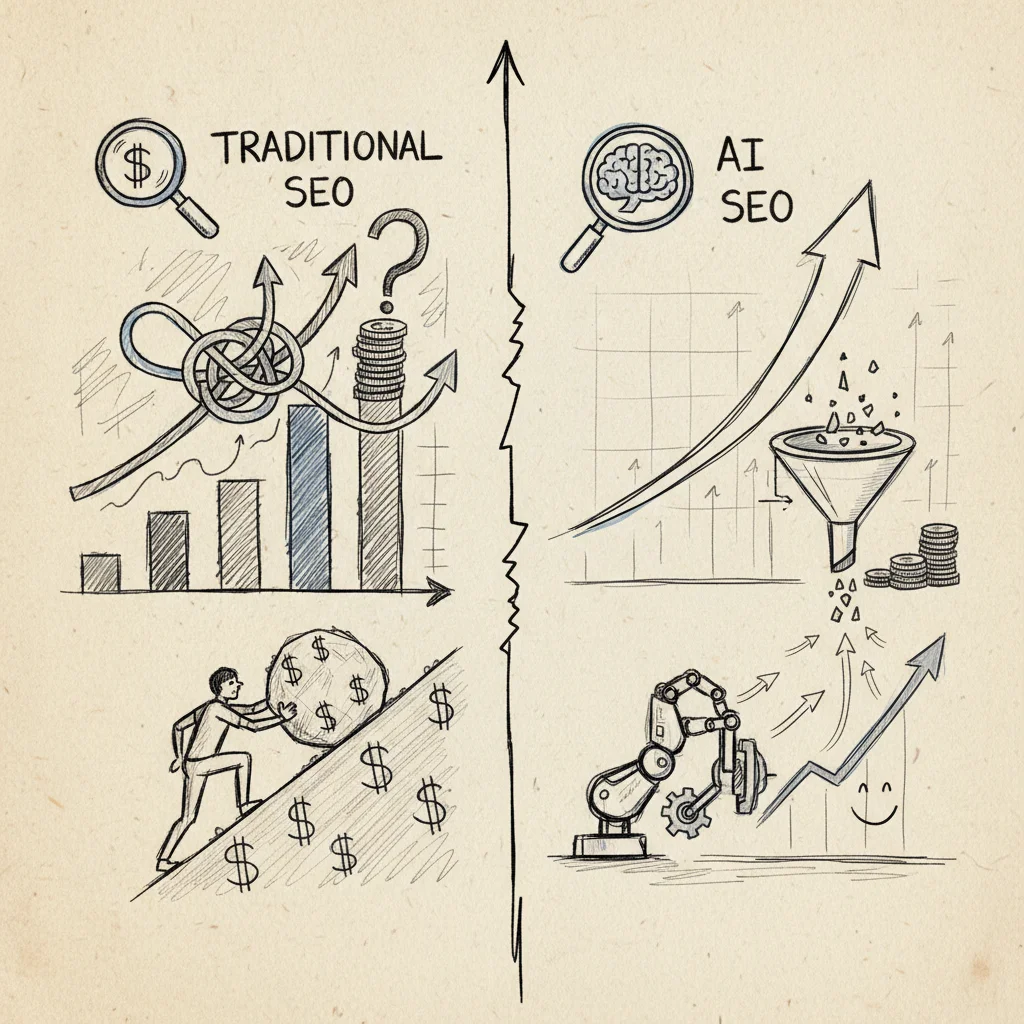
DIY tools cost less upfront, but that saving comes with a labor trade-off, expect to spend 5–15 hours per month on strategy, review, and adjustments. Agencies bundle that work into the retainer price, which is why full-service GEO packages start at $3,500/month [1].
For most SMBs, the real generative engine optimization cost question isn't the sticker price, it's whether the business has the in-house capacity to use a cheaper tool effectively, or whether paying for managed service is the only realistic path to consistent output.
What's Included in Each AI Search Optimization Pricing Tier
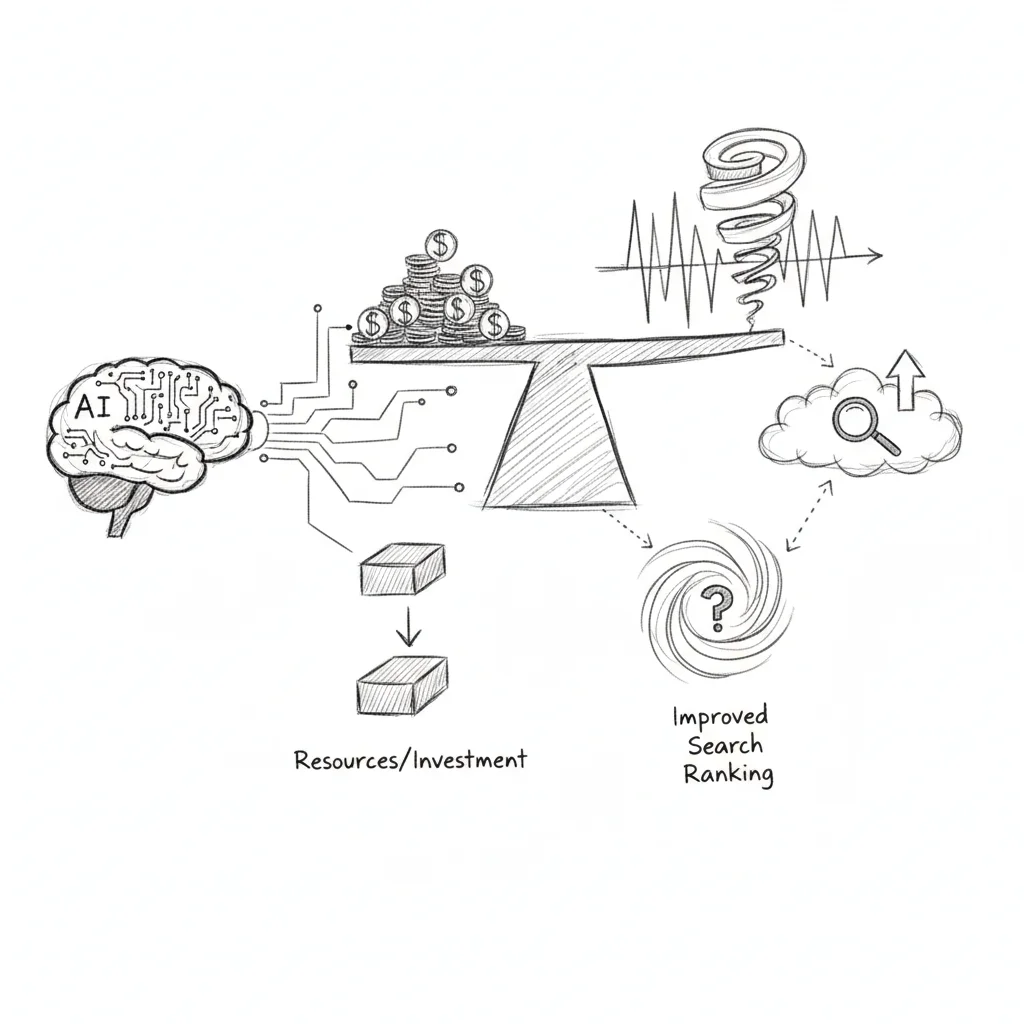
Each AI search optimization pricing tier bundles a different mix of tracking, content, and technical work, entry plans start with visibility monitoring, premium plans add full content production and dedicated strategy.
What Specific Services Are Covered in Each AI Search Optimization Package?
Entry-tier tools and plans ($99–$500/month) focus on measurement and basic technical signals. You get AI visibility tracking across ChatGPT, Perplexity, and Gemini, basic schema markup recommendations, and monthly reporting. Content creation is almost never included at this price point. Moonrank sits in this tier at $99/month, covering daily automated content publishing and technical optimization, schema markup, llms.txt configuration, and structured data, which most entry plans omit entirely.
Mid-tier packages ($500–$2,500/month) add production capacity. Expect 4–8 optimized content pieces per month, keyword and entity research consuming 10–20 hours of analyst time, structured data implementation, bi-weekly reporting, and one AI engine audit per cycle [2].
Premium packages ($2,500–$10,000+/month) cover the full scope [1]. Deliverables typically include a content calendar of 12–30 pieces per month, llms.txt file creation and ongoing maintenance, multi-engine citation tracking, weekly reporting with custom dashboards showing AI citation share, a dedicated strategist, and conversion rate optimization work.
How Do Keyword Research Hours, Content Creation, and Reporting Frequency Vary by Price Tier?
Reporting frequency is a meaningful signal of what you're actually buying. Entry plans report monthly; mid-tier plans check in bi-weekly; premium plans deliver weekly reports with custom AI citation share dashboards [2].
Content creation is the single biggest cost driver across all tiers. Agencies charging $6,000–$10,000/month for 20+ pieces are paying for writer and editor hours, that labor dominates the budget. When comparing AI search optimization costs across packages, isolating the content volume tells you more about real cost than the headline price does.
Is AI Search Optimization Worth the Investment for Your Business?
For most SMBs, AI search optimization pays for itself within 4–6 months, but how fast depends on your deal size, domain authority, and current Google footprint.
What ROI and Payback Period Can You Expect from AI Search Optimization?
Start with a simple formula to test the math against your own numbers:
(Monthly leads from AI search × average deal value × close rate) − monthly GEO cost = net monthly return
A B2B SaaS company with a $6,000 customer LTV closing 15% of leads needs just two AI-referred leads per month to cover a $500 GEO spend. A local restaurant with a $40 average ticket needs far more volume, making the same $500 spend harder to justify on pure lead math alone.
The decision should center on LTV, not monthly spend. High-LTV businesses, B2B SaaS, professional services, e-commerce brands with repeat buyers, reach ROI faster and with fewer leads. Low-ticket local businesses should weigh brand visibility and foot traffic alongside direct lead attribution.
Businesses already ranking on Google see faster GEO ROI because existing domain authority transfers into AI citation signals. New domains should budget 6–12 months before expecting meaningful AI search visibility. Small businesses spending around $500/month on GEO typically see measurable AI citation growth within 60–90 days; full cost recovery from leads usually occurs at month 4–6, based on published agency case studies [2].
What Do Actual Case Studies Show for Cost-Per-Lead and Cost-Per-Conversion by Industry?
One agency reported 814% keyword growth in 90 days for an SMB client using a structured GEO framework [1], a result that compressed the typical payback window significantly.
E-commerce brands report cost-per-lead from AI-referred traffic running 20–40% lower than equivalent paid search campaigns, because AI search users arrive with higher purchase intent, they asked a specific question and received a direct recommendation.
For context on AI search optimization cost at the agency tier, published packages start at $3,500/month [1][2]. A platform like Moonrank delivers daily automated content publishing, technical optimization, and AI visibility tracking across ChatGPT, Gemini, Claude, and Perplexity at $99/month, making the ROI math considerably easier for SMBs to close.
Hidden Costs and Implementation Requirements You Need to Budget For
The headline retainer is rarely the full AI search optimization cost, technical setup, measurement tools, and content refresh fees routinely add 20–40% to your actual spend.
What Technical Setup, Training, and Onboarding Fees Should You Budget For?
Schema markup audits and implementation typically run $500–$2,500 as a one-time fee, depending on how many page types your site has. Creating an llms.txt file, the configuration that tells AI engines which content to prioritize, adds another $200–$800 for sites with complex structures or multiple product categories.
Even fully managed agency engagements require internal time. Budget for 3–5 hours per month of stakeholder involvement: approvals, strategy calls, and briefings. At a $75/hour opportunity cost, that's $225–$375/month in real labor that never appears on an invoice.
Contract terms deserve scrutiny before you sign. Many agency agreements carry 6–12 month minimums with cancellation fees equal to 1–2 months' retainer, on a $6,000/month plan, that's up to $12,000 to exit early.
AI engines rank fresh content above static pages, so budget for quarterly content audits and updates: typically $300–$1,000 per quarter on top of your base retainer.
How Can You Track AI Visibility and Measure Results Across Different Platforms?
Tracking citations across ChatGPT, Gemini, Perplexity, and Claude requires dedicated infrastructure, manual prompt testing is time-consuming and inconsistent. Some agencies charge an additional $150–$500/month for multi-engine citation reporting [2].
Moonrank bundles AI visibility tracking across all four engines into its $99/month subscription, so that measurement layer doesn't become a separate line item. For businesses building a stack from scratch, factor in the monitoring cost before comparing headline prices.
Frequently Asked Questions
Can a small business afford AI search optimization on a tight budget?
Yes, AI search optimization is accessible at price points starting well below $100/month for automated SaaS tools. Moonrank, for example, costs $99/month and handles daily content publishing, technical optimization, and visibility tracking across ChatGPT, Gemini, Claude, and Perplexity without requiring agency fees. That compares directly to agency-managed GEO packages that start at $3,500/month [1]. For a business generating $150K–$900K annually, a $99/month subscription is a realistic line item, not a stretch.
How long does it take to see results from AI search optimization?
Most businesses see measurable changes in AI search visibility within 30 to 90 days, depending on how competitive their niche is and how much technical groundwork needs to be done first. One agency-managed GEO case study reported impressions jumping from 6,000 to 34,000+ within 30 days after a structured optimization push [1]. Automated tools that publish content daily tend to build momentum faster than one-off audits because AI engines reward consistent, fresh, well-structured content.
Is it better to hire an agency or use a DIY tool for AI search optimization?
For most SMBs, an automated SaaS tool delivers better value than an agency at the same budget. Agencies offer custom strategy and hands-on management, but their GEO packages start at $3,500/month [1], a price point that excludes most small businesses before the conversation even starts. A purpose-built tool handles the technical work (schema markup, llms.txt, structured data, daily content) automatically. The trade-off is less customization, but for a business owner without a marketing team, automation beats a retainer they can't afford.
Do I still need traditional SEO if I invest in AI search optimization?
Yes, traditional SEO and AI search optimization are complementary, not interchangeable. Google still drives a significant share of web traffic, and the technical foundations of good SEO (site speed, structured data, authoritative content) directly support AI search visibility too. The practical approach is to treat AI search optimization as an additional layer on top of existing SEO work, not a replacement. Many of the same content and technical signals that rank well on Google also help ChatGPT and Perplexity surface your business in recommendations.
Conclusion
AI search optimization cost breaks down to a clear decision: pay $3,500–$10,000+/month for agency management [1], spend $500–$2,000/month assembling your own tool stack, or use a purpose-built automated platform at a fraction of either price. The technical requirements, schema markup, llms.txt configuration, structured data, and consistent content publishing, are fixed regardless of which route you choose.
Two actions worth taking now: audit whether your site currently has an llms.txt file and valid schema markup, and check whether your business appears when you ask ChatGPT or Perplexity to recommend a provider in your category. If the answer to either is no, start a free 3-day trial at moonrank.ai to see exactly where your AI search visibility stands today.
Sources & References
Recommended Articles
Explore more from our content library: